Reviewed · SACRED VALLEY TOURS
Full Day in the Sacred Valley – The Pantry of Cusco
Sacred Valley sights, one long day. This $68 tour links Awana Kancha, Pisac, its famous market, and Ollantaytambo in about 10 hours, making it a useful first look at the valley without arranging several separate rides. I especially like the small maximum group of 16 and the chance to hear a real guide explain the Inca sites instead of relying only on an audio recording.
I also like the care shown by guides such as Ricardo Yana Curi, who earned repeated praise for clear explanations, patience, humor, and keeping the day on schedule. The main tradeoff is simple: this is a packed day, and the price does not include the Cusco Tourist Ticket or drinks with lunch. You will see a lot, but you will not have endless time at each stop.
In This Review
- Key points at a glance
- Why this Sacred Valley day works for first-time visitors
- Awana Kancha: a short introduction to Andean craft
- Pisac archaeological complex: terraces and a pre-Hispanic cemetery
- Pisac market: one hour to shop and bargain
- Ollantaytambo: the day’s strongest archaeological stop
- Lunch, music, and what the $68 price really covers
- The 7:30 a.m. start and 16-person group
- Physical demands and useful planning advice
- Who should book this Sacred Valley tour?
- Should you book it?
- FAQ
- How long does the Sacred Valley tour last?
- What time does the tour start?
- Which places are included in the route?
- Is the tour offered in English?
- Is the Cusco Tourist Ticket included?
- How many people can join the tour?
- Can I cancel for a full refund?
Key points at a glance

- Awana Kancha opens the day with Andean textiles and camelids, giving you cultural context before the ruins.
- Pisac combines terraces and a pre-Hispanic cemetery, not just the market most short visits focus on.
- The Pisac market gives you a built-in souvenir stop, with time to practice bargaining.
- Ollantaytambo brings the biggest archaeological payoff, with Inca canals, cobbled streets, a ceremonial center, and a fortress.
- A maximum of 16 people keeps the group manageable, especially when the guide is explaining ruins or helping with climbs.
- The 7:30 a.m. start and 10-hour length make this a full day, best suited to visitors with moderate fitness and limited time in Cusco.
Why this Sacred Valley day works for first-time visitors
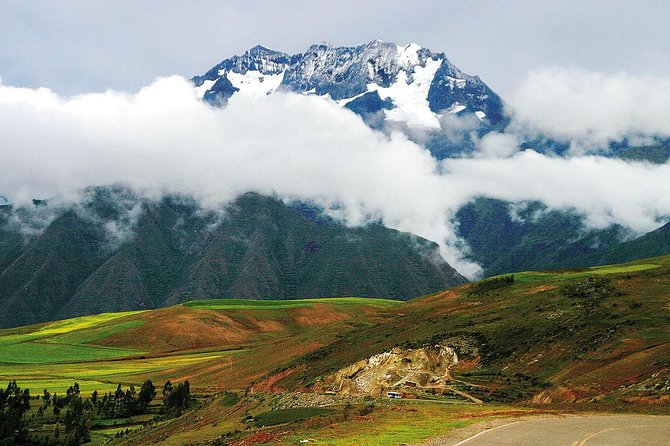
The Sacred Valley is not one single sight. It is a long stretch of villages, agricultural terraces, markets, and Inca sites, and getting between the highlights can take planning. This tour puts four useful pieces together in one outing, with an air-conditioned vehicle and a professional guide handling the route.
I like the order of the day. You begin with Awana Kancha, move to the high archaeological area at Pisac, spend time in the market, and finish at Ollantaytambo. That progression gives you a little culture, archaeology, shopping, and village life rather than four versions of the same ruin.
The guide matters here. At Pisac and Ollantaytambo, a good explanation helps you see why terraces, stonework, canals, and defensive positions mattered. Ricardo Yana Curi received particularly strong praise for explaining Inca culture in detail while keeping a friendly tone. Other guides named in the feedback include Pamela and Ruben Cusi, so the exact guide may vary.
You receive the tour in English or Spanish, but not in both languages at once. Audio guides are also included. I would confirm your preferred language at booking, especially if more than one person in your group needs a different language.
More Sacred Valley trips:
- From Cusco: Moray, Maras Salt Mines & Chinchero Weavers Tour
★ 4.8 · 1,925 reviews - 2-Day Tour: Sacred Valley and Machu Picchu by Train
★ 5.0 · 1,127 reviews - Cusco: Sacred Valley, Pisac, Ollantaytambo, Salt Mines Moray
★ 4.6 · 1,058 reviews
Awana Kancha: a short introduction to Andean craft
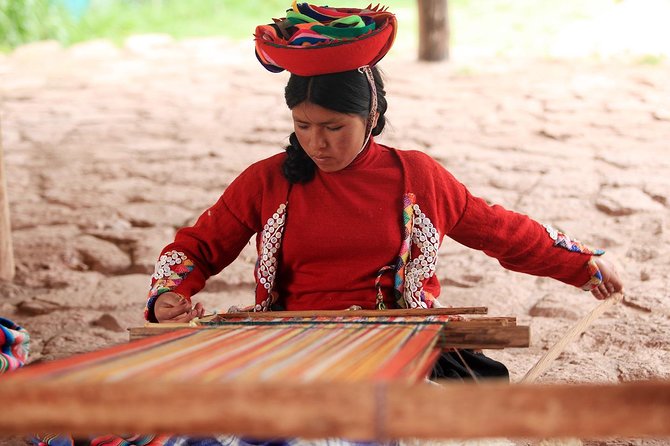
The first stop lasts about 25 minutes at Awana Kancha. The focus is on ancestral textile techniques and South American camelids, so you get an introduction to two subjects closely tied to Andean life: weaving and the animals that provide valuable fiber.
This is a brief stop, but it has a useful purpose. Before you reach the markets and ruins, you see the cultural setting behind some of the textiles and souvenirs sold around Cusco. I would pay attention to the textile-making explanation rather than treating Awana Kancha as a quick photo stop.
The camelids are another reason to keep this stop in the plan. The description specifically calls for a close look at South American camelids, giving you a chance to connect the region’s animals with its traditional crafts.
Do not expect a long workshop. With only 25 minutes scheduled, the visit is an introduction, not a full lesson in weaving. If you prefer archaeological sites to craft centers, this will be the least important stop for you. If this is your first day in the Cusco region, though, it adds useful cultural context without taking up much of the morning.
Pisac archaeological complex: terraces and a pre-Hispanic cemetery
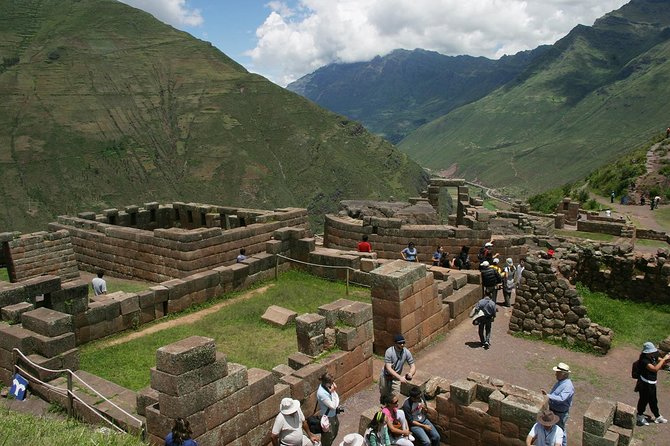
Pisac is the first major archaeological stop, with about 45 minutes at the complex. The visit includes the agricultural area and a pre-Hispanic cemetery, which makes it more interesting than a quick look at stone walls.
The agricultural terraces show how the Incas used steep mountain slopes for food production. The word pantry in the tour title points to this wider idea: the Sacred Valley was a productive food-growing area for Cusco. At Pisac, you can see how farming was built into the shape of the hills rather than placed only on flat ground.
The cemetery adds a different note. It helps you remember that this was not simply an agricultural site or a fortress. It was part of a wider community with religious and social practices. A guide can connect the visible remains to the larger Inca system in a way a quick photograph cannot.
Forty-five minutes is enough for an organized overview, but not for a slow, solo exploration of every corner. You should expect some walking and climbing, and the tour advises a moderate level of physical fitness. One guide, Ricardo, was praised for taking his time on the ruins and checking that people were doing well on the climbs. That sort of attention is valuable at high-altitude sites where a short staircase can feel longer than it looks.
The timing also means you need to stay with the group. If you want to linger over views, sketch, or inspect every terrace, a private visit would give you more freedom. For a first orientation, the scheduled stop gives you a strong sample.
Pisac market: one hour to shop and bargain
After the archaeological area, you spend about an hour at Pisac Market. This is the practical part of the day, with time to look for handicrafts and practice negotiating prices.
I like the fact that shopping is built into the route rather than added as an afterthought. You can compare what you see here with the textile work introduced at Awana Kancha. The market also gives you a chance to buy something connected to the region, rather than rushing through a shop at the end of the day.
The stated goal is to use your bargaining skills. Keep that friendly and good-natured. A negotiation should feel like a conversation, not a contest. If you find something you like, ask the price, consider whether it fits your budget, and be ready to walk away politely if it does not.
One hour goes quickly. You will have enough time to browse, but not necessarily enough to inspect every stall in a large market. I would decide before leaving Cusco what kind of souvenir you want and set a rough spending limit. That keeps the stop enjoyable and reduces the chance of buying the first appealing item you see.
The market can also make the day feel more personal. Ruins explain the past, while a market shows how local craft and commerce continue in the present. Just remember that shopping time comes after the archaeological visit, so do not spend all your energy or attention at the stalls if you still have Ollantaytambo ahead.
More things to do in Cusco:
- Classic Inca Trail Trek 4D/3N to Machu Picchu (Group Service)
★ 5.0 · 8,653 reviews - Cusco: Rainbow Mountain and Red Valley Day Trip with Meals
★ 4.9 · 4,893 reviews - Machu Picchu: 4-Day Inca Trail Trek with Panoramic Train Ride
★ 5.0 · 4,568 reviews - Salkantay Classic Trek 5 Days from Cusco
★ 5.0 · 4,062 reviews
Ollantaytambo: the day’s strongest archaeological stop
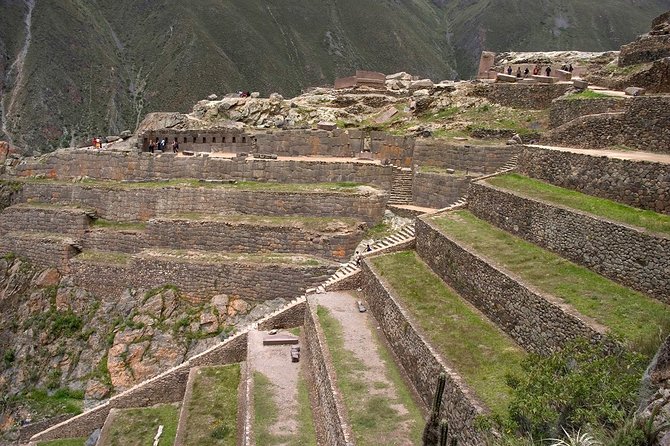
Ollantaytambo is described as a village of Inca origin, with canals and cobbled streets still in use. Above the village sits a ceremonial center and fortress that guarded access to the lower valley. The scheduled information lists only one minute, which is clearly not a realistic visit length for the site. Treat Ollantaytambo as the final major stop, but confirm the exact time allocation before booking or at the start of the day.
This is likely the highlight for anyone most interested in Inca engineering. The canals show how carefully water was managed, while the streets preserve the basic structure of an Inca settlement. The upper ceremonial and defensive area gives you a sense of the site’s strategic importance.
The climb can be demanding. You should wear practical shoes and pace yourself, though the supplied information does not specify a required dress code or footwear. A guide can make the climb easier by explaining what you are seeing as you go, rather than leaving you to face a steep series of stones with no context.
Several guides received strong praise for their explanations at Ollantaytambo. Ricardo was singled out for clear Inca history lessons, for keeping the group on schedule, and for helping with practical matters at the end of the day. That combination is important. A guide who knows the site but ignores the clock can create problems later, while a guide who rushes gives you little reason to remember the visit.
The village setting is also part of the appeal. You are not visiting an isolated ruin only. You are seeing an Inca-origin settlement whose canals and streets remain part of the built environment. That connection between ancient planning and a living village makes Ollantaytambo feel different from a stand-alone archaeological park.
Lunch, music, and what the $68 price really covers
The tour costs $68 per person. For a 10-hour day with an air-conditioned vehicle, professional guiding, onboard service, and a group capped at 16, that can be good value if you want transport and interpretation arranged for you.
The price is not all-inclusive. The Cusco Tourist Ticket, or BTC, is not included, so you need to budget for the required site admission separately. Drinks during lunch are also excluded.
A buffet lunch may be available at an additional cost. The experience has included buffet dining with live Andean music, and Tunupa Restaurant in Urubamba was specifically recommended by a guide. Since the lunch arrangement is not listed among the included services, confirm the current option and price before you sit down.
This matters because a cheap-looking day can cost more once tickets, lunch, drinks, and shopping are added. On the other hand, you are paying for more than entry. The vehicle, driver, guide, and route planning save you the trouble of arranging several connections across the valley.
The driver also deserves attention. Feedback praised courteous driving, which is not a minor detail on a long mountain-region day. You spend many hours in the vehicle, so safe and calm driving affects the whole experience.
The 7:30 a.m. start and 16-person group
The day begins at 7:30 a.m. and ends back at the meeting point. The starting time gives you a full route, but you should be ready for a long day rather than a relaxed late-morning outing.
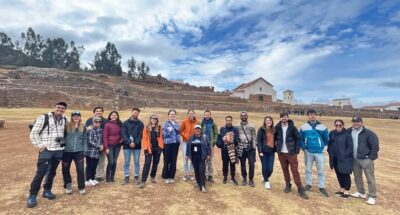
A group of no more than 16 is a sensible middle ground. You get the lower cost of a shared tour without the scale of a very large coach group. It should also be easier to hear the guide, ask a question, and keep track of the group at Pisac Market.
The experience includes an audio guide as well as a live guide. I would think of the audio device as a backup or extra layer, not a replacement for the guide. The strongest feedback centered on personal explanations, humor, patience, and help with timing.
At the end, the activity returns to the meeting point. One useful detail from the guide feedback is that Ricardo helped a group with luggage and even carried a large suitcase up two blocks of stairs into San Blas after the tour. That is not a promised transfer service, so you should not book this expecting hotel delivery. It does show the kind of practical help that can make a long day easier.
Physical demands and useful planning advice

The tour requires moderate physical fitness. Pisac and Ollantaytambo involve archaeological areas with climbing, and the day combines walking with several hours in a vehicle. You should be comfortable with both before reserving.
I would plan for:
- Comfortable walking shoes
- Water and sun protection
- Extra money for the BTC, lunch, and drinks
- A small bag for market purchases
- Patience for a full 10-hour schedule
These suggestions are practical rather than special requirements. The supplied details do not list a specific clothing rule, meal menu, or altitude program, so you should avoid assuming those are included.
Service animals are allowed, and the meeting area is near public transportation. The exact meeting point is not specified in the information provided, so confirm its location and pickup instructions before the morning of the tour.
The tour requires good weather and a minimum number of participants. If poor weather cancels the day, you are offered another date or a full refund. If the minimum is not met, you receive the choice of another date or experience, or a full refund.
Free cancellation applies when you cancel at least 24 hours before the start time. A cancellation inside that window is not refundable, and changes made within 24 hours are not accepted.
Who should book this Sacred Valley tour?
I would choose this experience if you are visiting Cusco for a short stay, want the main Sacred Valley highlights in one day, or prefer having a guide explain the ruins while someone else handles the driving. It is especially useful for first-time visitors who find Peru’s geography and transport system hard to sort out.
Families can also benefit from the organized schedule and the guide support at the ruins. The Iyer family’s experience with Ricardo points to a guide who can be courteous, friendly, and thorough with a family group.
I would hesitate if you want a slow archaeological day, long market browsing, or complete control over meal stops. The route is broad, the start is early, and the physical effort is real. You may also prefer a private tour if your group wants to set its own pace or stay longer at one site.
Should you book it?
Book it if you want a well-priced introduction to the Sacred Valley with four distinct stops, a small shared group, air-conditioned transport, and a guide who can put the Inca sites into context. The strongest reason to choose it is the combination of cultural and archaeological stops, with guides such as Ricardo praised for both clear explanations and practical help.
Before paying, confirm the BTC cost, lunch arrangement, meeting point, language, and the unusually short Ollantaytambo time shown in the schedule. If you are comfortable with a 7:30 a.m. start, moderate climbing, and a full 10-hour day, this is a sensible way to cover a great deal of the valley without making your own transport plan.
FAQ
How long does the Sacred Valley tour last?
The tour lasts approximately 10 hours.
What time does the tour start?
The stated start time is 7:30 a.m.
Which places are included in the route?
The route includes Awana Kancha, the Pisac archaeological complex, Pisac Market, and the Archaeological Park at Ollantaytambo.
Is the tour offered in English?
Yes. The guided tour is available in English or Spanish, but it is not bilingual.
Is the Cusco Tourist Ticket included?
No. The Cusco Tourist Ticket, also called the BTC, is not included in the tour price.
How many people can join the tour?
The tour has a maximum of 16 participants.
Can I cancel for a full refund?
Yes, if you cancel at least 24 hours before the experience start time. Poor weather or failure to meet the minimum number of participants can also lead to an alternative date or a full refund.
Just added in Cusco
- Cusco Private Transportation for 2026★ 5.0 · 4 reviews
- Private Transfer from Airport to Hotel in the City of Cusco★ 4.0 · 5 reviews
- Best Cusco walking tour: dinner street food tasting★ 4.5 · 11 reviews
- Private Tour to Pisac Market and Pisac Ruins★ 5.0 · 4 reviews
- Machu Picchu Day Trip With Panoramic Train from Cusco★ 5.0 · 10 reviews
- Sacred Valley Private Tour from Cusco, Guide and Driver only★ 5.0 · 4 reviews
- Sacred Valley of the Incas Tour★ 5.0 · 12 reviews
- Private Tour of the Mountain of Colours by Quad★ 5.0 · 7 reviews
Sacred Valley Tours, compared.
From Cusco: Sacred Valley & Maras Salt Mines Tour with Lunch
Read our review →
From Cusco: Moray, Maras Salt Mines & Chinchero Weavers Tour
Read our review →
2-Day Tour: Sacred Valley and Machu Picchu by Train
Read our review →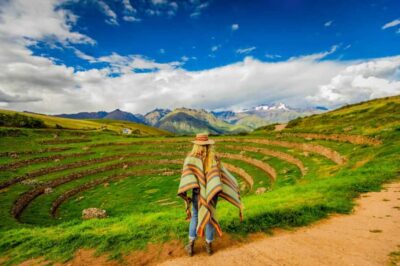
Sacred Valley, Pisac, Ollantaytambo, Salt Mines Moray
Read our review →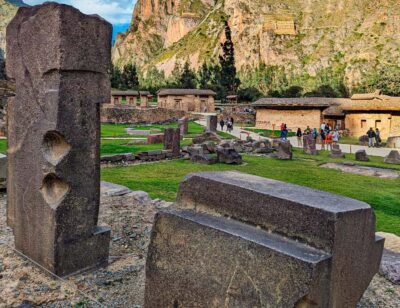
Chinchero,Moray & Salt Mines drop-off in Ollantaytambo
Read our review →
Sacred Valley and Maras Moray Tour with Full Day Buffet Lunch
Read our review →