Reviewed · COLCA CANYON AND AREQUIPA TOURS
Peruvian Cooking Class in arequipa
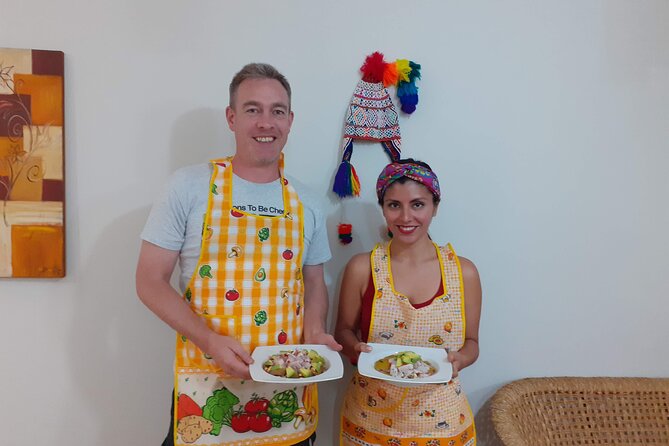
Bring your appetite to the kitchen. This three-hour Arequipa cooking class offers a personal way to learn Peruvian food, with hands-on preparation, local ingredients, and time to talk with your host about daily life and food traditions. You will make ceviche, causa Limeña, an exotic-fruit parfait, and your own Pisco Sour.
I especially like the private format, since only your group takes part, and the warm family setting that past participants describe. I also like the freedom to adjust dishes for dietary needs, including a vegetarian replacement for the fish. The main consideration is that the meeting information lists both C. Macón 12 and a kitchen studio at Los Portales de Cayma, so you should confirm the exact arrival point before setting out.
In This Review
- Key points to know before booking
- Why a cooking class fits Arequipa so well
- Starting with a Pisco Sour or Maracuya Sour
- Making ceviche with a Japanese-Peruvian twist
- Preparing causa Limeña and causa rellena
- Ending with local fruit parfait
- The family atmosphere and language support
- Timing, location, and what the three hours mean
- What the $50 price includes
- Who should book this experience
- Booking and cancellation advice
- Should you book the Arequipa cooking class?
- FAQ
- How long does the Peruvian cooking class last?
- What dishes will I prepare?
- Is a drink included?
- Are vegetarian options available?
- Are ingredients and cooking equipment provided?
- Where does the class begin?
- Is transportation included?
- Can I cancel for a full refund?
Key points to know before booking
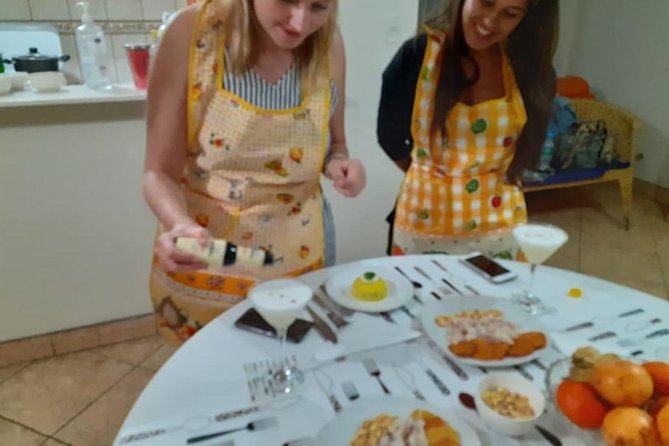
- You make the national cocktail yourself: Shake a Pisco Sour or passion-fruit Maracuya Sour while learning how the drink fits into Peruvian culture.
- The menu covers several Peruvian classics: The class includes ceviche, causa rellena or causa Limeña, local fruit, coffee, and tea.
- Vegetarians have a planned alternative: Fish is replaced with sweet cucumber, described as a local fruit.
- The atmosphere is personal: The experience is private, and the family hosts have worked with translators including Leo, Fernando, Maria, Mary, and Maree.
- You should arrive hungry: The portions can add up to a full meal, with one participant advising you to go with an empty stomach.
- You get three hours of kitchen time: Choose a morning session, an afternoon dinner class, or an evening start, depending on the schedule.
Why a cooking class fits Arequipa so well
Arequipa is famous for its food, and a cooking class gives you more than a meal at a restaurant. You learn what goes into the dishes, how they are assembled, and why certain ingredients matter. That makes the experience useful after you leave Peru, since you can try to repeat at least part of the meal at home.
The class also gives you a close look at Peruvian cooking through conversation. The hosts explain traditional food and share details about life in Arequipa. Past sessions have included family members translating and chatting in English, which can make the class easier if you do not speak Spanish.
I like this kind of setup because the meal is not rushed. You are not simply watching a chef prepare food behind a counter. You take part, ask questions, and then eat what you helped make.
The experience takes place in or around a family-run kitchen setting at Los Portales de Cayma, Pasaje Larilari I-3. The stated starting point is C. Macón 12 in Arequipa, so check the directions carefully before the day of your class. Private transportation is not included.
More Food Tours and Cooking Classes in Arequipa
- Peruvian Cooking Experience in Arequipa
★ 5.0 · 173 reviews - Chaqchao Chocolate Making Workshop
★ 5.0 · 104 reviews - A 3-hour Guided Food Tour with 4 Iconic Restaurants of Arequipa
★ 4.5 · 96 reviews
Starting with a Pisco Sour or Maracuya Sour
The class begins with an aperitif, and you get to shake your own drink. The standard option is a Pisco Sour, while the information also lists a passion-fruit version called a Maracuya Sour.
This is a good opening because Pisco is more than just a strong local spirit. The drink is closely tied to Peru’s national identity, and the class explains the story behind the cocktail as you prepare it. You get a little cultural context before moving on to the food.
The hands-on part matters here. Mixing your own drink gives you an immediate task while the host introduces the class. It also lets you see how a familiar restaurant cocktail comes together.
If you do not drink alcohol, the available information does not specify a nonalcoholic replacement. Ask about this before booking if it matters to you. The listed inclusions are a Pisco Sour or Maracuya Sour, not a separate alcohol-free drink.
Making ceviche with a Japanese-Peruvian twist
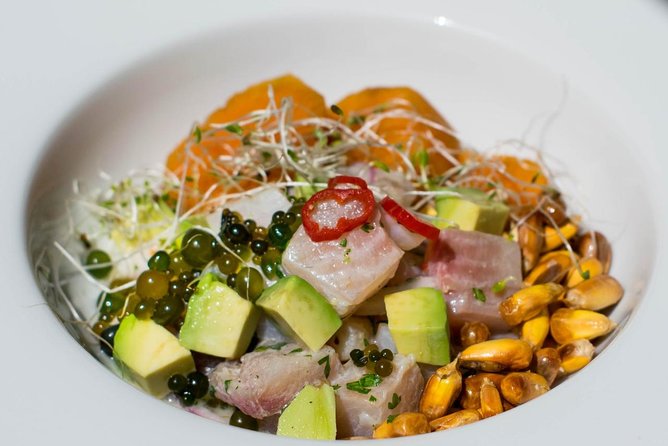
The ceviche is presented in a modern style, with sashimi-style fish marinated in a Japanese-Peruvian combination. That makes it different from a basic demonstration of the dish. You get to see how a traditional Peruvian preparation can be adjusted while keeping its central character.
Ceviche depends on fresh ingredients and careful seasoning. The class gives you a practical chance to understand how the fish, marinade, and other components work together. You also season the dishes with Maras pink salt, a detail that connects the cooking to Peru’s well-known salt-producing region.
The exact fish is not specified, so anyone with allergies should ask before arrival. The class does provide a vegetarian alternative, with fish replaced by sweet cucumber, a local fruit. That option is useful, though you should still explain all dietary requirements in advance rather than assuming every ingredient can be changed.
One point to keep in mind is that ceviche is prepared during the session and eaten as part of the meal. If you prefer a longer technical lesson about seafood handling, ask how much time will be spent on preparation and explanation. The class is designed as a social cooking experience, not a professional culinary course.
Preparing causa Limeña and causa rellena
Causa is one of the most approachable Peruvian dishes for a cooking class. Its potato base can be shaped and filled, making the finished dish look far more elaborate than the basic steps suggest.
The menu names causa Limeña, while the inclusions also refer to causa rellena. One past session included causa de pollo, so the filling may vary. Ask what filling is planned for your date, especially if you have dietary restrictions.
This is likely to be one of the most satisfying parts of the class because you can see the dish take shape in front of you. The preparation involves more than simply boiling and serving potatoes. Presentation is part of the fun, and one participant described the meal as both attractive and delicious.
The class also uses Maras pink salt across the dishes. That gives you another small lesson in how seasoning is handled in Peruvian cooking. You are not just following a recipe. You are learning how a familiar local ingredient fits into the finished dish.
More Colca Canyon trips:
- 2 day 1 night trek / Colca Canyon
★ 5.0 · 1,069 reviews - From Arequipa: Colca Canyon Full-Day Guided Tour with Meals
★ 4.5 · 982 reviews - Tour to the Salinas Lagoon and National Reserve in Arequipa
★ 4.5 · 548 reviews - From Arequipa: Sillar Route Trek
★ 4.2 · 461 reviews
Ending with local fruit parfait
Dessert is an exotic-fruit parfait made with local fruit. This is a lighter finish after the ceviche, causa, and cocktail, though the full menu can still amount to a substantial meal.
The fruit course is valuable because it introduces ingredients beyond the better-known potatoes, corn, and seafood associated with Peruvian food. The description does not name every fruit used, so the exact selection may depend on what is available.
I like the format of this dessert because it gives you a simple presentation lesson. A parfait can look elegant without requiring complicated pastry skills. You get to taste local produce and see how it can be served in a neat, attractive way.
Coffee and tea are also included. Those drinks give you time to sit and talk at the end rather than rushing straight out of the kitchen.
The family atmosphere and language support
The strongest feature of this experience is its personal character. The class is described as private, with only your group participating, and the sessions have been hosted in a welcoming family home or family-run kitchen environment.
Several hosts and translators have been involved. Julia and translator Leo helped one couple through the cooking and conversation. Marisa has taught with her daughter Maria, and another session included Mari and Marisa. Other visitors worked with Fernando, Mary, or Maree for English support.
You should not assume that every host speaks fluent English. Marisa, for example, has used a family member to translate. That is not a problem if you are comfortable with a little back-and-forth, gestures, and help from a translator. It may even add to the relaxed family feel, but it is worth knowing in advance.
The social side is a major reason to choose this class. You learn about food, but you also have a chance to talk about life in Arequipa and Peru. Past sessions included laughter, conversation, and new cooking skills, which suggests the experience works best for people who enjoy a friendly, informal setting.
If you want a silent, tightly timed lesson with professional kitchen precision, this may not be your ideal choice. If you prefer a meal shared with local people and plenty of conversation, it is a better fit.
Timing, location, and what the three hours mean
The class runs for approximately three hours. Available schedules are listed as:
- 10:00 to 13:00
- 14:30 to 17:30, described as a dinner class
- 18:00 to 21:00
The schedule gives you useful flexibility. A morning class can fit before an afternoon of sightseeing. The later options work well if you want your cooking session to become your main evening meal.
Because the class lasts three hours, do not place it too close to another fixed activity. Cooking, eating, translating, and conversation all take time. The experience is not just a quick recipe demonstration.
The kitchen studio is listed at Los Portales de Cayma, Pasaje Larilari I-3. The meeting point is also given as C. Macón 12, Arequipa 04017, and the activity ends back at the meeting point. Since the two location details may require clarification, contact the provider before the day of the class and confirm where you should go.
The class is near public transportation. Private transportation is not included, so you are responsible for reaching the starting point.
What the $50 price includes
At $50 per person, the price is reasonable if you treat the class as both a meal and a local cultural activity. You receive the ingredients, cooking equipment, instruction, the cocktail, several courses, local fruit, and coffee or tea.
You also avoid the extra cost of ordering these dishes separately at a restaurant, though the real value is the participation. You leave with a better idea of how ceviche and causa are made, plus the memory of preparing them with a local host.
The private setup adds value for couples, solo visitors, and small groups who want direct attention. You are not paying only for a seat at a shared table. You are paying for a three-hour session built around your group.
Still, $50 may feel high if your main goal is simply to eat Peruvian food. You can find less expensive meals in Arequipa. This class makes the most sense if you want instruction, conversation, and a hands-on activity, not just a plate of food.
Ingredients and equipment are provided, so you do not need to shop or bring cooking tools. Dietary adjustments are possible, but you should share those needs before the class.
Who should book this experience
I would suggest this class to couples who want a relaxed date activity, solo visitors looking for a social evening, and families interested in food. It also suits anyone who likes learning by doing rather than sitting through a long lecture.
It is especially useful early in your Peru trip. Once you learn about local ingredients and dishes, you may notice them more clearly on restaurant menus and in Arequipa’s food markets.
Vegetarians have a clear starting point because the fish is replaced with sweet cucumber. However, the information only specifically addresses that substitution. If you are vegan, allergic to seafood, avoiding alcohol, or managing several dietary restrictions, contact the provider before booking and confirm the full menu.
You should also choose your time based on your appetite. The ceviche, causa, dessert, and drink create a lot of food. Eat lightly beforehand, or you may spend the lesson admiring the dishes while trying to make room for them.
Booking and cancellation advice
The experience is often booked about seven days ahead, so reserving early is sensible if you need a specific time. Confirmation is provided when you book.
Free cancellation is available if you cancel at least 24 hours before the start time. Cancellations or changes made within 24 hours are not refunded or accepted. If the minimum number of participants is not met and the class is canceled, you will be offered another date or experience, or receive a full refund.
Should you book the Arequipa cooking class?
Book it if you want more than a restaurant meal. The strongest reasons are the private setting, the family warmth, the chance to prepare several classic dishes, and the personal stories shared during the cooking.
I would be less enthusiastic if you want a formal culinary school, a fully specified professional menu, or guaranteed English instruction from the main cook. The class relies in part on family translators, and the meeting-point details should be confirmed.
For most food-minded visitors, though, the combination of Pisco Sour, Japanese-Peruvian ceviche, causa, local fruit, and conversation offers good value. Go hungry, ask about the exact filling and dietary substitutions, confirm the address, and give yourself the full three hours. That is the best way to enjoy what this experience does well.
FAQ
How long does the Peruvian cooking class last?
The class lasts approximately three hours.
What dishes will I prepare?
The menu includes ceviche with a modern Japanese-Peruvian twist, causa Limeña or causa rellena, and an exotic-fruit parfait.
Is a drink included?
Yes. The experience includes either a Pisco Sour or a Maracuya Sour, and you prepare and shake the drink yourself.
Are vegetarian options available?
Yes. The fish is replaced with sweet cucumber, described as a local fruit. You should provide your dietary requirements when booking.
Are ingredients and cooking equipment provided?
Yes. All ingredients and cooking equipment are included.
Where does the class begin?
The stated meeting point is C. Macón 12, Arequipa 04017, Peru. The kitchen studio is also listed at Los Portales de Cayma, Pasaje Larilari I-3, so confirm the exact arrival point before the class.
Is transportation included?
No. Private transportation is not included, although the experience is near public transportation.
Can I cancel for a full refund?
Yes, if you cancel at least 24 hours before the experience begins. Cancellations or changes made less than 24 hours before the start time are not refunded.
Just added in Arequipa
- Sillar Route★ 5.0 · 4 reviews
- Salinas Lagoon + Mini Volcano DE Lojen★ 5.0 · 9 reviews
- 3-Day Colca Canyon trek with Professional Guide★ 5.0 · 40 reviews
- Full Day Tour To The Salt Lake Salinas in Arequipa★ 4.5 · 34 reviews
- Walking City tour including the Monastery of Santa Catalina★ 5.0 · 6 reviews
- Trekking, Waterfalls and Thermal Baths★ 4.5 · 47 reviews
- Downhill Tour – Mountain Bike in Arequipa★ 3.5 · 5 reviews
- 2 Days 1 Night trekking Through Colca Canyon, Private room★ 5.0 · 16 reviews
Colca Canyon and Arequipa Tours, compared.

From Arequipa: Colca Canyon Full-Day Guided Tour with Meals
Read our review →
Tour to the Salinas Lagoon and National Reserve in Arequipa
Read our review →

Rafting Arequipa – Chili River Canoeing – Cusipata Rafting Arequipa
Read our review →
Chili River White Water Rafting with Hotel Pickup
Read our review →