Reviewed · COLCA CANYON AND AREQUIPA TOURS
Private Cooking Class in Arequipa
Good food makes a better souvenir. This three-hour private class gives you a practical way to meet Peruvian cooking through ceviche, causa limeña, local fruit, and a freshly shaken Pisco Sour. I especially like the small private format, since your group cooks and eats together rather than watching from the sidelines. I also like the warm family welcome reported by guests, including the care Marisa brings to each dish. The main thing to consider is the menu and meeting information: the details describe both a home-style chicken causa and a more general causa rellena, while the listed meeting point differs from the kitchen-studio address.
You can choose a morning, afternoon, or evening session, making this easy to fit around Arequipa sightseeing. The $57 price is fair if you value instruction, a full meal, drinks, and a personal setting, though it is more than a simple restaurant lunch. English is offered, and one past group had an interpreter when Marisa did not speak English directly, so you may want to confirm language arrangements before booking.
In This Review
- Key points at a glance
- Cooking in Cayma, with Arequipa on the plate
- Starting with a homemade Pisco Sour
- Causa limeña, Peru’s cold potato classic
- A modern ceviche with avocado and sweet potato
- Mango and local fruit for dessert
- What the private format feels like
- Vegetarian substitutions and menu questions
- Is $57 a fair price?
- Choosing the right time
- Who should book this class?
- Should you book the Arequipa cooking class?
- FAQ
- Where does the cooking class take place?
- How long does the experience last?
- What time can I take the class?
- Is the class private?
- Is the class offered in English?
- What food will I prepare?
- Are vegetarian options available?
- What is included in the price?
- Can I cancel for a full refund?
Key points at a glance
- Three cooking times each day: Choose 10:00 to 13:00, 14:30 to 17:30, or 18:00 to 21:00.
- A full Peruvian menu: Prepare a Pisco Sour, causa limeña, ceviche with a modern touch, and a local-fruit dessert.
- Private group setting: Only your group participates, giving the class a more personal pace.
- Local ingredients take center stage: Peruvian avocado, sweet potato, mango, passion fruit, and exotic fruits all feature in the meal.
- Vegetarian substitutions are offered: Fish can be replaced with sweet cucumber, and meat with mushrooms.
- Flexible cancellation: Cancel at least 24 hours before the start time for a full refund.
Cooking in Cayma, with Arequipa on the plate
The class takes place at a kitchen studio in Los Portales de Cayma, at Pasaje Larilari i-3. The listed start point is Pancho Fierro 131, Arequipa 04017, and the activity ends back at the meeting point. Since those two location details are not identical, I would confirm exactly where you should arrive before the class.
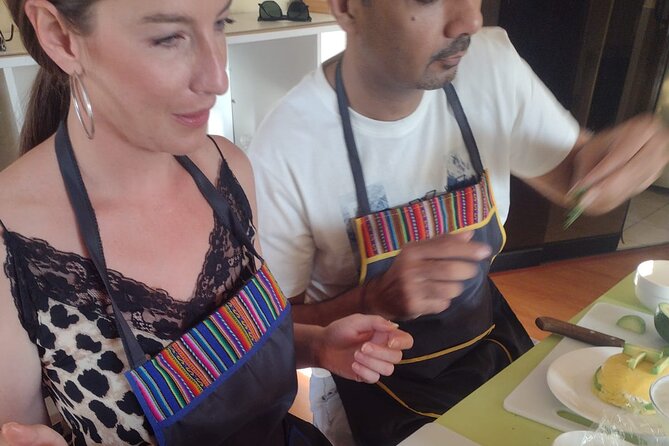
Cayma is useful for visitors who want a local cooking setting rather than a standard restaurant table. You are not simply served a plate and given a short explanation. You take part in preparing the food, then sit down to eat what your group has made.
The class lasts about three hours. That is long enough to cover several dishes without turning the session into a rushed demonstration. It also gives you time to ask questions, watch techniques, and enjoy the meal afterward.
Because the activity is private, the pace should suit your group better than a large public class. A couple can focus on learning together. A family can share tasks. Friends can divide the work and compare results. The private format also matters if you have food preferences or need the vegetarian substitutions.
More Food Tours and Cooking Classes in Arequipa
- Peruvian Cooking Experience in Arequipa
★ 5.0 · 173 reviews - Chaqchao Chocolate Making Workshop
★ 5.0 · 104 reviews - A 3-hour Guided Food Tour with 4 Iconic Restaurants of Arequipa
★ 4.5 · 96 reviews
Starting with a homemade Pisco Sour
The first drink is a passion fruit Sour. You shake your own Pisco Sour and learn about the background of Peru’s national cocktail.
This is a smart opening because it gets everyone involved at once. It is also more useful than simply receiving a prepared drink. You get to see the process and leave with a better sense of how the cocktail is made.
The passion fruit gives the drink a local flavor and a sharper fruit note than a plain version. Since the class includes the Pisco Sour, you do not need to pay extra for the drink that accompanies the meal.
I would take the cocktail portion seriously, even if you are mainly interested in food. It is one of the few parts of the experience that connects a recipe with a wider piece of Peruvian food culture. You also receive coffee or tea, snacks, and dinner as part of the package.
Causa limeña, Peru’s cold potato classic
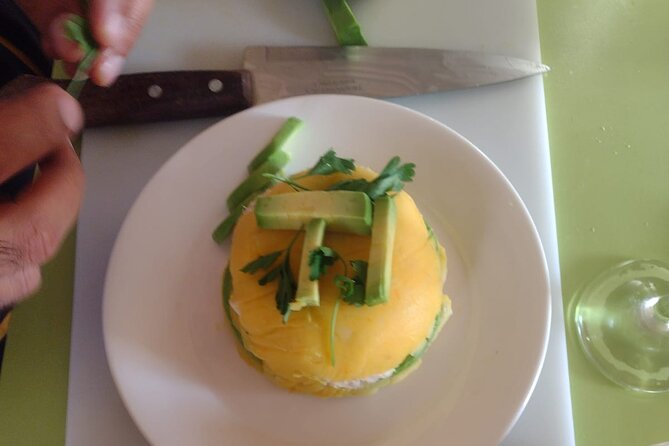
Next comes causa rellena, also called causa limeña in the sample menu. The dish is built around cold potato and is one of Peru’s most recognizable prepared foods.
The exact filling deserves attention. The menu description names causa rellena, while a guest account describes a cold potato and chicken pie, and another specifies causa with chicken. These details point to a chicken-filled version, but I would confirm the day’s preparation if you have dietary restrictions.
Causa is a good class dish because it teaches you that Peruvian food is not all about heat, stews, or grilled meat. Its appeal comes from the potato base, the filling, and the way the dish is arranged. You also get to work with a staple ingredient in a form that feels festive but remains approachable.
The cold preparation makes causa different from the ceviche that follows. You are learning two dishes with very different methods: one assembled and chilled, the other built around fresh fish and citrus. That contrast helps the class feel like a real meal rather than one recipe repeated in several forms.
A modern ceviche with avocado and sweet potato
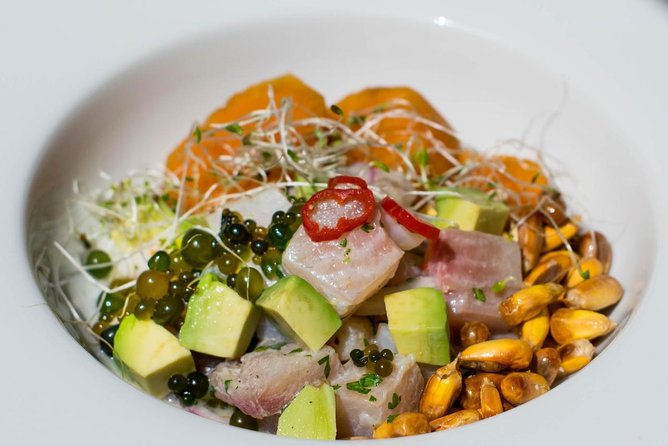
The main event is ceviche, prepared with a modern twist. The listed version uses sashimi-style fish, Peruvian avocados, and sweet potato.
Ceviche is a natural choice for a Peruvian cooking class. The dish depends on freshness, balance, and timing, so making it yourself gives you a better sense of how the ingredients work together. The sashimi-style presentation also gives the dish a cleaner, more contemporary look than a rustic bowl of mixed ingredients.
Peruvian avocado adds softness and richness. Sweet potato supplies a gentle sweetness and a contrasting texture. Together, those ingredients keep the fish and citrus from carrying the entire dish alone.
If you are hoping to learn one recipe you can repeat at home, ceviche is probably the most useful part of the class. The exact fish and local produce may not be easy to find everywhere, but the basic approach can guide your own version later.
The menu calls ceviche a main dish, while the sample menu lists both ceviche and causa as main items. In practical terms, expect a meal with several substantial courses rather than a single small tasting. The food descriptions and past meal accounts support that expectation.
More Colca Canyon trips:
- 2 day 1 night trek / Colca Canyon
★ 5.0 · 1,069 reviews - From Arequipa: Colca Canyon Full-Day Guided Tour with Meals
★ 4.5 · 982 reviews - Tour to the Salinas Lagoon and National Reserve in Arequipa
★ 4.5 · 548 reviews - From Arequipa: Sillar Route Trek
★ 4.2 · 461 reviews
Mango and local fruit for dessert
Dessert is a mango and exotic fruit parfait, made with local fruit and served in a more polished style.
This course gives the class a lighter finish after the potato and fish dishes. Mango adds sweetness and a soft texture, while the other fruits bring variety. The dessert also keeps the focus on ingredients from the region rather than switching to a generic cake or packaged sweet.
One account describes a fresh fruit dessert with mango, which fits the menu closely. It is a simple idea, but presentation matters here. A parfait turns fruit into a composed final course without burying it under heavy cream or pastry.
I like this choice for visitors who want to understand Peruvian produce as well as Peruvian recipes. The fruit course is less technical than the ceviche, but it shows how a few good ingredients can make a complete dessert.
What the private format feels like
This is not designed as a large group event. Only your own party takes part, which gives the session a more intimate tone.
The strongest personal detail comes from the way Marisa and her mother welcomed one group. Marisa was described as careful about preparation and unwilling to let standards slide. That can be a plus if you want clear instruction and proper results. It may feel more demanding if you prefer a loose, casual class where mistakes are simply brushed aside.
Another group had an interpreter because Marisa did not speak English. English is listed as an available language, but the actual arrangement may depend on who leads the session. I would ask in advance how communication will work, especially if you want detailed explanations of technique or ingredients.
The warm family setting is part of the value. You are not only learning recipes. You are sharing a meal with the people guiding the class, and one account specifically praised the sense of welcome and the shared meal afterward.
That personal contact also means the class may feel less polished than a cooking school with several instructors and formal workstations. For me, that is not automatically a weakness. It depends on what you want. If your priority is local contact and a relaxed meal, the home-style approach is appealing. If you want professional culinary training, this is probably not the right choice.
Vegetarian substitutions and menu questions
Vegetarian participants can join. Fish is replaced with sweet cucumber, described as a local fruit, and meat is replaced with mushrooms.
These substitutions are important because the central menu includes fish and may include chicken in the causa. Still, the available details only specify those replacements. If you have allergies, avoid certain ingredients, or follow a strict vegan diet, contact the provider before booking and ask for the full plan.
The menu wording is not perfectly consistent. One description calls the cause a causa rellena, the sample menu uses causa limeña, and the meal account refers to a chicken version. The ceviche is described in detail as sashimi-style fish with avocado and sweet potato, while the sample menu simply says ceviche. This is not a reason to reject the class, but it is a reason to confirm what your group will prepare.
The same advice applies to dessert. Mango and local fruits are clearly part of the plan, but the exact fruit selection is not specified. That is useful to know if you have a strong preference or intolerance.
Is $57 a fair price?
At $57 per person, the class is not the cheapest way to eat in Arequipa. You could certainly find a less expensive meal. The question is what you are paying for beyond the food.
The fee includes about three hours of instruction, the meal, a Pisco Sour, coffee or tea, and snacks. You also receive a private activity rather than joining an unknown group. If you are already planning to eat dinner, the price compares more favorably because the class replaces that meal while adding hands-on instruction.
I see the best value for couples, families, and small groups who enjoy food enough to make the process part of the day. The class is less useful for someone who wants only a quick tasting or who would rather spend $57 on several restaurant dishes.
Transportation is not included. Public transportation is nearby, but you are responsible for reaching the start point. Since the meeting point and kitchen address are presented separately, allow time to verify the exact arrival location.
The class is often reserved about seven days ahead. That is not a strict booking rule, but it is a useful planning clue. If you have a fixed schedule in Arequipa, booking roughly a week early is sensible.
Choosing the right time
The morning session runs from 10:00 to 13:00. This works well if you want a cooking activity before an afternoon of sightseeing, and the meal can function as lunch.
The afternoon session runs from 14:30 to 17:30. This may fit best between other plans, although you should consider how the meal timing fits your own schedule.
The evening session runs from 18:00 to 21:00. Since dinner is included, this is the most natural choice if you want the class to replace an evening restaurant reservation.
You should select the time based on more than convenience. Ceviche and a full meal require attention, so you do not want to squeeze the class between two fixed appointments. Give yourself room to arrive at the correct meeting point and stay through the shared meal.
Who should book this class?
I would recommend it to anyone who wants a personal introduction to Peruvian food and likes to participate rather than watch. It suits first-time visitors, couples, families, and private groups who want an activity with a meal built in.
It is also a good match for anyone curious about ceviche but unsure how it is prepared. The class gives that dish a central role and pairs it with causa, fruit, and a national cocktail.
Vegetarians have a clear starting point for substitutions, though they should confirm the final menu before arrival. English speakers should also confirm who will interpret or lead the class, since one past session used an interpreter.
I would skip it if you want a formal professional kitchen course, a very broad menu, or included transportation. The three-hour format covers a compact selection of dishes rather than a full survey of Peruvian cooking.
Should you book the Arequipa cooking class?
Book it if you want to spend part of your Arequipa visit around a table, learning a few dishes and sharing the result with a local host. The best parts are the private setting, the family welcome associated with Marisa and her mother, and the strong menu of ceviche, causa, Pisco Sour, and fruit dessert.
Before paying, confirm the meeting location, the language arrangement, and the exact cause filling. With those points clear, $57 is a reasonable price for a private three-hour activity that includes both instruction and dinner.
FAQ
Where does the cooking class take place?
The kitchen studio is listed at Los Portales de Cayma, Pasaje Larilari i-3. The start point is also listed as Pancho Fierro 131, Arequipa 04017, Peru, so confirm the exact arrival location before the class.
How long does the experience last?
The class lasts approximately three hours.
What time can I take the class?
You can choose from 10:00 to 13:00, 14:30 to 17:30, or 18:00 to 21:00.
Is the class private?
Yes. Only your group participates in the activity.
Is the class offered in English?
English is listed as an available language. One past group had an interpreter because Marisa did not speak English, so you may wish to confirm the language arrangements before booking.
What food will I prepare?
The planned menu includes a Pisco Sour, causa rellena or causa limeña, ceviche with fish, Peruvian avocado and sweet potato, and a mango and local-fruit parfait.
Are vegetarian options available?
Yes. Fish can be replaced with sweet cucumber, and meat can be replaced with mushrooms.
What is included in the price?
The price includes dinner, a Pisco Sour, coffee or tea, and snacks.
Can I cancel for a full refund?
Yes. You can cancel at least 24 hours before the local start time for a full refund. Cancellations or changes made less than 24 hours before the start are not accepted for a refund.
Just added in Arequipa
- Sillar Route★ 5.0 · 4 reviews
- Salinas Lagoon + Mini Volcano DE Lojen★ 5.0 · 9 reviews
- 3-Day Colca Canyon trek with Professional Guide★ 5.0 · 40 reviews
- Full Day Tour To The Salt Lake Salinas in Arequipa★ 4.5 · 34 reviews
- Walking City tour including the Monastery of Santa Catalina★ 5.0 · 6 reviews
- Trekking, Waterfalls and Thermal Baths★ 4.5 · 47 reviews
- Downhill Tour – Mountain Bike in Arequipa★ 3.5 · 5 reviews
- 2 Days 1 Night trekking Through Colca Canyon, Private room★ 5.0 · 16 reviews
Colca Canyon and Arequipa Tours, compared.

From Arequipa: Colca Canyon Full-Day Guided Tour with Meals
Read our review →
Tour to the Salinas Lagoon and National Reserve in Arequipa
Read our review →

Rafting Arequipa – Chili River Canoeing – Cusipata Rafting Arequipa
Read our review →
Chili River White Water Rafting with Hotel Pickup
Read our review →