
Reviewed · SACRED VALLEY TOURS
Sacred Valley Textile Workshop – Dyeing & Weaving in Cusco
Bring your hands, not just your camera. This full-day textile workshop takes you from Cusco into the Sacred Valley to gather plants, dye alpaca yarn, and learn traditional weaving beside Andean women artisans. I especially like the hands-on format and the chance to share lunch with the weaving family rather than simply watch a demonstration.
I also like the way the day connects craft with daily life, including Quechua customs, medicinal plants, traditional clothing, music, and food. The main drawback is the drive: allow roughly an hour to an hour and a half each way, so this is a true full-day outing, not a quick Cusco activity.
In This Review
- Key Points at a Glance
- What This Workshop Really Offers
- The 8:30 a.m. Pickup and Countryside Drive
- Meeting Ruth and the Weaving Family
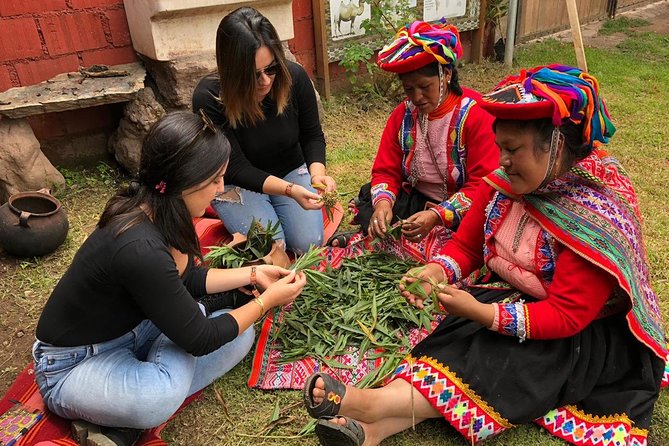
- Gathering Plants for Natural Dye
- Preparing, Spinning, and Dyeing Alpaca Yarn
- Lunch, Conversation, and a Taste of Home Life
- The Backstrap Loom Is Harder Than It Looks
- Traditional Clothing, Music, and the Shop
- Is the $420 Price Fair?
- Who Will Enjoy This Day Most?
- Practical Details Before You Book
- Should You Book the Sacred Valley Textile Workshop?
- FAQ
- How much does the textile workshop cost?
- How long does the experience last?
- What time does the workshop begin?
- Is hotel pickup included?
- Is the workshop private?
- What activities are included?
- Is lunch included?
- What happens if the weather is bad?
Key Points at a Glance
- Gather your own dye materials: Walk into the surrounding countryside to collect leaves, herbs, and other natural materials used for color and medicine.
- Work with alpaca yarn: Learn to spin wool, prepare a dye bath, and color yarn using traditional methods.
- Use a backstrap loom: Make a bracelet, bookmark, headband, or similar small textile with patient guidance from master weavers.
- Meet the Pimentel family and local artisans: Ruth Pimentel and other experienced weavers share techniques passed through Andean families.
- Enjoy a full cultural day: Lunch, snacks, conversation, Quechua words, traditional clothing, and dancing are part of the experience.
- Plan for the road: Private hotel pickup starts at 8:30 a.m., but the countryside drive adds real time to the day.
What This Workshop Really Offers
Many textile activities in Peru involve watching an artisan work, hearing a short explanation, and then browsing a shop. This one asks you to do the slow parts yourself. You collect plant material, prepare wool, work with dye, handle the loom, and take home something made with your own hands.
That distinction matters. You quickly learn that Andean weaving is not a simple souvenir craft. Even a narrow bracelet or headband demands focus, steady fingers, and repeated correction. The finished piece may be small, but it gives you a clearer respect for the large, intricate textiles produced by professional weavers.
The workshop is presented as a private experience at an atelier near Cusco, with instruction from Ruth Pimentel, described as Peru’s only UNESCO-awarded Indigenous master weaver. Other master weavers from communities around the Sacred Valley also take part. Names associated with the teaching team include Delia, Nayda, Marilus, Selena, Julia, Maria, Dalia, Martina, and Ruth, although the exact staff lineup can vary.
English support is provided through a guide or translator. Nayda receives especially warm praise for her patient explanations and friendly manner, while Edwin Pimentel has been involved in interpreting the family’s traditions and guiding the day. If you do not speak Spanish, you should still be able to follow the process and ask questions.
More Sacred Valley trips:
- From Cusco: Moray, Maras Salt Mines & Chinchero Weavers Tour
★ 4.8 · 1,925 reviews - 2-Day Tour: Sacred Valley and Machu Picchu by Train
★ 5.0 · 1,127 reviews - Cusco: Sacred Valley, Pisac, Ollantaytambo, Salt Mines Moray
★ 4.6 · 1,058 reviews
The 8:30 a.m. Pickup and Countryside Drive
The day begins with hotel pickup in Cusco at 8:30 a.m. Private transport makes the morning easy, especially if you are staying in the city and do not want to arrange a taxi, bus, or separate driver.
The drive toward the Sacred Valley is part of the experience. You leave the urban center and pass through countryside, with opportunities to stop for photographs. Several people have found the scenery enjoyable enough to treat the ride as an opening chapter rather than dead time.
Still, check your expectations. The workshop location is not just around the corner from central Cusco. The trip can take about an hour and a half, and the entire outing may run longer than the advertised eight hours once pickup and return are counted. If you have a late afternoon train, another tour, or a fixed dinner reservation, leave plenty of space.
The ride can also make this a gentle first or second day activity in Cusco. The schedule is unhurried compared with a ruin-heavy sightseeing day, and one person found it a good way to get used to the altitude. You will still be at high elevation, of course, but most of the day involves conversation and seated handwork rather than strenuous walking.
Meeting Ruth and the Weaving Family
At the workshop, the welcome is personal and family-centered. Ruth Pimentel introduces the textile tradition, her family’s role in preserving it, and the importance of Andean weaving to local communities.
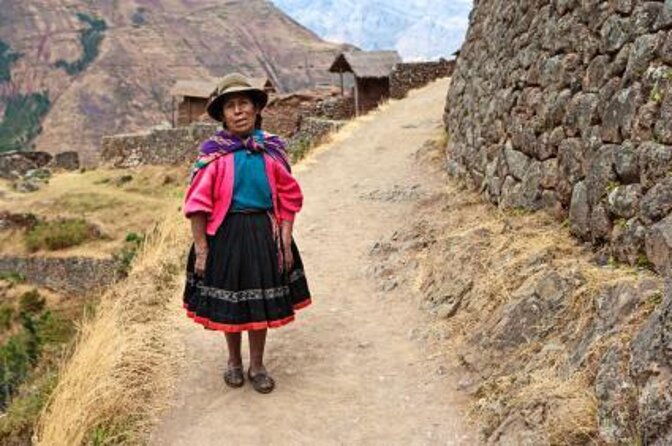
The strongest part of this introduction is its connection to living people. You are not only hearing about an ancient technique in the abstract. You are meeting women who still spin, dye, and weave as part of their working knowledge. They explain the patience behind the patterns and show how small motions become a finished design.
That human contact is also why this workshop feels different from a standard shopping stop. You can browse handmade goods later, but the main activity comes first. You have already spent time learning from the artisans and sharing food with them, so a purchase feels more like direct support than a forced sales pitch.
The experience includes a social-impact element focused on protecting Andean textile traditions and supporting artisan families. You should still approach the setting with courtesy. Ask before photographing people, listen carefully, and remember that the workshop is a working cultural space, not a staged photo set.
Gathering Plants for Natural Dye
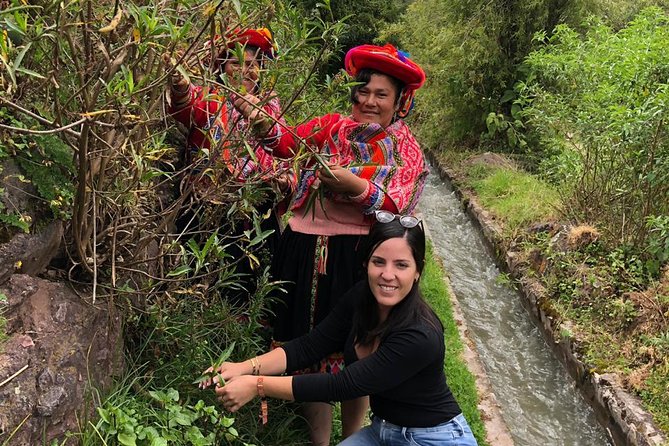
One of the most unusual parts of the day is the walk to collect leaves, herbs, and other natural materials. This is not a decorative side trip. The plants become part of the dyeing lesson, and some are also explained in connection with local medicinal knowledge.
You may gather material for a dye bath, learn which plants produce particular colors, and hear how the community uses certain herbs. The exact plants and shades depend on the season and what is available that day, so do not expect a fixed color menu.
This section gives the workshop its strongest sense of place. A color that looks ordinary in a finished textile becomes more interesting when you learn where it came from and how much preparation it requires. The process also makes clear that traditional textile work depends on close attention to the natural world.
Wear shoes suitable for a short walk outside and bring sun protection. The supplied details do not specify the distance or terrain, so you should be ready for uneven ground rather than assuming every step takes place indoors.
More things to do in Cusco:
- Classic Inca Trail Trek 4D/3N to Machu Picchu (Group Service)
★ 5.0 · 8,653 reviews - Cusco: Rainbow Mountain and Red Valley Day Trip with Meals
★ 4.9 · 4,893 reviews - Machu Picchu: 4-Day Inca Trail Trek with Panoramic Train Ride
★ 5.0 · 4,568 reviews - Salkantay Classic Trek 5 Days from Cusco
★ 5.0 · 4,062 reviews
Preparing, Spinning, and Dyeing Alpaca Yarn
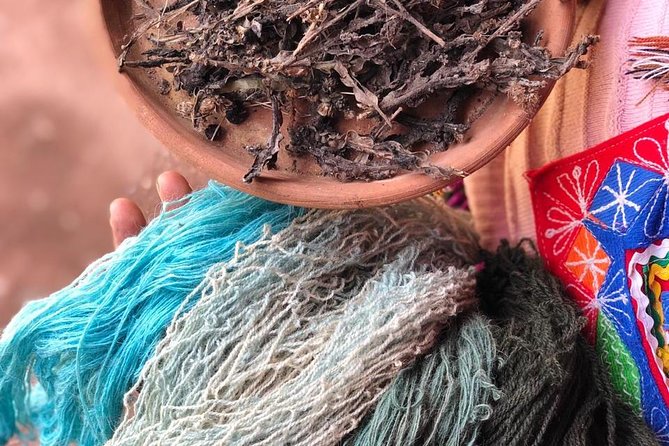
The workshop may include turning alpaca wool into yarn, spinning it, winding it into balls, and preparing it for coloring. Some sessions focus more on dyeing and weaving, while others include a fuller sequence from raw wool onward.
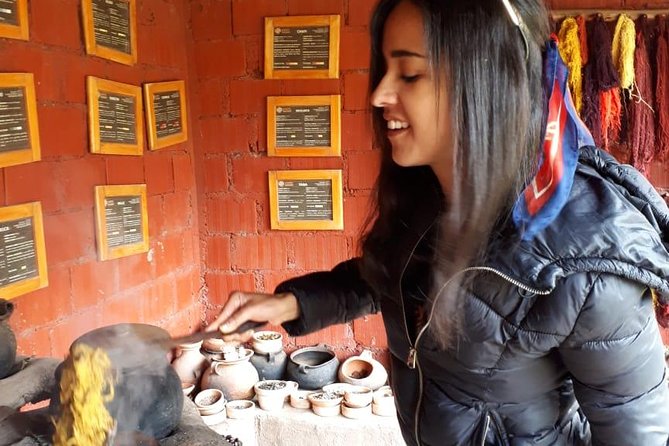
The instructors show you how to prepare the natural materials and place the yarn into the dye. You then see the color develop through a process that takes more care than simply dropping thread into a bucket. The timing, preparation, and handling all affect the result.
You may work with premium baby-alpaca yarn, and several participants have taken home yarn they personally dyed. That is a useful souvenir because it preserves the process, not just the final look. A small ball of colored wool can remind you of the plants, the countryside, and the people who explained each stage.
The pace is friendly, but this is not a polished craft class designed for instant perfection. You may need help with the spinning or dyeing, and that is part of the point. The instructors are patient, and mistakes become a practical lesson in why professional weaving takes years to master.
Lunch, Conversation, and a Taste of Home Life
Lunch is included, along with coffee or tea. The meal is repeatedly praised for being fresh, generous, and home-cooked, and it is served as a shared part of the day rather than as a rushed restaurant stop.
The food can include local produce such as pineapple, passion fruit, papaya, avocado, and yucca. One account also mentions guinea pig during a scenic stop, but that should not be treated as a standard part of the workshop menu. The reliable detail is the included lunch and hot drink.
This meal may be the most important pause in the schedule. You sit with the instructors and guide, exchange stories, and learn about where everyone comes from. Conversation helps turn a technical lesson into a personal meeting.
The food also gives you a chance to slow down. The dyeing and weaving require concentration, and a shared lunch creates a natural break before the loom work begins. If you have dietary restrictions, ask the operator in advance, since the supplied information does not specify alternative menus.
The Backstrap Loom Is Harder Than It Looks
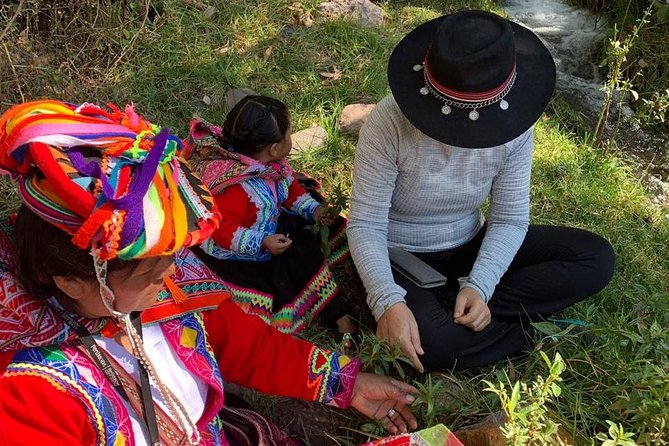
After lunch, the central challenge begins. The instructors show you how to set up and use a backstrap loom, a traditional method passed through generations of Andean women.
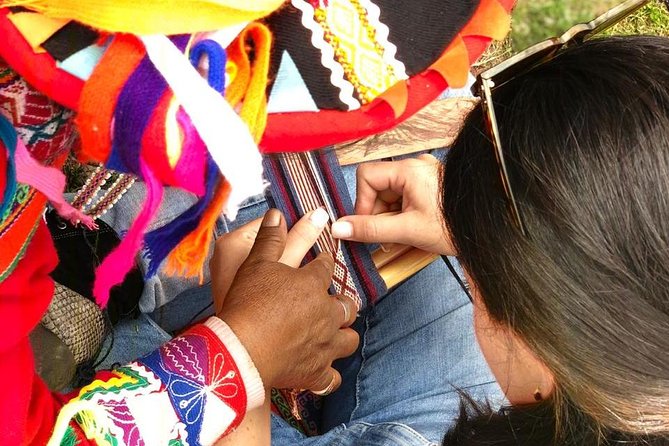
The loom is compact, but the technique is not simple. You must manage tension, keep track of the colored threads, and repeat small movements in the correct order. The artisans make the work look fast and effortless because they have practiced it for years. Your first attempt will likely be slower and less tidy.
That is where the lesson becomes valuable. You gain a practical sense of how much time and skill go into the textiles sold in Peru’s markets and shops. A narrow woven piece can occupy you for quite a while, even with someone guiding your hands.
Most sessions produce a small item such as a bracelet, bookmark, headband, or bincha. The exact choice may depend on the group and the workshop plan. Some people make their piece largely by themselves, while others receive frequent help. Either way, you take home an object with a personal connection to the day.
Be ready to sit on the floor for a few hours. This detail matters for anyone with knee, hip, or back problems. The workshop is physically gentle, but the seated position can be demanding, and the activity does not resemble a brief standing demonstration.
Traditional Clothing, Music, and the Shop
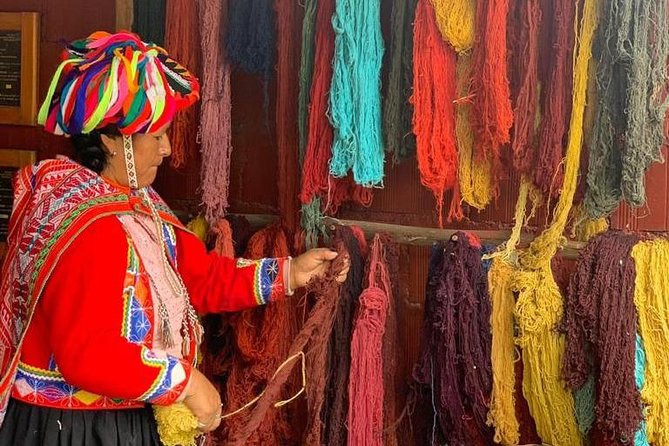
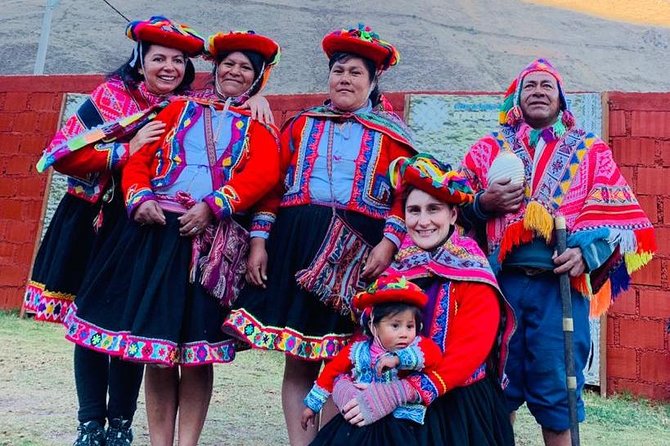
Once the handwork is complete, the day may include a lesson about traditional clothing. You may have the chance to dress in local garments, learn what they represent, and join the group for a dance.
The dancing is informal and cheerful. It gives the day a lift after the quiet concentration of weaving, and it lets you enjoy the social side of the gathering. You do not need dance experience, and nobody expects a polished performance.
There is also time to look through the workshop shop. Prices have been described as more reasonable than expected, with handmade products available directly from the women who made them. Buying is optional, but this is a sensible place to purchase textiles if you want your money to reach the artisans more directly.
The key is to shop after participating. You will have a better eye for the labor involved, and you can ask about materials, patterns, and production. The experience gives context to every item on the shelf.
Is the $420 Price Fair?
At $420 per person, this is expensive compared with a basic market visit or a short weaving demonstration. The price needs to be judged as a full private day, not as the cost of a bracelet-making class.
You are paying for private transport from Cusco, a guide or translator, instruction from master weavers, hands-on materials, lunch, coffee or tea, and a full schedule that can include collecting plants, spinning, dyeing, weaving, clothing, and music. You also avoid arranging transport and meals separately.
The value is strongest for people who care about textiles, traditional crafts, social impact, or personal contact with local families. A textile designer, hobby weaver, or anyone who enjoys making things by hand may find the price well justified.
For a visitor who only wants to see a few colorful Peruvian textiles, the cost may be harder to defend. You could spend less at a market or cultural center. This workshop earns its price through time, instruction, transport, and participation, not through the size of the item you take home.
The private format also matters for couples, families, and solo participants. The available information says only your group will participate, although one experience included another guest. Group arrangements may vary, so confirm the format if privacy is especially important to you.
Who Will Enjoy This Day Most?
I would recommend the workshop to you if you:
- Like making things with your hands
- Want cultural contact beyond ruins and major sights
- Have an interest in alpaca wool, natural dyes, or weaving
- Prefer a slower day with conversation and countryside views
- Are happy to sit on the floor and accept help while learning
- Want to support local artisans through direct participation and shopping
Families can enjoy it because the activity is creative and social, though younger children may need help with the fine handwork. Solo visitors should not worry about feeling awkward. The teaching team has welcomed solo participants warmly and included them in meals, conversation, and dancing.
It is less suitable if you have limited time in Cusco, dislike long drives, or need a tightly timed itinerary. It is also not ideal if you want a finished, professional-looking textile without effort. The charm lies in learning, not in producing a flawless souvenir.
The workshop is described as suitable for most people, and service animals are allowed. It is near public transportation, but the included private pickup is the simpler choice.
Practical Details Before You Book
The experience begins at 8:30 a.m. and lasts about eight hours, not counting the possibility of extended transport time. Plan for a full day from your Cusco hotel.
Confirmation is provided at booking. Free cancellation is available up to 24 hours before the start time for a full refund. Changes or cancellations inside that 24-hour window are not accepted for a refund, and cut-off times follow local time.
Good weather is required. If poor weather forces cancellation, you will be offered another date or a full refund. Since part of the day involves collecting plants outdoors, bring sun protection and clothing suitable for changing conditions.
The workshop includes lunch and coffee or tea, but the supplied details do not specify every meal choice or all items included in the final package. If you have allergies, mobility concerns, or a strong preference for the type of textile you make, contact Peru Private Tours before booking.
Should You Book the Sacred Valley Textile Workshop?
Book it if you want to understand Andean weaving by doing it, not just looking at it. The day’s strongest features are the patient instruction, the walk to gather natural dye materials, the shared meal, and the chance to meet the women who keep these methods in use.
Skip it if you want a short activity close to central Cusco or if the $420 price is beyond your budget. The drive is long, the weaving can be challenging, and you may spend several hours seated on the floor.
For the right person, this is one of the most meaningful cultural activities available around Cusco. You leave with a small textile, perhaps dyed yarn, and a much better understanding of the work behind Peru’s famous woven designs. Just book it as a full day, wear practical clothing, and arrive ready to learn slowly.
FAQ
How much does the textile workshop cost?
The listed price is $420 per person.
How long does the experience last?
The workshop lasts approximately eight hours. With hotel pickup and the return drive, you should plan for most of the day.
What time does the workshop begin?
The start time is 8:30 a.m.
Is hotel pickup included?
Hotel pickup by private transport is offered for an easy start in Cusco.
Is the workshop private?
Yes. It is described as a private tour or activity for your group only. One experience included another guest, so confirm the exact group arrangement if needed.
What activities are included?
You may collect natural dye materials, prepare and dye alpaca yarn, learn spinning techniques, use a backstrap loom, and create a small textile item. The day can also include traditional clothing, dancing, conversation, and shopping.
Is lunch included?
Yes. Lunch and coffee or tea are included.
What happens if the weather is bad?
The experience requires good weather. If it is canceled because of poor conditions, you will be offered another date or a full refund.
Just added in Cusco
- Cusco Private Transportation for 2026★ 5.0 · 4 reviews
- Private Transfer from Airport to Hotel in the City of Cusco★ 4.0 · 5 reviews
- Best Cusco walking tour: dinner street food tasting★ 4.5 · 11 reviews
- Private Tour to Pisac Market and Pisac Ruins★ 5.0 · 4 reviews
- Machu Picchu Day Trip With Panoramic Train from Cusco★ 5.0 · 10 reviews
- Sacred Valley of the Incas Tour★ 5.0 · 12 reviews
- Private Tour of the Mountain of Colours by Quad★ 5.0 · 7 reviews
- Sacred Valley Private Tour from Cusco, Guide and Driver only★ 5.0 · 4 reviews
Sacred Valley Tours, compared.
From Cusco: Sacred Valley & Maras Salt Mines Tour with Lunch
Read our review →
From Cusco: Moray, Maras Salt Mines & Chinchero Weavers Tour
Read our review →
2-Day Tour: Sacred Valley and Machu Picchu by Train
Read our review →
Sacred Valley, Pisac, Ollantaytambo, Salt Mines Moray
Read our review →
Chinchero,Moray & Salt Mines drop-off in Ollantaytambo
Read our review →
Sacred Valley and Maras Moray Tour with Full Day Buffet Lunch
Read our review →

Browse the lists this tour appears in