Reviewed · INCA TRAIL AND SALKANTAY TREKS
2 Day Trek Including Transfer to Puno / Colca Canyon
Wake before dawn for one huge canyon day. This two-day trip combines a demanding Colca Canyon hike with a useful one-way transfer to Puno, so you get mountain scenery and avoid returning to Arequipa first. I like the chance to watch Andean condors at Condor’s Cross, and I like that the small group, capped at 12 people, allows more contact with the guide.
The main catch is the physical effort. Day one drops roughly 1,200 meters into the canyon, while day two climbs about 950 to 1,200 meters before breakfast. The accommodation and food are basic, and the $179 price may be poor value if you can arrange the same route locally for much less.
In This Review
- Key points to know before you book
- What this two-day route really offers
- The 3:00 am start from Arequipa
- Chivay breakfast and Plaza de Armas
- Condor’s Cross and the canyon rim
- Three hours downhill into Colca Canyon
- Cosñirhua, Malata, and the Sangalle oasis
- The pre-dawn climb back to Cabanaconde
- Chivay, terraces, and the optional hot springs
- The transfer through Pampa Cañahuas
- Food, luggage, and comfort
- Is $179 a fair price?
- Who should choose this trek?
- Practical details before booking
- Should you book the Colca Canyon trek to Puno?
- FAQ
- How long does the tour last?
- What time does pickup begin?
- Where does the tour start?
- Where does the tour end?
- How many people can join the group?
- How difficult is the hike?
- Where do you sleep?
- Is food included?
- Are the hot springs included?
- Is the Colca Canyon entrance fee included?
- Are luggage transfers included?
- What happens if bad weather cancels the tour?
Key points to know before you book
- The canyon trek is the main event: Expect about three hours downhill on day one and about three hours uphill by torchlight on day two.
- Sangalle gives you a warm-water reward: The oasis has a pool, dinner, and a simple bungalow stay after the long descent.
- Condor’s Cross is an early highlight: The viewpoint is known for Andean condors with wingspans exceeding three meters.
- Your luggage can travel separately: This is useful because a heavy backpack makes the uphill return much harder.
- Puno transfer adds real value: You finish in central Puno at about 6:30 pm instead of backtracking to Arequipa.
- Budget for extra fees: The Colca Canyon entrance is PEN 70, the Chacapi hot springs cost PEN 15, and the final lunch costs PEN 30.
What this two-day route really offers
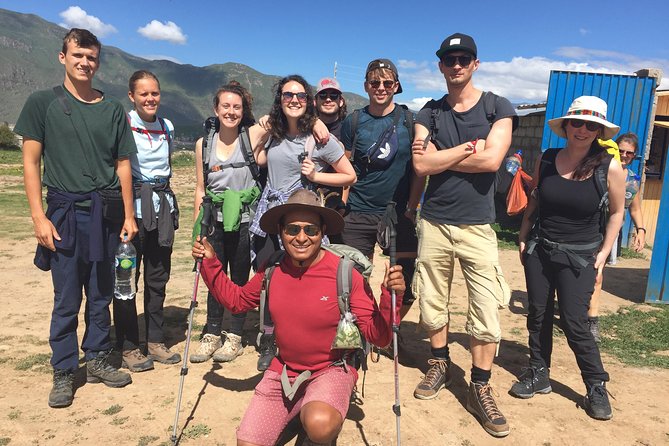
This is not a gentle sightseeing trip with a short walk added on. It is a compact mountain journey that begins with a long drive, drops into one of the world’s great canyon systems, spends a night at the bottom, and climbs back out before sunrise.
The practical appeal is the route. You start in Arequipa and finish in Puno, two major stops on a southern Peru itinerary. That saves you from returning to Arequipa and finding another bus or tour onward to Lake Titicaca.
The small group also matters. With no more than 12 people, you should have a better chance to hear explanations, ask for help, and keep the group moving at a manageable pace. Still, a small group does not make the walk easy. The trail remains steep, sunny, and physically demanding.
More hikes and treks in Arequipa:
- 2 day 1 night trek / Colca Canyon
★ 5.0 · 1,069 reviews - From Arequipa: Sillar Route Trek
★ 4.2 · 461 reviews - Colca Canyon Trek 3 Day 2 Night
★ 5.0 · 328 reviews
The 3:00 am start from Arequipa
Pickup begins around 3:00 to 3:30 am from your hotel or hostel in Arequipa. You then face roughly a six-hour drive toward Cabanaconde, with breakfast in Chivay along the way.
That early departure is necessary if you want to reach Condor’s Cross and complete the long descent on day one. It also makes the first morning tiring before your boots even hit the trail. I would treat this as a serious hiking day, not as a relaxed transfer with a walk attached.
The drive takes you through high mountain country before reaching the canyon area. You should bring warm layers for the early hours, along with sun protection for the hotter sections later in the day. The tour requires a moderate level of physical fitness, and that description is fair.
Chivay breakfast and Plaza de Armas
The group reaches Chivay at about 7:30 am for breakfast. The town is known for its traditional houses and colorful surroundings, and the stop gives you a chance to eat before the main viewpoints and trail.
You spend about 30 minutes around the Plaza de Armas de Chivay. This is a short stop, so do not expect a full town visit. Its value is practical as much as scenic: you can have breakfast, stretch your legs, and get ready for the canyon.
Breakfast is included on both mornings according to the tour details. The meals are filling enough for the schedule, but the food should be viewed as simple trekking fare rather than a culinary reason to book.
Condor’s Cross and the canyon rim
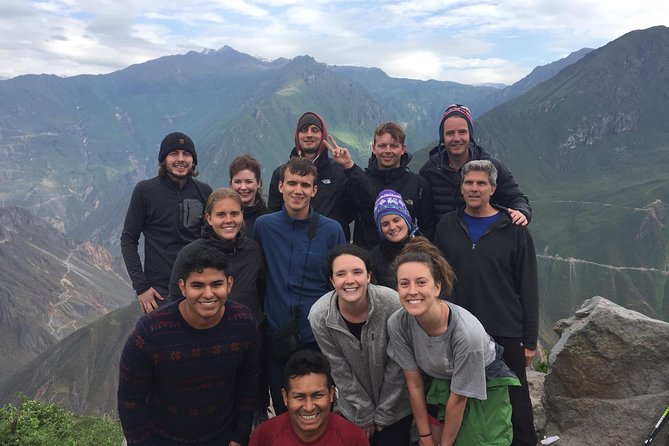
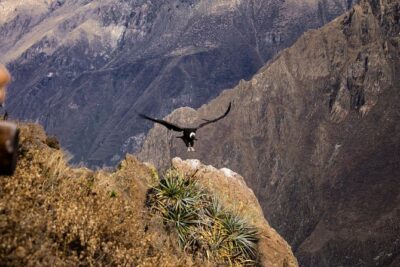
Condor’s Cross is one of the strongest parts of the trip. The viewpoint is known as one of the best places in South America to watch Andean condors, and the birds can reach a wingspan of more than three meters.
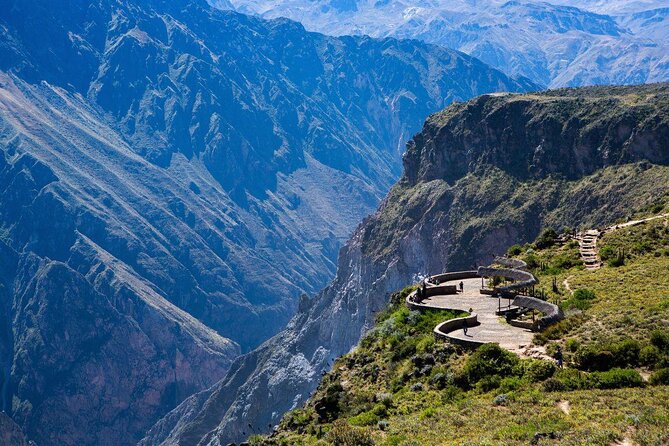
You have about 30 minutes at the viewpoint. That is enough time for a good look if the birds are active, but wildlife never follows a timetable. The stop also gives you a broad view into the canyon before you leave the rim and begin the steep walk down.
I like the way this visit sets up the hike. You first see the canyon from above, then spend the rest of the day walking through it. The scale becomes easier to understand once you can see the trail cutting down the walls and toward the villages below.
More Colca Canyon trips:
- From Arequipa: Colca Canyon Full-Day Guided Tour with Meals
★ 4.5 · 982 reviews - Tour to the Salinas Lagoon and National Reserve in Arequipa
★ 4.5 · 548 reviews - Colca Full Day Tour
★ 4.5 · 429 reviews - Rafting Arequipa – Chili River Canoeing – Cusipata Rafting Arequipa
★ 5.0 · 332 reviews
Three hours downhill into Colca Canyon
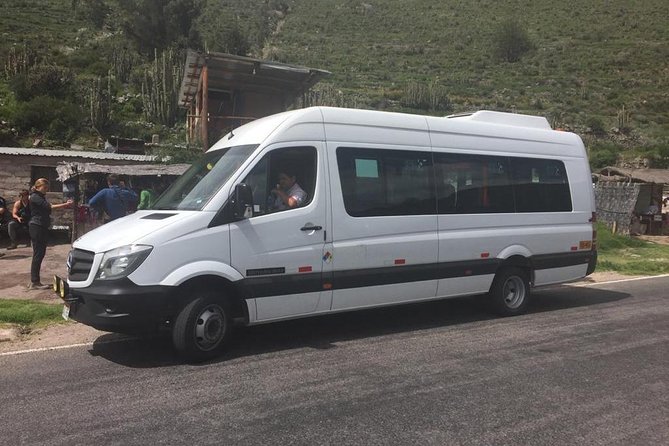
After Condor’s Cross, the vehicle drives about 20 minutes to the trailhead. From roughly 3,300 meters, you hike downhill for around three hours toward San Juan de Chuccho at about 2,100 meters.
Downhill walking sounds easy until you spend several hours doing it. The trail can put plenty of strain on your knees, especially under strong sun. Good shoes and trekking poles would be sensible, although poles are not listed as included.
San Juan de Chuccho offers lunch and a rest break. The village has vegetation and fruit trees, which makes it feel very different from the dry upper canyon. A home-cooked lunch with fresh natural juices is one of the more appealing food moments described for this route.
This section rewards patience. You are not rushing from one photo stop to another. You are moving through changing altitude and vegetation, with small villages providing a human scale to the huge canyon walls.
Cosñirhua, Malata, and the Sangalle oasis
After lunch, the trail continues through the small communities of Cosñirhua and Malata. Then you descend farther into the canyon toward Sangalle, an oasis village at about 1,900 meters.
The total first-day trek takes around 11 hours from the morning departure to arrival at the oasis. The group is expected to reach Sangalle at about 5:00 pm, which leaves little room for a slow pace or long unscheduled stops.
Sangalle is the payoff. You can use the warm swimming pool, relax after the descent, eat dinner, and sleep in a bungalow at Cielo Azul Lodge or a similar basic oasis accommodation. The pool sounds especially welcome after a day spent walking downhill in the sun.
Keep your expectations modest. The accommodation is simple, and one account described the oasis ecolodge as shabby but acceptable for one night. Hot water may not be available, and the rooms offer the basics rather than hotel comfort.
That is not necessarily a flaw in this setting. Sangalle is reached by a strenuous trail inside the canyon, not by a normal city road. Still, you should know that the warm pool and setting are the attractions, not polished rooms or dependable creature comforts.
The pre-dawn climb back to Cabanaconde
Day two begins around 5:00 am. You climb for approximately three hours toward Cabanaconde, using torch lights as the group starts uphill in the dark.
This is the hardest part for many people. The climb gains roughly 950 meters, with some descriptions placing the total gain closer to 1,200 meters. Either way, you should expect a serious uphill effort before breakfast.
There is one reward for the early start: sunrise views as you climb. The changing light can make the canyon feel completely different from the previous afternoon. You will also appreciate carrying only a light daypack if the operator transports your main luggage.
Do not overpack. A heavy bag turns this section into a punishment. Take water, a warm layer, sun protection, and only the essentials you need during the walk. The basic accommodation and early departure mean you should organize your things the night before.
Once you reach Cabanaconde, breakfast is served. The town is also the point where the vehicle takes over again, allowing your legs to recover while you continue toward Chivay.
Chivay, terraces, and the optional hot springs
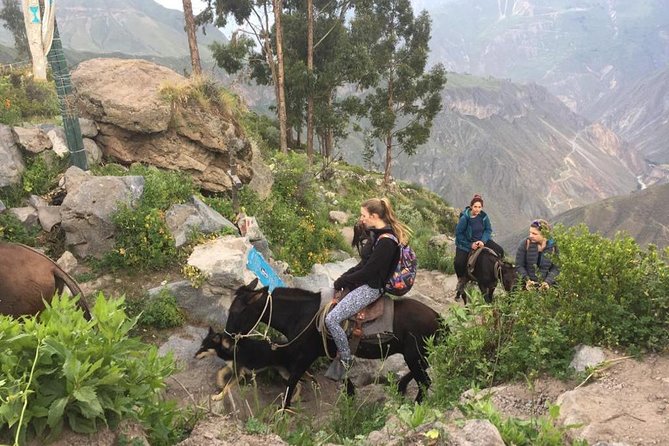
The drive from Cabanaconde to Chivay includes views of pre-Inca terraces, archaeological ruins, and colonial towns. These sights add useful context to the canyon region, showing that the area is not only about dramatic rock walls and condors.
Around noon, you reach the Chacapi hot springs near Chivay. Entry costs PEN 15 and is not included. The pools range from about 30°C to 60°C, so you can choose a warmer or cooler pool depending on what feels right after the climb.
I see the hot springs as a good optional extra, not an essential part of the trip. After three hours uphill, soaking your legs can be a welcome treat. But if you would rather eat, change clothes, or simply rest, skipping the springs is perfectly reasonable.
A typical local lunch is available in Chivay, usually as a buffet costing PEN 30. It is not included in the tour price. This is another small expense to plan for, especially because you will have already used plenty of energy on the climb.
The transfer through Pampa Cañahuas
In the afternoon, the trip continues toward Puno. The route descends from about 4,830 meters to around 2,325 meters and passes through the Salinas y Aguada Blanca National Reserve.
At Pampa Cañahuas, you stop to see volcanic scenery and South American camelids. You may see alpacas, llamas, vicuñas, and guanacos. The formal stop is listed as about 15 minutes, but the surrounding views and animals may remain visible for more than an hour as you travel through the reserve.
This transfer is one of the best reasons to choose this particular tour instead of a simple return trip to Arequipa. You turn a long travel day into a scenic continuation of the journey. The vehicle may require a bus change, so keep your valuables and essential items with you rather than packed away.
Arrival in Puno is scheduled for about 6:30 pm. Drop-off is available at hotels or hostels in the city center. If you are staying outside the center, confirm the final drop-off arrangement before booking.
Food, luggage, and comfort
The package includes dinner, lunch, and two breakfasts. The included meals make the trip easier to budget, but food quality is best described as basic. One meal in a local family home received particular praise for its homemade flavor and fresh juices.
Bring snacks anyway. The first day starts very early and includes a long drive before the hike. You may also want extra water and something easy to eat during the trail sections.
Luggage handling is a real convenience. The main bags can be transported while you hike, so you do not need to carry everything down to Sangalle and back up to Cabanaconde. Still, pack a small overnight bag with clothing, toiletries, a headlamp or torch, and anything you cannot do without.
The accommodation is functional rather than comfortable. Expect a simple bungalow and limited facilities. If you need a private bathroom, hot water, or polished lodging, this route may feel too rough.
Is $179 a fair price?
At $179 per person, the price includes the Arequipa pickup, transport to the canyon, the guided trek, meals, one night of accommodation, and the transfer from Chivay to Puno. Taken together, that is a useful package, especially if you value having the entire connection arranged.
The strongest value is the final transfer. If you already need to travel from Arequipa to Puno, combining transport with the canyon trek saves time and removes a piece of planning.
You should also add the compulsory Colca Canyon entrance fee of PEN 70, plus PEN 15 for the hot springs if you go and PEN 30 for the final lunch. Those extras are not large individually, but they make the real cost higher than the advertised figure.
There is one important price warning. A booking account reported that people on the same departure had paid less than half by arranging the trip through a local Arequipa office. I cannot guarantee that every local quote matches the same service, meals, lodging, or transfer, but I would compare prices before paying online.
Ask what is included, confirm the Puno transfer, and check the accommodation name. Online convenience may be worth something, but not if the difference is several times the local price.
Who should choose this trek?
I would recommend this for a reasonably fit person who wants a close look at Colca Canyon and needs to reach Puno afterward. It suits you if you accept early starts, basic lodging, long vehicle rides, and a steep uphill climb.
It is a poor match if you want a restful holiday, dislike hiking downhill, or have trouble with long climbs. The second morning begins before sunrise, and the physical challenge arrives before breakfast.
The route also works well for someone who wants more than a quick condor viewpoint. You see the canyon from above, walk through its villages and lower sections, spend a night at the Sangalle oasis, and return by a different route through mountain reserve country.
The maximum group size of 12 is another plus. It does not turn the walk into a private tour, but it should give the guide more opportunity to monitor the group and answer questions than a large coach excursion.
Practical details before booking
The tour starts at about 3:00 am, with pickup from your Arequipa hotel or hostel. Confirmation is provided at booking, and service animals are allowed.
The experience requires good weather. If poor weather forces cancellation, you are offered a different date or a full refund. For personal cancellations or changes, the payment is non-refundable and cannot be amended, so choose your date carefully.
Carry cash in Peruvian soles for the PEN 70 canyon fee, PEN 15 hot springs entry, and PEN 30 Chivay lunch. Also bring sturdy footwear, a torch, sun protection, a warm layer, water, and a small overnight bag.
Should you book the Colca Canyon trek to Puno?
Book it if you want a tough but efficient two-day route from Arequipa to Puno, with condors, canyon villages, a warm oasis pool, and a scenic reserve crossing. The scenery and route planning are the strongest reasons to go.
Think twice if price matters greatly or if you need comfortable accommodation. First compare the $179 online cost with a local Arequipa office, then decide if the convenience, small group, and arranged Puno transfer justify the difference.
FAQ
How long does the tour last?
The tour lasts approximately two days, beginning early in Arequipa and ending in Puno at about 6:30 pm on the second day.
What time does pickup begin?
Pickup begins around 3:00 am, with departures described as taking place between 3:00 and 3:30 am.
Where does the tour start?
The tour starts with pickup at your hotel or hostel in Arequipa.
Where does the tour end?
The tour ends in Puno, with drop-off at hotels or hostels located in the city center.
How many people can join the group?
The group has a maximum of 12 travelers.
How difficult is the hike?
You need a moderate level of physical fitness. Day one includes about three hours of downhill hiking, and day two includes about three hours of uphill hiking with a significant altitude gain.
Where do you sleep?
You sleep in bungalows at the Sangalle oasis, at Cielo Azul Lodge according to the scheduled plan.
Is food included?
Dinner, lunch, and two breakfasts are included. The final lunch in Chivay is not included and costs PEN 30 as a buffet option.
Are the hot springs included?
No. Entry to the Chacapi hot springs is optional and costs PEN 15 per person.
Is the Colca Canyon entrance fee included?
No. The entrance fee is PEN 70 per person.
Are luggage transfers included?
The tour arrangements include transport for your luggage, so you do not need to carry your main bags during the trek.
What happens if bad weather cancels the tour?
If poor weather causes cancellation, you are offered a different date or a full refund. Personal cancellations and amendments are non-refundable.
More Lake Titicaca Trips
- 2-Day Tour Colca Canyon in Arequipa with end in Puno
★ 4.6 · 248 reviews - From Arequipa: Colca Canyon Day Trip with Transfer to Puno
★ 4.6 · 90 reviews - Turist Bus Colca Canyon (Chivay) To Puno
★ 5.0 · 83 reviews - From Puno to Arequipa: 2 Days/1 Night Colca Canyon Tour
★ 3.6 · 83 reviews
Just added in Arequipa
- Sillar Route★ 5.0 · 4 reviews
- Salinas Lagoon + Mini Volcano DE Lojen★ 5.0 · 9 reviews
- 3-Day Colca Canyon trek with Professional Guide★ 5.0 · 40 reviews
- Full Day Tour To The Salt Lake Salinas in Arequipa★ 4.5 · 34 reviews
- Walking City tour including the Monastery of Santa Catalina★ 5.0 · 6 reviews
- Trekking, Waterfalls and Thermal Baths★ 4.5 · 47 reviews
- Downhill Tour – Mountain Bike in Arequipa★ 3.5 · 5 reviews
- 2 Days 1 Night trekking Through Colca Canyon, Private room★ 5.0 · 16 reviews
Inca Trail and Salkantay Treks, compared.
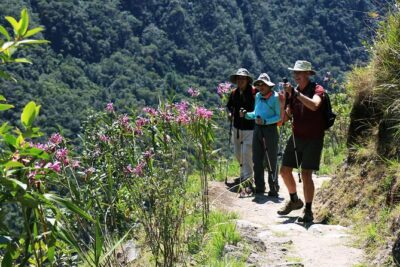
Classic Inca Trail Trek 4D/3N to Machu Picchu (Group Service)
Read our review →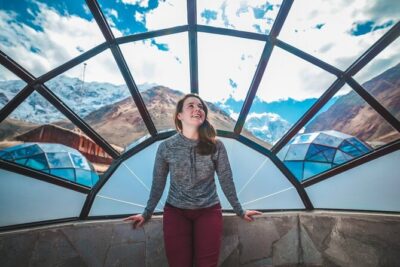
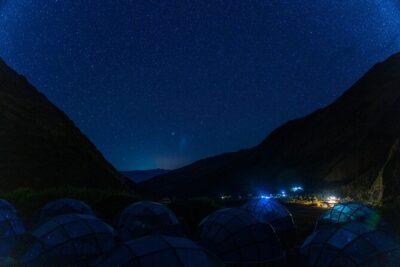
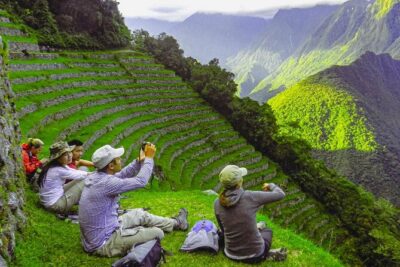
Salkantay Trek 5D/4N with Glass Cabins, Domes and Hobbit House
Read our review →2-Day Inca Trail to Machu Picchu with Panoramic Train
Read our review →