
Reviewed · WALKING TOURS IN CUSCO
Cusco: Walking Tour with a Local Guide
Cusco reveals itself one street at a time. This $15 walking tour links the Plaza de Armas, Qoricancha, Inka Roca Street, and San Blas in two and a half hours, giving you a useful first look at the city without a costly full-day commitment. I like the focus on local stories and everyday Cusqueño life, and I like that the route reaches places you could easily pass without understanding. The main concern is reliability: one confirmed booking reported that no guide arrived and messages went unanswered.
The route involves moderate walking on cobblestones, hills, and uneven surfaces. You need comfortable shoes, water, a hat, and sunscreen. The tour is not suitable for wheelchair users or people with mobility impairments, but for an active visitor who wants a quick cultural orientation, it offers good value.
In This Review
- Key points to know before booking
- Starting between Calle del Medio and the Plaza de Armas
- Reading Cusco from the Plaza de Armas
- Loreto Street and the details between major sights
- Qoricancha and the importance of the sun
- Cusicancha, an Inca palace with a later church
- Inka Roca Street and ordinary city life
- San Blas and the walk uphill to the viewpoint
- What the $15 price really gives you
- The guide can make or break the experience
- Practical advice for a smoother walk
- Who should book this Cusco walk?
- Should you book the Cusco Walking Tour?
- FAQ
- How long does the Cusco walking tour last?
- How much does the tour cost?
- Where does the tour begin?
- Where does the tour finish?
- Which languages are available?
- What should I bring?
- Is the tour accessible for wheelchair users?
Key points to know before booking
- Two and a half hours on foot: The route covers central Cusco and San Blas without transport between stops.
- A strong first-day introduction: You see the main square, Inca sites, colonial streets, churches, shops, and workshops in one outing.
- Qoricancha adds real historical weight: You learn why the sun mattered so greatly in Inca culture and see surviving Inca construction.
- San Blas provides a change of pace: The final section shifts from grand plazas to artisan workshops and ordinary neighborhood life.
- English and Spanish guiding: You can select a live guide in either language.
- A low price with one important warning: At $15 per person, the cost is modest, but the reported no-show means you should keep a backup plan.
Starting between Calle del Medio and the Plaza de Armas
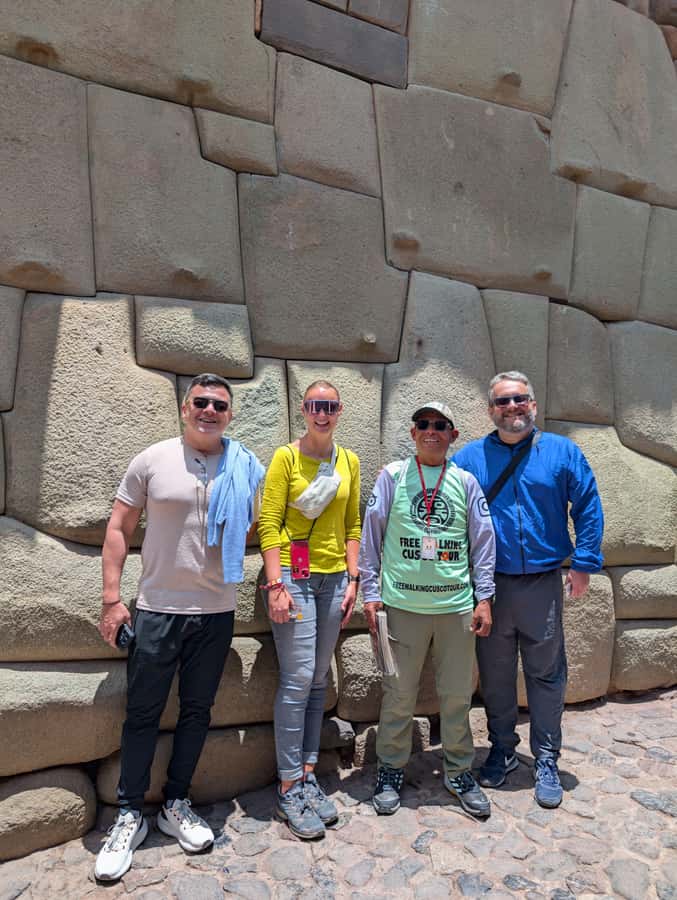
You meet the guide between Calle del Medio and the Plaza de Armas. Look for the green T-shirt, and use the supplied coordinates, -13.5170627, -71.9795113, if you need to confirm the exact point.
This location makes sense for a first meeting. The Plaza de Armas is Cusco’s natural center, and you can reach it easily from many central accommodations. It also gives the guide an immediate setting for explaining how the city developed from an Inca capital into a Spanish colonial center.
The tour is listed as private, although the available details do not explain the exact group size or how private bookings are arranged. I would confirm that point when booking if a one-on-one experience matters to you.
More Walking Tours in Cusco
- Cusco: Walking Tour with an Experienced Local Guides
★ 4.8 · 636 reviews - Cusco: Historic Walking Tour with Pisco Sour and Local Music
★ 5.0 · 190 reviews - Curious Monkey Cusco- Eat the Streets, Walking Food Tour
★ 5.0 · 160 reviews
Reading Cusco from the Plaza de Armas
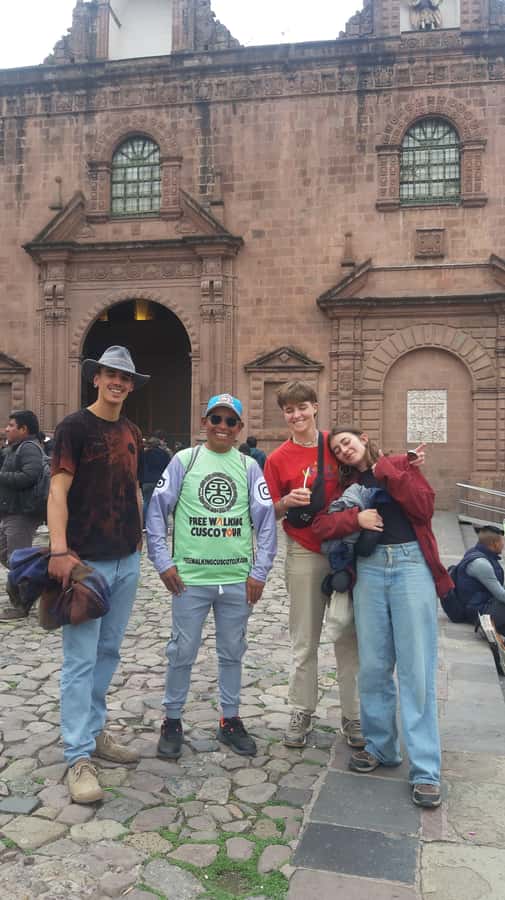
The Plaza de Armas is more than a photo stop. Here, you learn about the plaza’s past, its colonial buildings, and the Inca legends connected with the city.
Your guide can help you read the square in layers. The colonial facades tell one story, while the streets and building foundations point to an older Inca plan. That combination is one of Cusco’s great pleasures. You are not simply looking at a pretty central square. You are seeing two urban traditions occupying the same space.
This opening section is especially useful if you have just arrived. Cusco can feel confusing at first, with streets that change character quickly and buildings that combine several periods of construction. A local guide gives you a framework before you start exploring on your own.
The drawback is that the square is the most obvious part of the route. If you have already taken a detailed city tour, this section may feel familiar. Its value depends on how much background you want and how well the guide connects the visible buildings with Inca stories.
Loreto Street and the details between major sights
From the main square, the walk continues along Loreto Street. This is where the tour moves from a broad civic space to close-up details: colonial architecture, local shops, and artisan workshops.
I like this part because it slows the pace and gets you looking at the street itself. Narrow lanes and carefully fitted stonework can be easy to treat as scenery. With a guide, you have a better chance of understanding what you are seeing and why the street matters.
The artisan workshops also add a practical, present-day layer. You may see how local craft traditions fit into daily commerce, rather than treating Cusco as a museum made only for sightseeing. The supplied details do not promise a workshop demonstration or a shopping stop, so think of this as a chance to see working neighborhood businesses, not a formal craft class.
Wear shoes with good grip here. Cobblestones are attractive but not forgiving, especially if you are watching the buildings instead of your feet.
Qoricancha and the importance of the sun
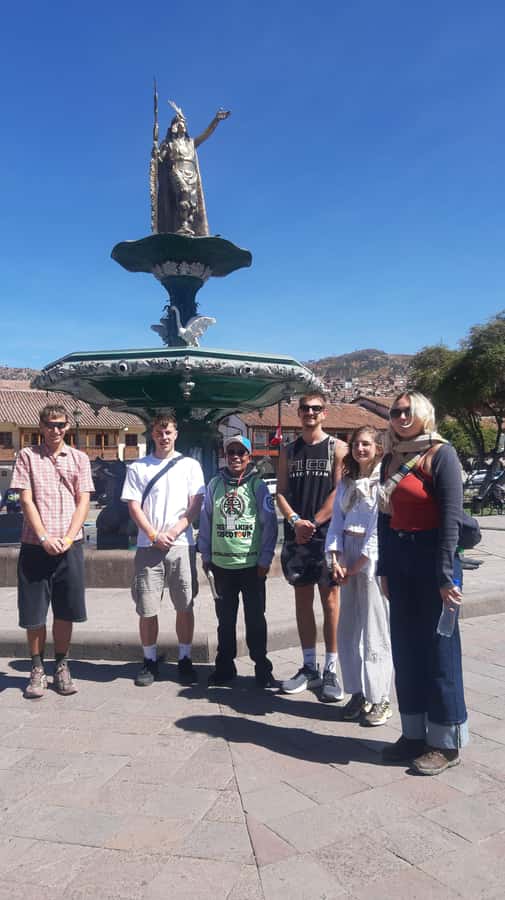
Qoricancha, also called the Temple of the Sun, is the route’s key Inca stop. The guide explains the importance of the sun in Inca culture and points out the Inca architecture.
This visit gives the walk a clear center. The Plaza de Armas introduces the city’s broad story, but Qoricancha lets you focus on belief, power, and engineering. The sun was not a minor religious symbol in the Inca world. It was central to how the empire understood authority and the natural order.
Look closely at the stonework and listen for the contrast between the Inca structure and the later church built on or around it. The site is valuable because the building itself helps explain Cusco’s layered past. You are not just hearing about change. You can see different periods sharing one place.
The tour information says you can skip the ticket line. That may save useful time on a short outing, though you should still check exactly what entry is covered when reserving. The $15 price appears to cover the guide and the tour experience, but food, drinks, transport, and any separate admission costs are not listed as included.
A completely different kind of day:
- Classic Inca Trail Trek 4D/3N to Machu Picchu (Group Service)
★ 5.0 · 8,653 reviews - Cusco: Rainbow Mountain and Red Valley Day Trip with Meals
★ 4.9 · 4,893 reviews - Machu Picchu: 4-Day Inca Trail Trek with Panoramic Train Ride
★ 5.0 · 4,568 reviews - Salkantay Classic Trek 5 Days from Cusco
★ 5.0 · 4,062 reviews
Cusicancha, an Inca palace with a later church
The route next reaches the Inka Palace Cusicancha, described as an Inca palace and temple that is now a church.
This stop reinforces one of the most important ideas in Cusco: the city’s past has not been neatly separated into ancient, colonial, and modern sections. Instead, later buildings often occupy or incorporate earlier sacred and royal places.
I find this kind of stop more useful than a long list of dates. You can begin to notice how the city was reshaped after the Inca period, while older stonework remained part of the urban fabric. Your guide’s explanation matters here, since the significance may not be obvious from the street.
Because the available description does not give a long interior visit or a scheduled service, expect an interpretive stop rather than a lengthy church tour. The exact amount of time spent here will likely depend on the guide and the pace of your group.
Inka Roca Street and ordinary city life
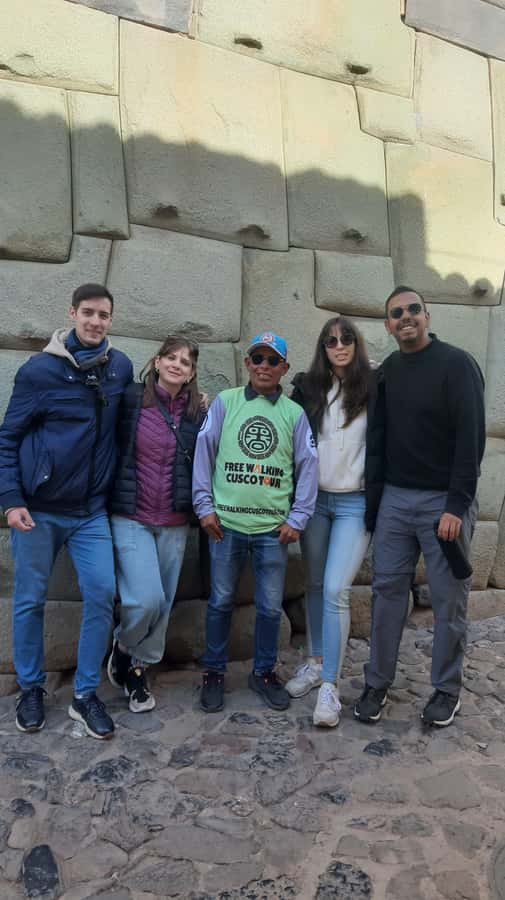
Inka Roca Street brings you into a narrower setting, with cobblestones, colonial houses, and local life. This is a good transition before San Blas because it takes you away from the largest landmarks.
I like the promise of this section. You get a chance to see how Cusco works at street level, where houses, shops, and movement through the neighborhood matter as much as grand monuments. The route is not only about famous buildings. It gives you space to notice doors, walls, lanes, and the way the old city remains part of daily life.
This is also one of the places where the walking can feel more demanding. A moderate fitness level is required, and the route may include uneven ground and uphill sections. If you are still adjusting to Cusco’s altitude, keep your pace steady and tell the guide if you need a short pause. The tour lasts 150 minutes, so it is not a quick stroll around one plaza.
San Blas and the walk uphill to the viewpoint
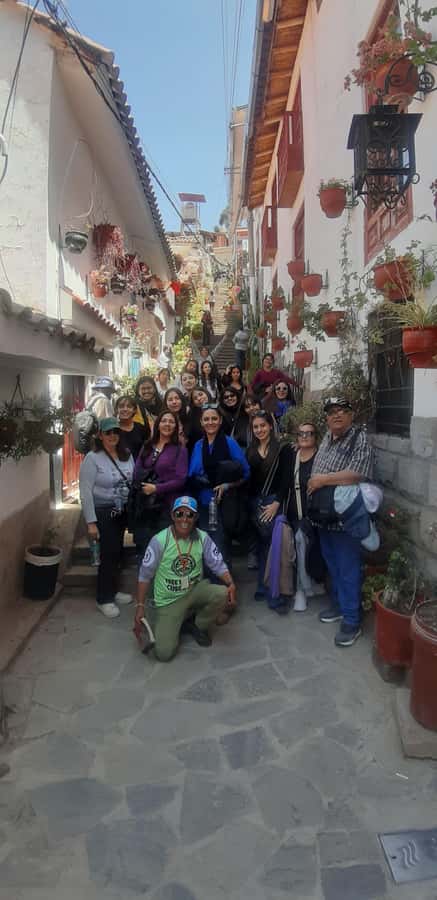
The final neighborhood is San Blas, known here for artisan workshops, colonial churches, and the daily life of Cusqueños. The walk finishes at the Mirador de San Blas.
San Blas gives the experience a satisfying change of mood. The central area introduces major civic and religious landmarks, while this neighborhood offers a more local, creative setting. The workshops may interest you if you want to see how handmade goods fit into the character of Cusco, though the tour does not promise a purchase, demonstration, or particular artist.
The colonial churches add another layer to the neighborhood, and the guide can connect them with the streets and homes around them. You also have the chance to see more ordinary activity instead of spending the entire tour among major monuments.
The viewpoint is a fitting endpoint because it gives you a sense of how the neighborhood sits within Cusco. The supplied information does not specify exactly what can be seen from the lookout, so I would treat it as a final orientation point rather than promise a particular view.
The route is not flat. If you have knee trouble, limited balance, or difficulty with stairs and inclines, San Blas may be the hardest part. This is the clearest reason to think carefully about the mobility warning before booking.
What the $15 price really gives you
At $15 per person, this is an inexpensive way to place Cusco’s main sights in context. You receive a professional guide, a live tour in English or Spanish, and a 150-minute route through several important areas.
The value is strongest for a first visit. In two and a half hours, you cover the central plaza, Loreto Street, Qoricancha, Cusicancha, Inka Roca Street, and San Blas. Doing all of that alone is possible, but you would need to research the sites and decide how they connect. The guide saves you that preparation time.
The price does not include pickup, drop-off, food, or drinks. That is reasonable for a central walking tour, but you should arrive independently and carry your own water. You may also need to budget separately for site entry if it is not included in your booking confirmation.
This is not a full-day archaeological excursion or a food tour. It is a city orientation with cultural explanation. If you want museums, meals, transport, or extended interior visits, you will need a different experience or additional plans.
The guide can make or break the experience
The strongest feedback centers on the guide’s pace and ability to explain sights that are easy to miss. Enrique, in particular, has been praised for keeping the pace comfortable and showing places that would be difficult to find alone. That is exactly what you want from a walking tour: not a rushed march, but enough movement to cover ground while leaving room to look around.
A second booking described the guide simply as excellent. Those comments suggest the best version of this tour depends heavily on the individual guide. A good guide will connect the plaza, Inca sites, colonial buildings, and San Blas instead of treating them as unrelated stops.
There is also a serious warning. One confirmed booking reported that the guide did not arrive and that messages received no response. That does not tell you how often this happens, but it is too specific to ignore. I would save the meeting point, arrive with the green-shirt identification in mind, and keep the name and location of another central walking option available.
The free cancellation policy allows a full refund when you cancel at least 24 hours ahead. You can also reserve and pay later, which helps if your Cusco schedule depends on weather, altitude, or changing plans.
Practical advice for a smoother walk
Wear shoes that can handle cobblestones and uneven streets. Sandals or smooth city soles may become uncomfortable during a moderate walk through central Cusco and San Blas.
Bring water, a hat, and sunscreen. The route is outdoors, and sun protection matters even when the air feels cool. Smoking and flash photography are not allowed.
Choose the English or Spanish guide that suits you best. If you want detailed explanations about Inca beliefs and colonial architecture, stay close to the guide and ask questions at the stops. The tour is short enough that a few minutes spent asking about one building may be more useful than trying to photograph everything.
I would schedule this near the beginning of your Cusco stay. It can help you understand the city center, locate San Blas, and decide which places deserve a longer return visit. If you are already familiar with the main square and Qoricancha, the value will depend more on the guide’s local knowledge and the neighborhood walk.
Who should book this Cusco walk?
I would recommend it to first-time visitors who want a low-cost introduction to Cusco, especially people who enjoy architecture, local stories, and walking through neighborhoods rather than moving from attraction to attraction by vehicle.
It also suits anyone who wants a short activity that leaves most of the day free. The route is long enough to feel substantial, but not so long that it takes over your schedule.
I would think twice if you have mobility limitations, dislike hills and cobblestones, or need guaranteed transport. The tour does not include pickup or drop-off, and it is not wheelchair accessible.
Should you book the Cusco Walking Tour?
Book it if you want a budget-friendly first look at Cusco with a local guide, and if two and a half hours of moderate walking sounds comfortable. The combination of Qoricancha, colonial streets, Cusicancha, and San Blas gives you more substance than a simple plaza stroll.
Go in with realistic expectations. The price covers a guided walk, not meals, transport, or a full inspection of every site. Because one booking reported a no-show, confirm the meeting details and keep a backup plan. If the guide is as effective as Enrique, the tour can give you a clear sense of how Cusco’s Inca, colonial, and modern lives fit together.
FAQ
How long does the Cusco walking tour last?
The tour lasts 150 minutes, or two and a half hours.
How much does the tour cost?
The listed price is $15 per person.
Where does the tour begin?
The meeting point is between Calle del Medio and the Plaza de Armas in Cusco. Look for the green T-shirt, and the listed coordinates are -13.5170627, -13.5170627? Wait typo. Need correct coordinates from prompt -13.5170627, -71.9795113. Ensure answer.
Where does the tour finish?
The walk finishes at the Mirador de San Blas.
Which languages are available?
The live guide is available in English and Spanish.
What should I bring?
Bring comfortable shoes, a hat, sunscreen, and water.
Is the tour accessible for wheelchair users?
No. The tour is not wheelchair accessible and is not suitable for people with mobility impairments.
Just added in Cusco
- Cusco Private Transportation for 2026★ 5.0 · 4 reviews
- Private Transfer from Airport to Hotel in the City of Cusco★ 4.0 · 5 reviews
- Best Cusco walking tour: dinner street food tasting★ 4.5 · 11 reviews
- Private Tour to Pisac Market and Pisac Ruins★ 5.0 · 4 reviews
- Machu Picchu Day Trip With Panoramic Train from Cusco★ 5.0 · 10 reviews
- Sacred Valley of the Incas Tour★ 5.0 · 12 reviews
- Private Tour of the Mountain of Colours by Quad★ 5.0 · 7 reviews
- Sacred Valley Private Tour from Cusco, Guide and Driver only★ 5.0 · 4 reviews
Walking Tours in Cusco, compared.
Historic Walking Tour with Pisco Sour and Local Music
Read our review →
Curious Monkey Cusco- Eat the Streets, Walking Food Tour
Read our review →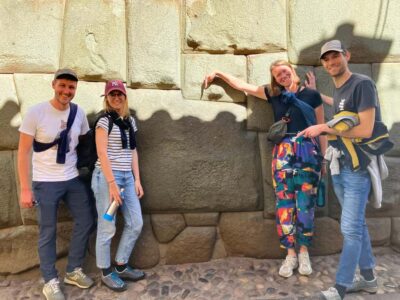
Cusco Highlights Walking Tour: History, Culture, Traditions
Read our review →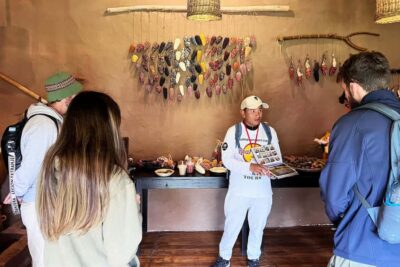
Historic Walking Tour with Pisco Sour and Music Show
Read our review →
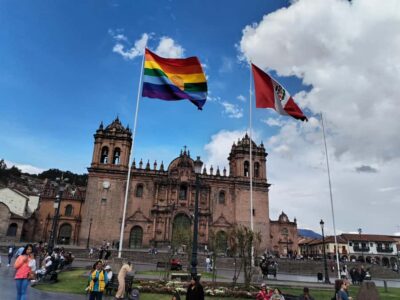
Historic Walking Tour & Scenic Views with local drink
Read our review →
Browse the lists this tour appears in