
Reviewed · FOOD
Meet Quechua people, food & traditions
Step into a living Andean tradition. This half-day experience takes you from Cusco to the Centro poblado Chincheros, where Quechua women welcome you into their community and share food, clothing, weaving, cooking, songs, and daily customs. It is a small-scale cultural visit rather than a quick photo stop.
I especially like the small group limit of 10, which gives the visit a personal feel, and the chance to spend time with local women instead of simply watching a staged demonstration. Jane Camacho provides translation and helps connect you with the hosts, including Mariluz, Tiburcia, and Reyna. The main consideration is timing: five to six hours is enough for an introduction, but the visit may leave you wishing you could stay longer.
In This Review
- Key Points to Know Before You Go
- Why This Visit Feels Different From a Standard Cusco Excursion
- The Morning Meeting at Costa del Sol Wyndham Cusco
- Arriving at Centro Poblado Chincheros
- Learning the Meaning Behind Quechua Clothing
- From Wool to Handwoven Textiles
- Pachamanca and Traditional Andean Food
- Medicinal Plants, Family Life and Daily Customs
- Is the $99 Price Good Value?
- Who Will Enjoy This Best?
- Practical Details That Matter
- Should You Book Meet Quechua People, Food and Traditions?
- FAQ
- Where does the experience begin?
- What time does the tour start?
- Where does the activity end?
- Is hotel pickup available?
- How long does the experience last?
- What is included in the price?
- Are children allowed?
Key Points to Know Before You Go
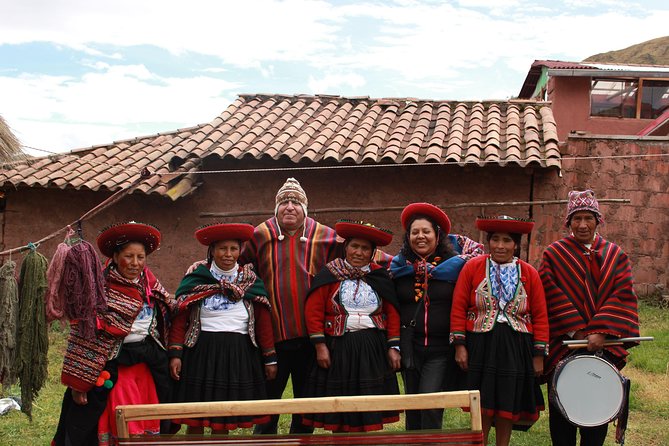
- Meet Quechua women in Chincheros: The visit centers on a local community near Cusco, not a large tourist complex.
- Learn through hands-on activities: Cooking, food tasting, wool preparation, natural dyes, weaving, clothing, and medicinal plants are part of the experience.
- Taste a traditional Andean meal: Pachamanca may be included, with a chance to take part in its preparation.
- Small groups make a difference: The maximum group size is 10, and some departures may be much smaller.
- Support a local social enterprise: Purchases from the community shop provide another source of income without pressure to buy.
- Plan around the fixed terms: Pickup is available from selected hotels, the standard meeting time is 8:30 a.m., and cancellations are non-refundable.
Why This Visit Feels Different From a Standard Cusco Excursion
Many cultural tours give you a short demonstration, a few posed photographs, and a chance to buy something before moving on. This experience aims for a slower exchange. You enter a Quechua community, meet the women who host the visit, and learn how several parts of traditional life fit together.
The clothing is not treated as decoration. You learn about its meaning, including differences connected with a woman’s marital status. You may also hear about hair, blankets, medicinal plants, child care, cooking, and ways rural families protect themselves from dangerous wildlife.
That range matters. You are not learning about one isolated craft. You are getting a picture of how clothing, food, work, family life, and the natural world connect in the Andes.
Jane’s role is important. The hosts speak Quechua, and Jane translates in both directions. That allows you to ask questions and gives the women room to explain their traditions in their own way. You will not be left watching from the edge of the group.
More Food Tours and Cooking Classes in Cusco:
- Group Cooking Class in Cusco with Pisco Tasting
★ 5.0 · 335 reviews - Curious Monkey Cusco- Eat the Streets, Walking Food Tour
★ 5.0 · 160 reviews - Food and Culture Full day Tour in the Sacred Valley
★ 5.0 · 144 reviews
The Morning Meeting at Costa del Sol Wyndham Cusco
The stated meeting point is the front entrance of the Costa del Sol Wyndham Cusco at Calle Santa Teresa 344. The start time is 8:30 a.m., and the activity ends back at the same meeting point.
Pickup and drop-off are offered from selected hotels in Cusco and the Sacred Valley, but you should confirm that your accommodation qualifies. If it does not, plan to reach the hotel entrance yourself. The meeting point is near public transportation, which gives you another option for getting there.
Transport is by private vehicle. That is useful for a half-day outing because you avoid arranging separate taxis and can concentrate on the visit itself. The ride to the community is described as about 15 minutes from the town, though the total morning schedule is five to six hours once transportation and activities are included.
Start early, especially if you are staying elsewhere in Cusco. The tour has a fixed departure rather than a flexible arrival window, and missing the morning meeting could be costly because the booking is non-refundable.
Arriving at Centro Poblado Chincheros
The community visit begins with a welcome from local women. The setting gives you a chance to meet people in their own community instead of encountering traditions only in a city shop or museum.
The welcome may include singing. One especially memorable part of the experience is the way the hosts greet and farewell visitors with music. Llamas may also appear at the end, adding a friendly and unmistakably Andean touch without turning the visit into a zoo-style attraction.
The visit at the community lasts about two hours. That is a useful block of time. You have enough room for several demonstrations and some conversation, though you should not expect a full day of village life.
Because the group is capped at 10, you should have a better chance to see the demonstrations clearly and ask questions. If you are lucky enough to have a very small departure, the mood can feel more like a personal introduction than a formal tour.
Learning the Meaning Behind Quechua Clothing
Clothing is one of the strongest parts of this experience because it opens a window into identity and community life. The women explain the significance of their garments, hair, and accessories, including distinctions between single and married women.
This is more useful than simply being told the names of colorful pieces. You begin to understand that traditional dress can communicate social information and family status. The clothing becomes part of a living system, not just something worn for photographs.
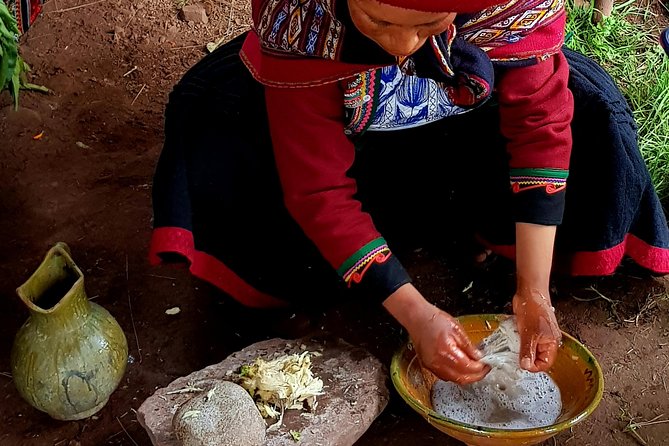
The experience also allows you to see how wool is cleaned, dyed, woven, and turned into finished textiles. Alpaca and sheep wool are part of the demonstrations described during the visit. You can watch the stages that are easy to overlook when buying a finished hat or blanket in Cusco.
Pay attention to the multi-purpose blankets. They are not merely souvenirs. The visit explains their practical importance in Andean life, and this context can change the way you view the textiles sold afterward.
A completely different kind of day:
- Classic Inca Trail Trek 4D/3N to Machu Picchu (Group Service)
★ 5.0 · 8,653 reviews - Cusco: Rainbow Mountain and Red Valley Day Trip with Meals
★ 4.9 · 4,893 reviews - Machu Picchu: 4-Day Inca Trail Trek with Panoramic Train Ride
★ 5.0 · 4,568 reviews - Salkantay Classic Trek 5 Days from Cusco
★ 5.0 · 4,062 reviews
From Wool to Handwoven Textiles
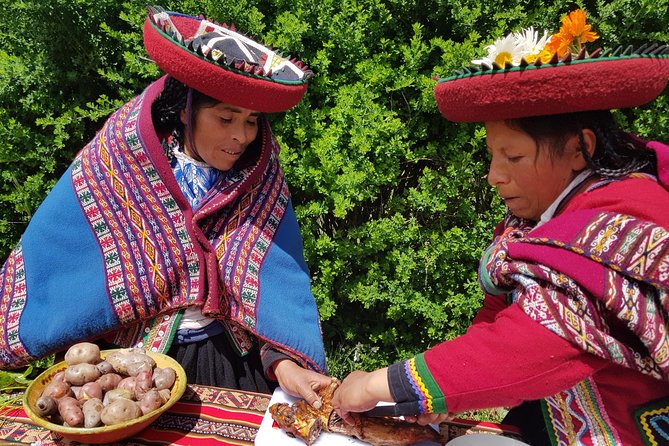
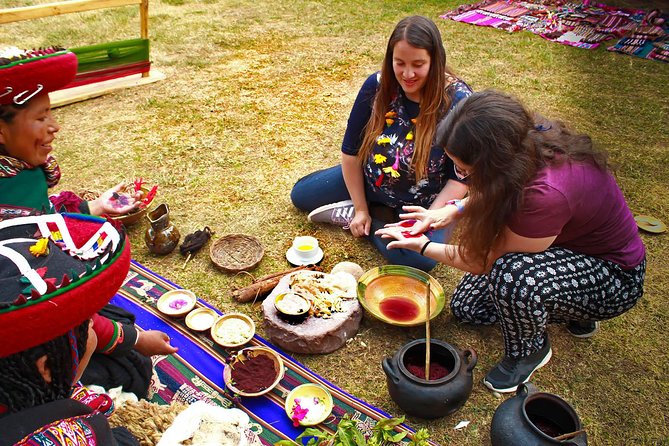
The weaving demonstration gives the visit a practical backbone. You see how raw wool is prepared, how color is added, and how the material becomes a useful object.
The process helps explain why handwoven goods cost more than factory-made clothing. It also gives you a better basis for comparing prices. One guest bought alpaca winter hats for 75 soles each and found the community prices far lower than those in Cusco. Another purchased a multi-purpose blanket after learning what it meant and how it was used.
You should not feel obligated to shop. The community has a store, but the buying portion is described as low-pressure. That matters. You can look carefully, ask about the items, and buy only if something suits you.
If you do want a textile, bring enough local currency or confirm your payment options in advance, since the available information does not specify accepted payment methods. More important, buy because you value the work, not because you feel pushed. The best souvenirs here carry a story you understand.
Pachamanca and Traditional Andean Food
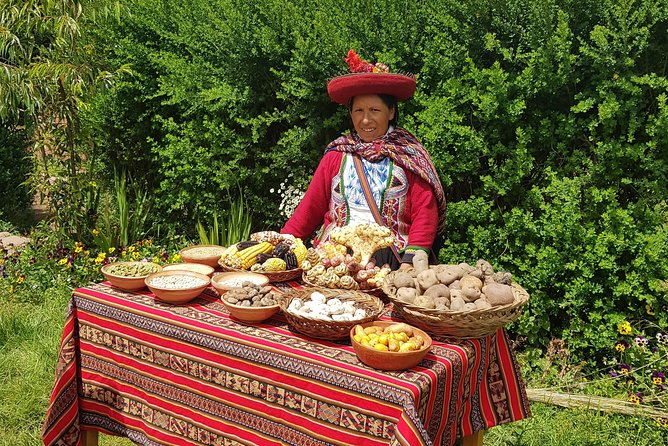
Food gives the visit another layer. A tasting is included, and the experience may include hands-on preparation of pachamanca, a traditional Andean meal cooked with heated stones.
The cooking is not treated as a quick sample on a plate. You may help with the preparation and then share a larger meal. That makes pachamanca one of the most memorable parts of the visit for anyone who enjoys food as a way to understand place and culture.
The information about food needs a little care. Food tasting and the listed activities are included, while additional food and drinks are not included unless specifically stated. Ask your guide what is covered on your departure so you know whether the meal is part of the planned tasting or if anything extra costs more.
Altitude can also affect appetite. One account describes having trouble eating much because of the adjustment to Cusco’s elevation. You may want to take the meal slowly and avoid treating the feast as a challenge.
Medicinal Plants, Family Life and Daily Customs
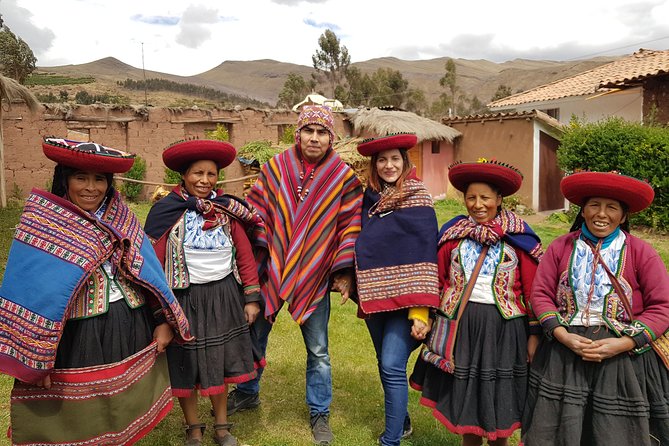
The visit covers more than textiles and food. The women may explain medicinal plants, child care, cooking, clothing, and practical ways they protect against dangerous wildlife.
These details are valuable because they show the ordinary side of Andean life. A short conversation about a plant or a blanket can tell you as much about local priorities as a formal lecture. The women are not presented as figures from the past. They are sharing practices that remain part of their lives.
You may also find the visit humbling. The exchange asks you to listen rather than rush from one attraction to the next. Jane’s translation helps, but the pace still depends on conversation and demonstration. If you want a tightly scripted tour with constant movement, this may feel slow. If you want time for people to explain their choices, it is a strong fit.
Is the $99 Price Good Value?
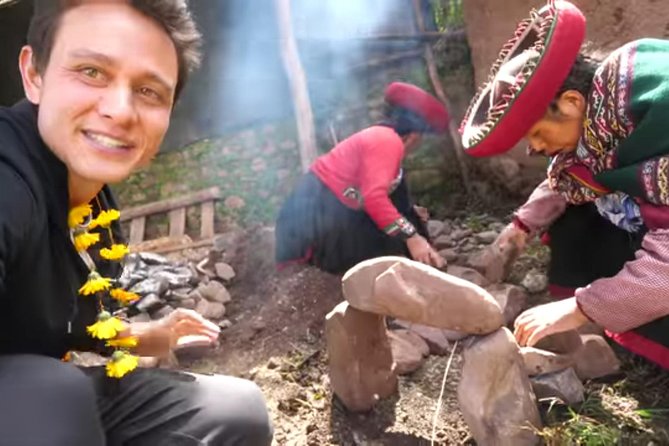
At $99 per person, this is not the cheapest way to spend a morning near Cusco. The price includes private transport, selected hotel pickup and drop-off, a tour escort or host, the activities, and food tasting.
The value depends on what you want from a cultural outing. You are paying for transport, a small group, translation, organization, and direct time with a Quechua community. You are also helping support a project that gives local women another income source while encouraging pride in their traditions.
The small group is especially important here. A large busload would make conversation and hands-on demonstrations harder. With a maximum of 10 people, the experience has a better chance of feeling respectful and personal.
Shopping can also affect the value. If you already plan to buy alpaca or woven goods, the lower community prices may offset part of the excursion cost. That should not be your only reason to book, since buying is optional and savings are never guaranteed for every item.
I would consider the price reasonable for someone who values direct cultural contact and organized transport. It is less compelling if you mainly want scenic viewpoints, ruins, or a long food tour.
Who Will Enjoy This Best?
I would recommend this experience to you if you want to understand more of the local Andean culture during a Cusco stay. It suits curious adults, families, and anyone who prefers conversation and demonstration over a checklist of famous sights.
It also works well for families with children. The activities cover food, clothing, animals, plants, and crafts, giving younger visitors several ways to engage. Children must be accompanied by an adult, and the child rate applies only when sharing with two paying adults.
You should be comfortable with a cultural exchange that may include translation and some quiet observation. The tour is offered in English, and Jane helps translate between English and the Quechua-speaking hosts.
Most people can participate, and service animals are allowed. The available information does not describe the exact walking conditions or whether every activity can be adapted, so contact the provider if you have a specific mobility concern.
Practical Details That Matter
The experience lasts approximately five to six hours. It is offered in English, includes a mobile ticket, and confirmation is sent at booking.
The standard meeting time is 8:30 a.m. at the Costa del Sol Wyndham Cusco. Selected hotels in Cusco and the Sacred Valley may receive pickup and drop-off, but do not assume every hotel is covered.
The activity is non-refundable and cannot be changed for any reason. That makes travel insurance or a firm Cusco schedule worth considering before you pay.
The tour is often reserved well ahead of time, with bookings commonly made about 79 days before the date. If your Peru trip is fixed, booking early is sensible. Just make sure your plans are stable first.
The experience has received a 5 out of 5 rating from 10 published ratings, with 100 percent recommending it. That is a small sample, so I would treat it as encouraging rather than absolute proof. The praise is notably consistent around the warmth of the welcome, the quality of Jane’s guiding, the food, and the lack of pressure to buy.
Should You Book Meet Quechua People, Food and Traditions?
Book it if you want a personal introduction to Quechua customs and would rather spend a morning with local hosts than pass through another commercial attraction. The strongest reasons are the small group, Jane’s translation, the women’s generous welcome, and the chance to connect food and textiles with everyday life.
Think twice if your schedule is uncertain, you dislike fixed early departures, or you want a major archaeological site included. This is a people-centered visit, not a ruins tour.
For the right person, it can become one of the most meaningful half-days near Cusco. You leave with more than a souvenir. You leave knowing who made it, how it was made, and why it matters.
FAQ
Where does the experience begin?
It begins at the front entrance of the Costa del Sol Wyndham Cusco, at Calle Santa Teresa 344 in Cusco.
What time does the tour start?
The stated start time is 8:30 a.m.
Where does the activity end?
The activity ends back at the meeting point at the Costa del Sol Wyndham Cusco.
Is hotel pickup available?
Pickup and drop-off are offered from selected hotels in Cusco and the Sacred Valley. The standard pickup details specify the front entrance of the Costa del Sol Wyndham Cusco, so confirm whether your hotel qualifies.
How long does the experience last?
The experience lasts approximately five to six hours.
What is included in the price?
The price includes private vehicle transport, selected hotel pickup and drop-off, a tour escort or host, all activities, and food tasting.
Are children allowed?
Yes. Children must be accompanied by an adult, and the child rate applies only when sharing with two paying adults.
Just added in Cusco
- Cusco Private Transportation for 2026★ 5.0 · 4 reviews
- Private Transfer from Airport to Hotel in the City of Cusco★ 4.0 · 5 reviews
- Best Cusco walking tour: dinner street food tasting★ 4.5 · 11 reviews
- Private Tour to Pisac Market and Pisac Ruins★ 5.0 · 4 reviews
- Machu Picchu Day Trip With Panoramic Train from Cusco★ 5.0 · 10 reviews
- Sacred Valley Private Tour from Cusco, Guide and Driver only★ 5.0 · 4 reviews
- Sacred Valley of the Incas Tour★ 5.0 · 12 reviews
- Private Tour of the Mountain of Colours by Quad★ 5.0 · 7 reviews
Food, compared.
Street Food, Market & Old Eateries Tour in Lima’s Historic Center
Read our review →
Food Tour and Market Experience: 12 Peruvian Snacks
Read our review →
Food & Art: Lima Colors and Flavors Walking Tour
Read our review →
Historic Center Street Food, Market, and Eateries Tour
Read our review →Browse the lists this tour appears in