
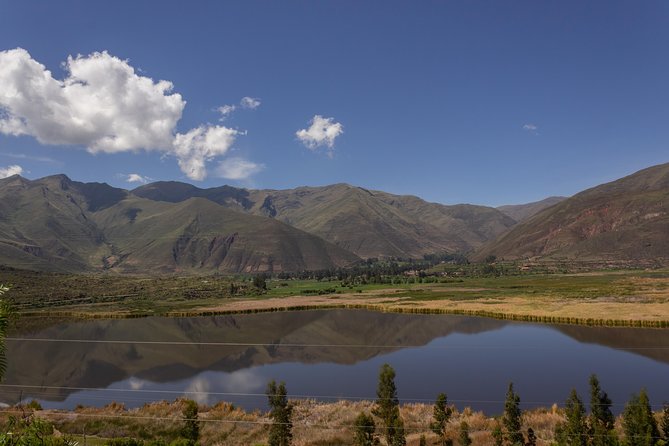
Reviewed · LAKE TITICACA AND THE UROS ISLANDS
Sightseeing Bus Tour from Cusco to Puno with Buffet Lunch
Ancient ruins make this transfer worthwhile. I like the way this small-group bus tour turns a long ride into a full day of sights, and I especially like the excellent buffet lunch and hotel transfers. The main drawback is time: the journey can run close to 11 hours, and Wi-Fi may be too weak to count on.
You leave Cusco around 7:00 am and cross the high plains toward Puno, stopping at archaeological sites, a grand colonial church, a mountain pass, and a museum. At $99 per person, the tour costs more than a plain bus ticket, but you are paying for a guide, admissions, lunch, drinks, and a much more useful day on the road.
In This Review
- Key points to know before booking
- Why this Cusco to Puno route makes sense
- Raqchi and the Temple of Wiracocha
- Andahuaylillas church and its wall-to-wall art
- Lunch at La Pascana near Sicuani
- La Raya Pass at 4,335 meters
- Pukara and the Museo Litico
- Comfort on a 10 to 11 hour bus day
- The guide can make or break the day
- Is $99 a fair price?
- Who should book this bus tour?
- FAQ
- What time does the tour start?
- How long is the Cusco to Puno bus tour?
- How many people can join the tour?
- Is buffet lunch included?
- Is a vegetarian meal available?
- Do I need to bring my passport?
- Is Wi-Fi available on the bus?
- Should you book it?
Key points to know before booking
- Five planned stops break up the long ride: You visit Raqchi, Andahuaylillas, La Raya Pass, the Pukara museum, and a buffet restaurant near Sicuani.
- Raqchi is the strongest archaeological stop: The Temple of Wiracocha and its rows of Inca storehouses give you a clear sense of the site’s size.
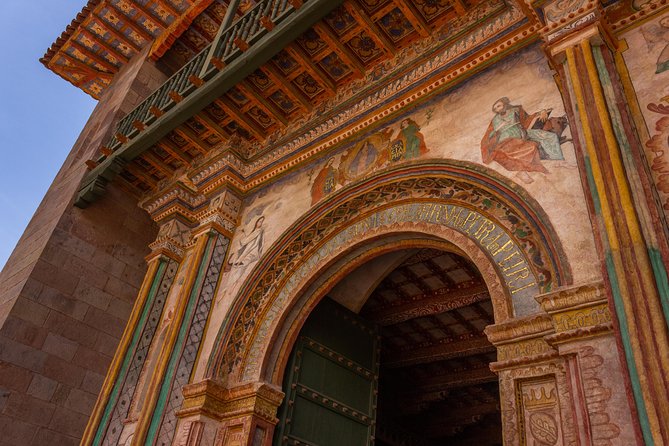
- The Andahuaylillas church is small but memorable: Murals, gold decoration, and Cusco School artwork make this a fine stop even if you have seen other churches in Peru.
- The bus is built for a full day: Seats recline, headrests and USB ports are available, and the group is limited to 15 people.
- Lunch is a real part of the experience: The buffet includes Peruvian and regional food, salads, side dishes, desserts, and hot drinks.
- Pack for altitude and patchy Wi-Fi: La Raya reaches 4,335 meters, and onboard internet may work only briefly.
Why this Cusco to Puno route makes sense
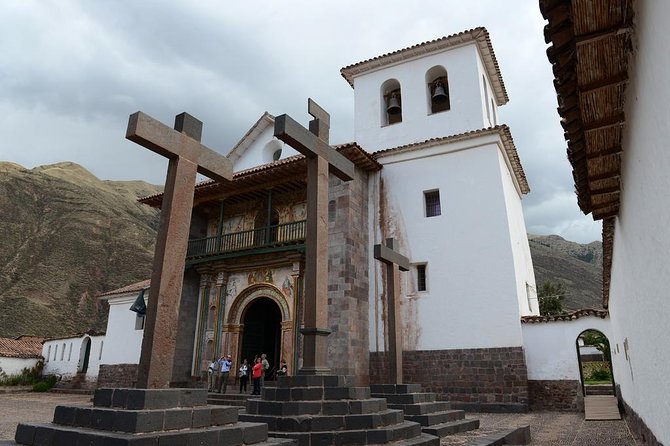
The direct ride between Cusco and Puno is mainly a transfer. This version gives you something to do along the way, with five stops spread across the day. You still spend many hours on the road, but the stops add culture, scenery, food, and fresh air to what could otherwise be a tiring bus journey.
I see this as a practical choice for someone who wants to travel overland but does not want to lose a full day to simple transportation. It is also a cost-conscious alternative to a more expensive rail journey, particularly because lunch, entrance tickets, pickup, drop-off, and guiding are included.
The group limit of 15 is important. You are not being herded through the countryside with a huge crowd, and a guide can usually give more useful explanations in a smaller group. English and Spanish may both be used, so you should listen carefully if you want every detail in English. One especially strong guide named Maria was praised for explaining each site fully in both languages, while another guide, Bernardo, was singled out for giving a great deal of historical context.
The day begins early. Hotel pickup is included, but confirm the exact pickup details before departure. The tour requires a current passport, and passport name, number, expiry date, and country are needed for all participants at booking.
More Lake Titicaca trips:
- Cusco: Scenic Sun Route to Puno with Buffet Lunch
★ 5.0 · 214 reviews - 6-Day Best of Peru: Cusco, Machu Picchu, and Lake Titicaca Tour
★ 5.0 · 123 reviews - Cusco: Scenic Route of the Sun to Puno with Buffet Lunch
★ 4.8 · 101 reviews
Raqchi and the Temple of Wiracocha
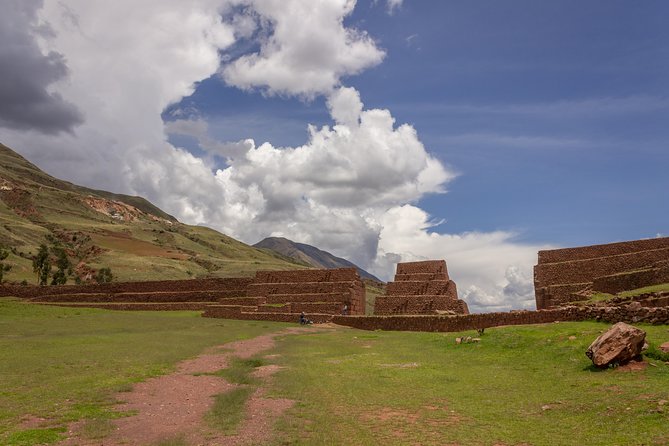
Raqchi is the first major stop and one of the best reasons to choose this route. You have about 30 minutes at the Parque Arqueologico de Raqchi, with admission included.
The center of attention is the Temple of Wiracocha, dedicated to the Inca creator god. The site is known for monumental construction that combines finely worked stone with sun-dried adobe. That mixture gives the ruins a different look from the tightly fitted stonework you may have seen at Machu Picchu or in Cusco.
Raqchi also contains the largest collection of colcas, or traditional Inca storehouses, along this route. Their repeated forms help you understand that this was not just a ceremonial place. It was a large, organized center with storage and supply systems supporting the Inca state.
Thirty minutes is enough for an introduction and photographs, but it is not a long archaeological visit. Listen closely to the guide, since a quick explanation can make the rows of ruins much easier to understand. I would bring a hat and sunscreen. The site is exposed, and there is little reason to expect much shade during your short visit.
Andahuaylillas church and its wall-to-wall art
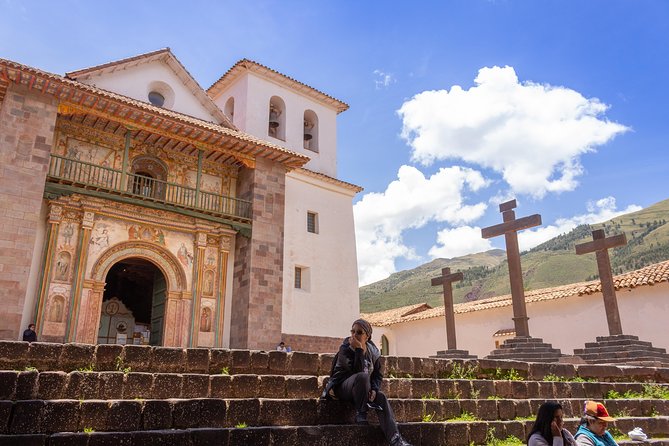
The Church of San Pedro Apostol de Andahuaylillas receives about 25 minutes. That sounds brief, but the church is compact, and the interior gives you plenty to examine.
Built in the 17th century, it is often called the Sistine Chapel of the Americas. The comparison is dramatic, but the church has its own character. Its walls are covered with murals, gold leaf decoration fills the interior, and paintings from the Cusco School show how Catholic art was presented to local communities.
This stop adds a different kind of history to the day. Raqchi shows the scale and engineering of the Inca world. Andahuaylillas shows how Spanish colonial religion used art, color, and imagery to reach an Indigenous audience.
The guide matters here. A quick look at a decorated church can blur into the next colonial building, but a good explanation helps you notice why the paintings and murals were placed where they are. One family described the church as particularly memorable because the guide explained its role in teaching Catholic ideas to the local population.
The short visit is the main limitation. If you enjoy church art, you may wish for more time. Still, this is one of the most worthwhile stops on the route.
Lunch at La Pascana near Sicuani
After the morning stops, you eat at La Pascana, or Pascana Restaurant, on the outskirts of Sicuani. The lunch stop lasts about 40 minutes and does not require a separate admission ticket.
The buffet includes national and regional dishes, appetizers, fresh vegetables, side dishes, and several desserts. Coca tea, coffee, and tea are available, which is useful at altitude and gives you a warm drink after the morning ride.
The setting receives as much praise as the food. Details include attractive views, a garden, a waterfall, and live music performances. That makes lunch feel like part of the excursion rather than a rushed roadside meal.
Forty minutes is enough to eat, but you will not have unlimited time to linger. I would keep your first plate sensible and save time for dessert or a hot drink. A vegetarian option is available, but you need to request it when booking.
The lunch adds real value to the $99 price. Buying a meal separately would not cover the full difference between this tour and ordinary transport, but the included food removes one practical concern from a long day. You also avoid having to search for somewhere to eat while moving between towns.
More things to do in Cusco:
- Classic Inca Trail Trek 4D/3N to Machu Picchu (Group Service)
★ 5.0 · 8,653 reviews - Cusco: Rainbow Mountain and Red Valley Day Trip with Meals
★ 4.9 · 4,893 reviews - Machu Picchu: 4-Day Inca Trail Trek with Panoramic Train Ride
★ 5.0 · 4,568 reviews - Salkantay Classic Trek 5 Days from Cusco
★ 5.0 · 4,062 reviews
La Raya Pass at 4,335 meters
La Raya is the high point of the route, both literally and visually. This pass marks the border between the Cusco and Puno regions and reaches 4,335 meters above sea level.
You have only about 10 minutes here. That is enough to step off the bus, take photographs, and look toward the Chimboya glacier, described as one of the headwater areas linked to the beginning of the Amazon River.
This is not a long scenic walk. The stop is about altitude, open views, and the feeling of crossing from one region into another. The air can feel thin at this height, especially if you have only recently arrived in the Andes. Move slowly, drink water, and do not treat the stop as a chance for strenuous activity.
The altitude is the one physical issue worth taking seriously. The tour has no specific restrictions except for people in very serious health conditions, and most people can participate, but that does not mean everyone will feel equally comfortable at La Raya. If you already know that high altitude affects you badly, speak with a medical professional before booking.
Pukara and the Museo Litico
The final cultural stop is the Museo Litico Pukara, with about 30 minutes and admission included. Pukara refers to an ancient highland culture that flourished between the 4th and 16th centuries in the plateau region northeast of Puno.
Inside, you can see pottery and stone sculptures, including zoomorphic figures and the Hatun Ñaqaq, translated as The Supreme Executioner. These pieces offer a look at a culture that predates the better-known Inca period.
The museum is small, so 30 minutes works well if your guide gives a clear introduction. It is not the kind of museum that fills an entire afternoon, but it gives useful context before you reach Puno and prevents the day from becoming only a series of viewpoints.
There is one point to clarify. The advertised stop is the Museo Litico Pukara, but one account described being taken instead to an archaeological museum near the bus service station, rather than into the center of Pukara or the named museum. Because of that, I would confirm the exact Pukara stop with the operator shortly before departure if this museum is a major reason for booking.
Comfort on a 10 to 11 hour bus day
The bus is designed for a long ride. Seats are reported as comfortable, with headrests, reclining backs, and USB ports for charging devices. Hotel pickup and drop-off also reduce the need to manage taxis with luggage at either end.
Hot and cold beverages are included, along with one bottle of water. Some accounts describe drinks being offered during the journey, while another notes that the selection and availability did not match the advertised service. I would bring extra water and regard the onboard drinks as a bonus rather than your whole supply.
Wi-Fi is included, but you should not plan your day around it. It may connect briefly and can be limited by the remote areas along the route. Download films, music, maps, and important messages before leaving Cusco. That small bit of preparation will make the long stretches between stops easier.
Seat assignment deserves attention. One serious complaint involved two passengers being placed in the last row on a full bus, with no seat change available at departure. The operator later acknowledged the mistake and said seats are usually placed between rows one and five when possible. Since a specific seat is not described as guaranteed, contact the company ahead of time if you have a neck, back, or motion-sickness concern.
The bus may also make local shopping stops, depending on the day and guide. These can add interest, but they may reduce the time available elsewhere or push arrival later. One account reported arriving more than an hour late after the guide did not keep to the planned timings.
The guide can make or break the day
This is not simply a bus with a recorded commentary. Your guide shapes how useful the stops become.
The strongest accounts describe guides who explain the sites clearly, keep the group moving, and provide equal attention to English and Spanish speakers. Maria was praised for her warmth and detailed explanations. Bernardo received similar praise for his preparation and the amount of information he shared.
That said, bilingual guiding can take longer and may feel less focused if you understand only one language. One person preferred a guide speaking a single language because it was easier to follow. If you want a quiet ride with no commentary, this is not the right format. If you enjoy learning as you go, the guiding is one of the tour’s best features.
The small group helps with questions and movement, but it cannot eliminate every delay. Stop lengths, shopping breaks, traffic, and road conditions can affect the schedule. Do not book a tight evening activity in Puno unless you have a generous buffer.
Is $99 a fair price?
At $99, this is not the cheapest way to get from Cusco to Puno. The value comes from what the price bundles together: hotel pickup and drop-off, an English-speaking guide, entrance tickets at four stops, buffet lunch, onboard drinks, Wi-Fi, and a comfortable bus.
I think the price is fair if you would otherwise pay separately for transport, meals, taxis, and visits along the route. It is especially good value for someone interested in archaeology and colonial art. You are not merely covering distance. You are using the transfer to see places that would be awkward to reach independently in a single day.
The value drops if you only want to arrive in Puno as early as possible. A 10-hour estimate is already a full day, and actual travel can reach about 11 hours. The bus is comfortable, but comfort does not make a long journey short.
Free cancellation is available up to 24 hours before the start time. Changes or cancellations inside that window are not accepted for a refund.
Who should book this bus tour?
I would choose this experience if you:
- Want to travel from Cusco to Puno overland
- Like archaeology, colonial churches, and highland scenery
- Prefer a guided day to arranging several independent stops
- Value hotel pickup and drop-off
- Want lunch and admission fees handled in advance
- Can tolerate a long day and a possibly flexible arrival time
I would think twice if you have a fixed evening booking in Puno, dislike bilingual commentary, need a guaranteed front seat, or expect strong Wi-Fi. People with serious health conditions should also seek medical advice before spending time at 4,335 meters.
FAQ
What time does the tour start?
The tour starts at 7:00 am. Hotel pickup is included.
How long is the Cusco to Puno bus tour?
The stated duration is approximately 10 hours. Some journeys can take closer to 11 hours.
How many people can join the tour?
The group has a maximum of 15 participants.
Is buffet lunch included?
Yes. Lunch is served at La Pascana Restaurant near Sicuani and includes national and regional dishes, vegetables, side dishes, desserts, and hot drinks.
Is a vegetarian meal available?
Yes. A vegetarian option is available, but you must request it at the time of booking.
Do I need to bring my passport?
Yes. You must bring a current, valid passport on the day of travel. Passport name, number, expiry date, and country are required for all participants when booking.
Is Wi-Fi available on the bus?
Yes, Wi-Fi is included. It can be weak or intermittent along the route, so download anything you need before departure.
Should you book it?
I would book this tour if the journey itself is part of your Peru plans. Raqchi, Andahuaylillas, La Raya, lunch near Sicuani, and Pukara give you a useful introduction to the highlands, and the comfortable bus makes the long day manageable.
Just pack water, sunscreen, a hat, downloaded entertainment, and patience with the schedule. Confirm your pickup details and ask about seating and the Pukara museum stop before departure. With those expectations in place, this is a smart way to turn a necessary transfer into one of the more rewarding days between Cusco and Puno.
Just added in Cusco
- Cusco Private Transportation for 2026★ 5.0 · 4 reviews
- Private Transfer from Airport to Hotel in the City of Cusco★ 4.0 · 5 reviews
- Best Cusco walking tour: dinner street food tasting★ 4.5 · 11 reviews
- Private Tour to Pisac Market and Pisac Ruins★ 5.0 · 4 reviews
- Machu Picchu Day Trip With Panoramic Train from Cusco★ 5.0 · 10 reviews
- Sacred Valley Private Tour from Cusco, Guide and Driver only★ 5.0 · 4 reviews
- Sacred Valley of the Incas Tour★ 5.0 · 12 reviews
- Private Tour of the Mountain of Colours by Quad★ 5.0 · 7 reviews
Lake Titicaca and the Uros Islands, compared.
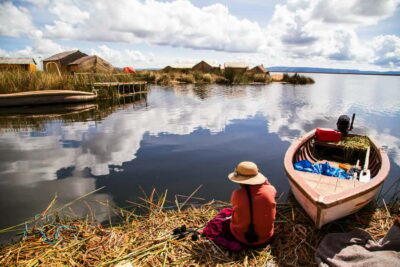
From Puno: Uros, Amantaní & Taquile Islands 2-Day Tour
Read our review →
Tour to Uros and Taquile Islands in a Fast Boat
Read our review →
From Puno: Floating Islands of the Uros Half-Day Tour
Read our review →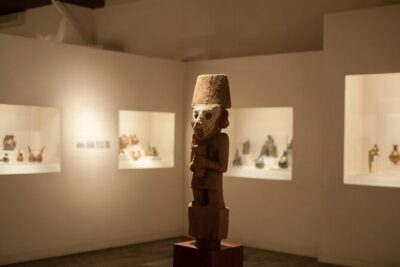
10-Day Discover Peru: Lima, Arequipa, Puno, Cusco & Machu Picchu
Read our review →
Uros and Taquile Islands on New and Comfortable SpeedBoat
Read our review →
Lake Titicaca (Day Trip) Uros & Taquile Islands
Read our review →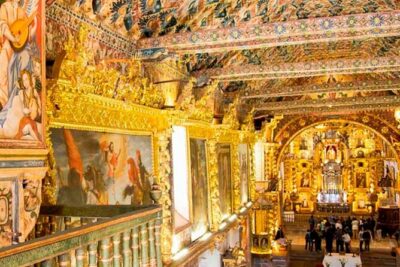
Lake Titicaca 2-Day Tour to Uros, Amantani and Taquile
Read our review →Browse the lists this tour appears in