Reviewed · PERU FOOD TOURS AND COOKING CLASSES
Arequipeño Cooking Class and San Camilo Market
Start with a market, not a classroom. This four-hour Arequipeño cooking experience takes you into San Camilo Market to choose local ingredients before preparing lunch in a restaurant in Arequipa’s historic center. I like the direct connection between shopping and cooking, and I like that you take part in each dish rather than simply watching a chef work.
The visit also keeps its group size to a maximum of 10 people, which should make hands-on instruction easier. The main point to check is the schedule: the details give both 8:45 a.m. and 9:45 a.m. for pickup, with a 10:00 a.m. start, so confirm your exact pickup time before the day of the class.
In This Review
- Key Points Before You Book
- Why San Camilo Market Makes the Class Better
- Choosing Potatoes, Produce, and Local Ingredients
- From the Market to the Historic Center
- Learning the Sample Menu
- Eating What You Prepare
- Is the $130 Price Fair?
- Timing, Pickup, and the Four-Hour Plan
- Who Will Enjoy This Cooking Class?
- My Booking Advice for Arequipa
- FAQ
- Where does the experience take place?
- How long does the cooking experience last?
- What time does the activity start?
- Is hotel pickup included?
- Is transportation back to the hotel included?
- What food is included?
- How many people are required for the class?
- Can I cancel for a full refund?
Key Points Before You Book
- San Camilo Market comes first: You look at potatoes, produce, meats, fruits, and dehydrated foods before choosing the ingredients for lunch.
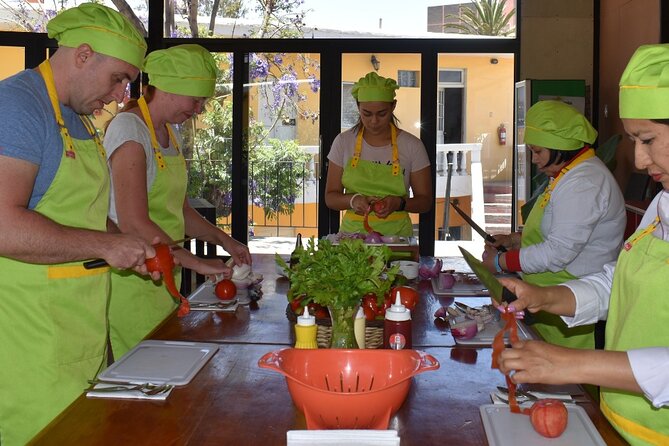
- The cooking is hands-on: The chef explains each step, and every participant gets the chance to prepare the selected dish.
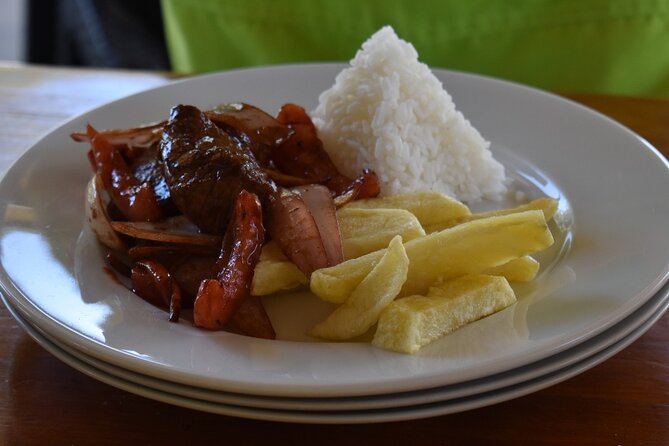
- Lunch is included: The sample menu lists salted loin as the main course and stuffed causa as the starter.
- The setting is local: You visit a traditional public market, not a standard supermarket or a cooking studio designed only for tourists.
- Pickup is included, but the return is not: Hotel pickup is offered, while transportation back to your hotel is listed as an additional $12 per person.
- Small enough for participation: The maximum group size is 10 people, with a minimum of two required for the class to operate.
Why San Camilo Market Makes the Class Better
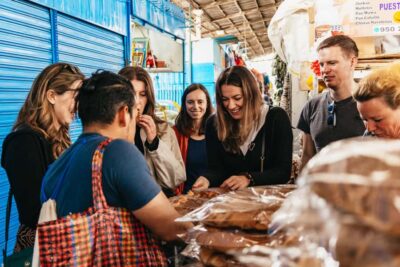
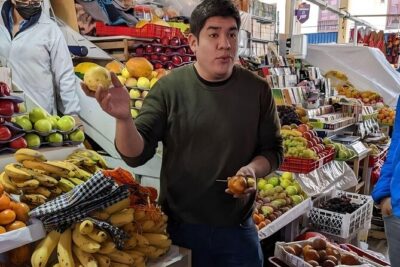
San Camilo Market gives this experience its strongest sense of place. Instead of beginning with premeasured ingredients in a kitchen, you start by seeing the products as they are sold in Arequipa. The class introduces you to potatoes, vegetables, fruits, meats, and dehydrated foods, with the chef explaining what you are looking at.
I like this order. Food makes more sense when you see where the cooking begins. You get a closer look at the ingredients before they appear on a plate, and the market visit gives the meal a local setting that a hotel-based class cannot easily match.
The market is also described as a place where people sell a wide range of products and follow everyday customs. That matters because San Camilo is not presented as a display arranged only for visitors. A five-star assessment praised the experience as a visit to a real Peruvian market rather than a grocery store, followed by a strong cooking class.
You should expect the market to be active and practical, not polished like a food museum. The focus is on seeing products, learning about them, and selecting what you will use. If you want a quiet, carefully staged introduction to Peruvian food, this may feel less controlled. If you want to see food in its ordinary setting, the market is a major reason to book.
More Food Tours and Cooking Classes in Arequipa
- Peruvian Cooking Experience in Arequipa
★ 5.0 · 173 reviews - Chaqchao Chocolate Making Workshop
★ 5.0 · 104 reviews - A 3-hour Guided Food Tour with 4 Iconic Restaurants of Arequipa
★ 4.5 · 96 reviews
Choosing Potatoes, Produce, and Local Ingredients
The shopping portion is not just a short walk through the aisles. The chef explains the products, then helps the group choose the ingredients for the meal. That makes the market stop useful even if you already know some Peruvian food.
Potatoes receive special attention. Peru is famous for its many potato varieties, and the class specifically introduces you to the world of potatoes along with vegetables, fruit, meats, and dehydrated foods. The supplied details do not identify the exact varieties or ingredients you will purchase, so you should treat this as an introduction rather than a formal lesson in every regional product.
The chef’s role is important here. You are not left to guess which item belongs in the recipe. The explanation links the market to the kitchen, so the food you see has a clear purpose.
This is also a good part of the experience for curious eaters who want context without a long lecture. You learn through the products themselves. I would pay attention to how the chef describes ingredients, since that knowledge can help you make better choices later at a market or restaurant in Peru.
From the Market to the Historic Center
After the market visit, the group goes to a restaurant in Arequipa’s historic center. The second listed stop is the historical center of the city, but the details do not promise a separate sightseeing walk or a guided tour of specific monuments. Think of the center as the setting for the cooking portion, not a full city tour.
The change of location gives the class a natural rhythm. San Camilo supplies the sights, sounds, and products. The restaurant provides the work space, cooking equipment, and place to sit down together for lunch.
The class includes the kitchen elements and materials needed for preparation. That is a practical benefit, especially if you are packing light or have no access to a kitchen during your stay. You do not need to arrange your own ingredients or buy special cooking tools.
Because the class is held in a restaurant, you should have a more suitable space for preparing and eating the food than you would in a market setting. Still, the information does not specify the restaurant’s name, layout, or whether every person has an individual cooking station. The maximum of 10 people is reassuring, but the amount of personal counter space may vary.
Learning the Sample Menu
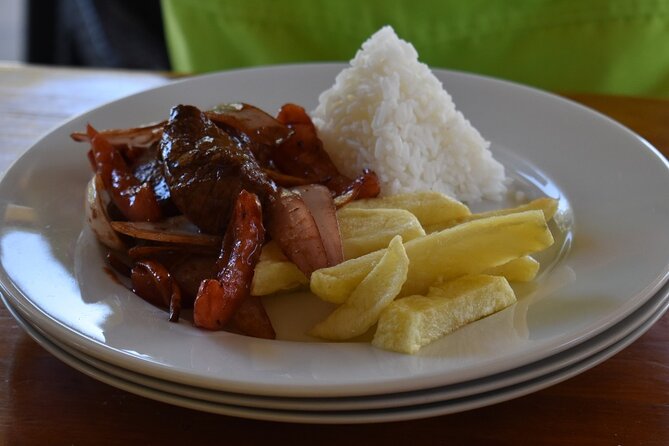
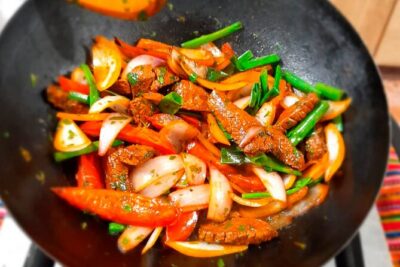
The sample menu includes salted loin for the main course and stuffed causa as the starter. These two dishes offer a useful look at different parts of Peruvian cooking, with one centered on a seasoned main dish and the other on a prepared potato-based starter.
The menu is called a sample, so I would not assume it is guaranteed unchanged for every class. The experience says the group chooses the ingredients and the selected dish is prepared during the session. Ask at the start what you will be making if the exact menu matters to you.
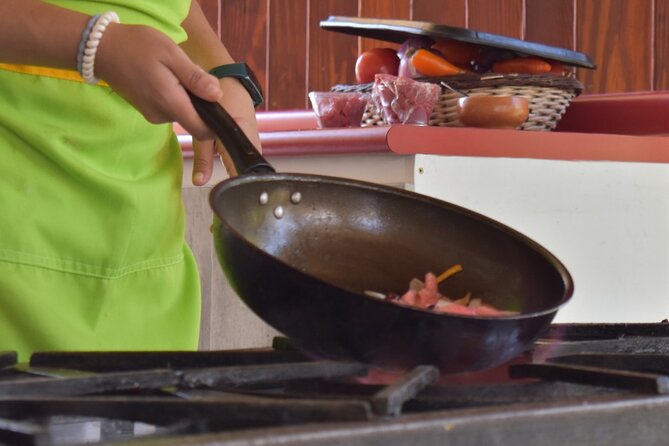
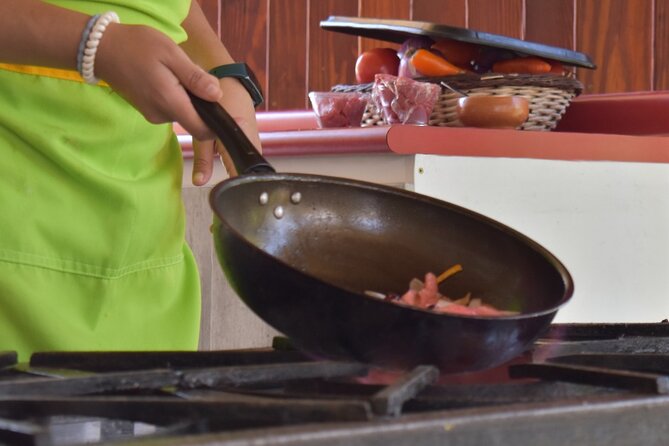
The chef teaches the secrets of each dish and explains how to prepare it step by step. That is more valuable than simply eating a local meal because you see the process behind it. You also get the chance to prepare the chosen dish yourself, rather than standing at the edge of the kitchen.
The phrase ancestral techniques is used to describe the cooking approach. The available information does not name those techniques, so I would not expect a detailed historical lecture on every method. What you can expect is a lesson presented as traditional Arequipa and Peruvian cooking, with the chef openly demonstrating the local cuisine.
For a visitor who enjoys food but does not cook often, the step-by-step format should feel approachable. For an experienced home cook, the market and regional focus may be more interesting than the basic mechanics. The class is not designed only for serious cooks. It is built around participation, explanation, and a shared meal.
A completely different kind of day:
- 2 day 1 night trek / Colca Canyon
★ 5.0 · 1,069 reviews - From Arequipa: Colca Canyon Full-Day Guided Tour with Meals
★ 4.5 · 982 reviews - Tour to the Salinas Lagoon and National Reserve in Arequipa
★ 4.5 · 548 reviews - From Arequipa: Sillar Route Trek
★ 4.2 · 461 reviews
Eating What You Prepare
The class ends with the group tasting and sharing the food prepared during the session. Lunch is included in the price, so this is not a demonstration followed by an extra restaurant bill.
I like this ending because it ties the whole morning together. You see the products at San Camilo, help prepare them, then sit down to eat the result. That simple chain gives the meal more meaning than ordering the same dish from a menu without seeing how it came together.
A five-star rating specifically praised both the market visit and the cooking class, with the group described as numbering 10 people. That is useful evidence about the experience’s strongest feature: it can work as a social activity while still giving the group a real food focus.
The group size can shape your experience. With two people, the class may feel more intimate. With 10, the mood may be more social, but you may need to share attention and work space. The provider sets a minimum of two people, so solo visitors cannot count on the class running alone for them.
Is the $130 Price Fair?
At $130 per person, this is not a low-cost lunch. The price covers hotel pickup, the San Camilo Market visit, English instruction, the cooking experience, kitchen materials, and lunch. It also combines a food-focused activity with a look at one of Arequipa’s traditional markets.
I think the value depends on how you like to spend your time. If you would otherwise pay separately for a market tour, a cooking class, and lunch, the package becomes easier to justify. You are paying for a guided experience with ingredients arranged for you, not just for the food on the plate.
The value is weaker if your main goal is simply to eat cheaply or browse the market on your own. San Camilo Market can be visited without booking a cooking class, and $130 is a substantial amount for a four-hour activity. You should book this for the instruction and participation, not because it is the cheapest way to have lunch in Arequipa.
The included pickup also helps. You do not need to arrange the first transfer from your hotel. The return trip is not included, and public transportation is listed at $12 per person. Check how that extra cost applies to your plans, especially if your hotel is outside the central area.
Timing, Pickup, and the Four-Hour Plan
The experience lasts about four hours. The stated start time is 10:00 a.m., while the pickup information gives 9:45 a.m. in one place and 8:45 a.m. in another. That one-hour difference is too large to ignore.
I would confirm the pickup time directly after booking and again the day before. The booking confirmation is sent at the time of reservation, but the conflicting times mean you should read it closely rather than rely on a general schedule.
A morning start makes sense for a market-based cooking class. You see the products early, cook afterward, and finish with lunch. The schedule may also work well if you want the afternoon free for Arequipa’s other sights, though the experience itself does not promise a separate afternoon plan.
Pickup is available from your hotel. The exact hotel coverage is not specified, so you should provide the property name when booking and verify that pickup applies to your location. The activity is also near public transportation, which gives you another way to reach the area if needed.
Free cancellation is available when you cancel at least 24 hours before the local start time. Changes or cancellations made within 24 hours are not accepted for a refund.
Who Will Enjoy This Cooking Class?
I would recommend this experience to food-focused visitors who want more than a restaurant meal. It suits people who like local markets, enjoy learning by doing, and want an activity that connects ingredients with a finished dish.
It is also a good choice for couples, families, and small groups who want a shared project. The minimum of two people makes it naturally suited to pairs, while the 10-person limit keeps it from becoming a very large class.
You may want to skip it if you dislike markets, prefer a tightly scheduled sightseeing tour, or want a quiet private lesson. The market is a central part of the experience, and the class is designed for group participation.
The English option is helpful for visitors who want the chef’s explanations in English. The available information does not list other languages, so English is the confirmed language to choose.
My Booking Advice for Arequipa
I like this experience because it connects three things that belong together: a local market, traditional cooking, and a shared lunch. The strongest feature is not the menu alone. It is the chance to see the ingredients at San Camilo, hear the chef explain them, and then use them yourself.
Before paying $130, confirm the pickup time, ask whether the sample menu will be used on your date, and plan for the $12 return transportation charge. Those checks remove the main uncertainties.
Book it if you want an active food experience with a genuine market visit and do not mind paying for guidance and convenience. Skip it if you are looking for the lowest-cost meal or a broad historical tour of Arequipa. For the right person, this is a pleasant way to turn lunch into a lesson about the city’s food culture.
FAQ
Where does the experience take place?
It begins at San Camilo Market and continues at a restaurant in the historical center of Arequipa.
How long does the cooking experience last?
The experience lasts approximately four hours.
What time does the activity start?
The stated start time is 10:00 a.m. Pickup details list both 8:45 a.m. and 9:45 a.m., so confirm the exact pickup time when you book.
Is hotel pickup included?
Yes. Pickup from the hotel is included.
Is transportation back to the hotel included?
No. Return transportation is not included. Public transportation is listed at $12 per person.
What food is included?
Lunch is included. The sample menu lists salted loin as the main course and stuffed causa as the starter.
How many people are required for the class?
A minimum of two people is required. The maximum group size is 10 people.
Can I cancel for a full refund?
Yes, if you cancel at least 24 hours before the experience start time. Cancellations or changes made less than 24 hours before the start are not refunded or accepted.
More Markets in Arequipa
- Peruvian Cooking Class Cocktails and Market Tour in Cusco
★ 5.0 · 1,712 reviews - Peruvian Cooking Class, Local Market Tour & Exotic Fruit Tasting
★ 5.0 · 744 reviews - Street Food, Market & Old Eateries Tour in Lima’s Historic Center
★ 5.0 · 656 reviews - Cusco: Peruvian Cooking Class, Cocktails & Local Market Tour
★ 4.9 · 512 reviews
Just added in Arequipa
- Sillar Route★ 5.0 · 4 reviews
- Salinas Lagoon + Mini Volcano DE Lojen★ 5.0 · 9 reviews
- 3-Day Colca Canyon trek with Professional Guide★ 5.0 · 40 reviews
- Full Day Tour To The Salt Lake Salinas in Arequipa★ 4.5 · 34 reviews
- Walking City tour including the Monastery of Santa Catalina★ 5.0 · 6 reviews
- Trekking, Waterfalls and Thermal Baths★ 4.5 · 47 reviews
- Downhill Tour – Mountain Bike in Arequipa★ 3.5 · 5 reviews
- 2 Days 1 Night trekking Through Colca Canyon, Private room★ 5.0 · 16 reviews
Peru Food Tours and Cooking Classes, compared.
Peruvian Cooking Class Cocktails and Market Tour in Cusco
Read our review →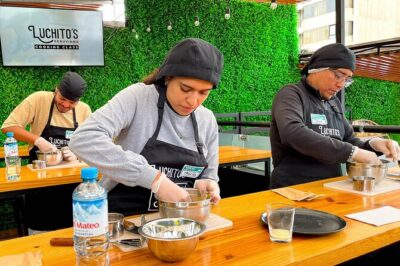
Peruvian Cooking Class, Local Market Tour & Exotic Fruit Tasting
Read our review →
3 Day Tour From Lima: Paracas, Huacachina Oasis & Pisco Vineyard
Read our review →