
Reviewed · CUSCO CITY TOURS
Cuzco City Tour and Archaeological Ruins in Half Day
Six major sights, one afternoon. This Cusco tour gives you a fast introduction to the old Inca capital, combining the city center with five archaeological sites in the hills above town. You begin at the Plaza de Armas, walk to Qorikancha, then ride out to Sacsayhuaman, Q’enqo, Puka Pukara, and Tambomachay.
I like the efficient route and the chance to see both Spanish colonial Cusco and the remains of the Inca world in one outing. I also like that pickup and return transportation are included within the historic center, and the group is limited to 15 people. The main drawback is simple: five hours is not much time for six stops, and the approximately $25 tourist ticket is extra.
In This Review
- Key points to know before booking
- Why this half-day route works
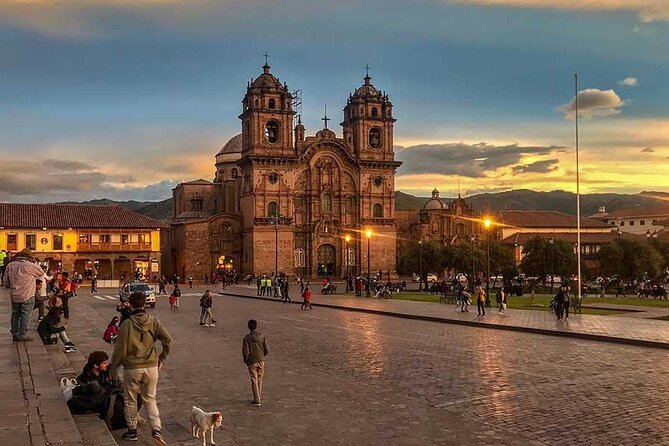
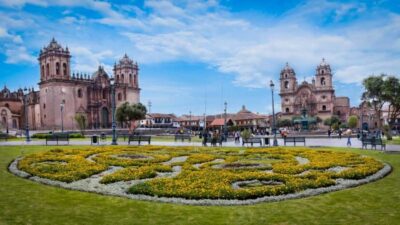
- Plaza de Armas: start with Cusco’s center
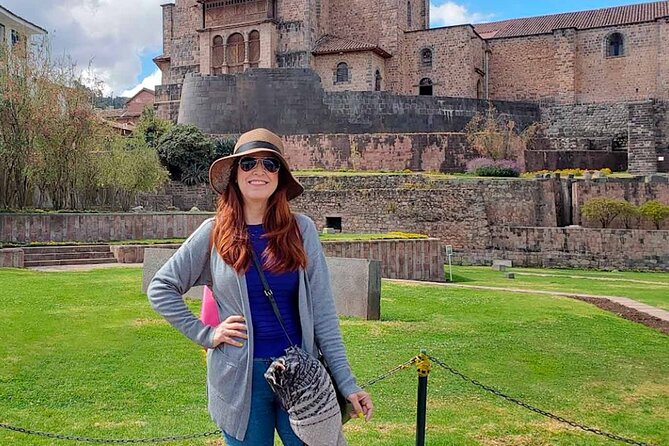
- Qorikancha: where Inca stone meets a Dominican convent
- Sacsayhuaman: the tour’s biggest visual moment
- Q’enqo: a smaller site with a religious purpose
- Puka Pukara: a red fortress beside the road
- Tambomachay: water, ritual, and a quiet finish
- The $60 price and the extra ticket
- What the guide adds to the experience
- Timing, pickup, and group size
- Who should book this Cusco tour?
- Final verdict: book it for orientation, not a slow study
- FAQ
- How long does the Cusco city and ruins tour last?
- What time does the tour begin?
- Which sites are included in the route?
- Is transportation included?
- What happens if my accommodation is outside the pickup area?
- Is the tour offered in English?
- Is admission to the sites included in the tour price?
- Are food and drinks included?
- How many people can join the tour?
- Can I cancel for a full refund?
Key points to know before booking
- Six sights in about five hours: You cover the central plaza, Qorikancha, and four hilltop archaeological sites in one afternoon.
- A useful first-day tour: The 1:00 pm start works well if you arrive in Cusco with only part of the day available.
- The tourist ticket costs extra: Admission to the archaeological sites is not included, with the listed cost around $25.
- Pickup is limited to central Cusco: Hotels inside the city’s urban radius receive transportation, while outlying accommodations are assigned a nearby meeting point.
- Guides add the most value: Guides such as Jorge, Javier, and Jose have been praised for clear explanations, local tips, and patience.
- Expect a quick overview, not a slow study: This is a good orientation tour, but you will not have unlimited time at every ruin.
Why this half-day route works
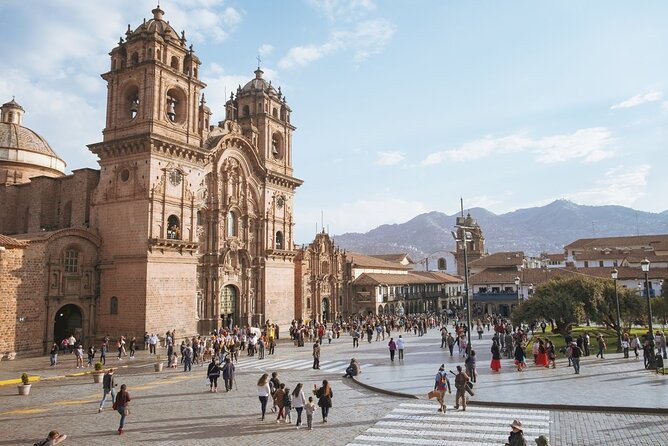
Cusco is a city where the past appears in layers. In the Plaza de Armas, you see the Spanish colonial center. At Qorikancha, Inca stonework sits beneath a Dominican convent. Outside town, enormous masonry, ceremonial spaces, water channels, and defensive sites explain how the Inca capital functioned.
I like the order of this tour because it moves from the center outward. You first get your bearings in the heart of Cusco, then head into the surrounding hills. That makes the ruins easier to understand. They are not isolated monuments scattered at random. They were tied to the capital, its religion, its roads, its water supply, and the movement of the Inca and his court.
The afternoon schedule also makes practical sense. The tour begins at 1:00 pm, so you have the morning for breakfast, a gentle walk, or recovery after arriving in Cusco. The tour is also useful on a departure day if you have a later flight or train, though you should allow plenty of extra time for your own onward plans.
The experience is offered in English and includes a professional guide. It is also listed as suitable for most people, with transportation to and from hotels in central Cusco. A maximum group size of 15 keeps it from becoming a large bus outing, though the experience may still feel brisk when the group is moving between sites.
More Cusco city tours:
- Cusco: Half-Day City Tour with Sacsayhuaman and Q’enco
★ 4.6 · 1,129 reviews - City Tour Cusco Qoricancha Sacsayhuaman y Tambomachay
★ 4.7 · 617 reviews - Cusco City Tour Four Ruins in Half-Day
★ 5.0 · 530 reviews
Plaza de Armas: start with Cusco’s center
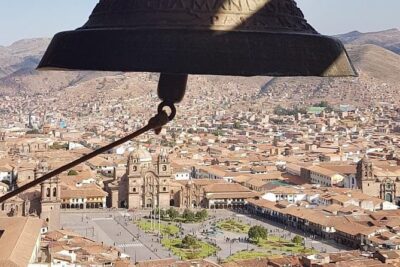
The tour begins in the Plaza de Armas, the main square of Cusco. Plan on about an hour here, including the walk toward Qorikancha.
This is the right place to begin because the square gives you a visual introduction to the city’s changing identity. You are starting in the colonial center, but the streets and foundations reflect the earlier Inca capital. The route allows your guide to connect the buildings around the plaza with the larger story of Cusco before you visit the remains outside town.
The walk to Qorikancha is also useful. It gives you a little time on foot rather than keeping you in a vehicle all afternoon. You can expect this portion to focus on orientation and explanation rather than a long museum visit.
The limitation is time. One hour sounds generous, but it includes movement and interpretation. If you want detailed photographs of every building around the square, you may wish to return independently later.
Qorikancha: where Inca stone meets a Dominican convent
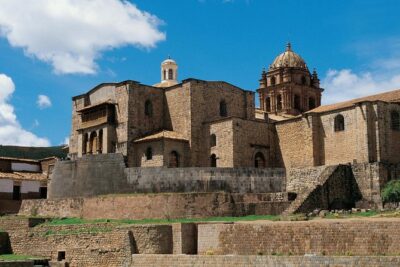
Qorikancha is described as the highest expression of Inca architecture and engineering. The name refers to the Temple of the Sun, which now forms part of the Convent of Santo Domingo.
This is one of the most important stops because it makes the collision of Inca and Spanish cultures easy to see. The site is not only an archaeological ruin. It is also a religious building that continued in another form after the Spanish conquest. That combination gives you more to think about than a standalone ruin.
The stonework is the main reason to pay attention here. The Inca built with carefully fitted masonry, and Qorikancha provides a central-city example before you see the larger stones at Sacsayhuaman. Your guide can help explain why this temple mattered and how its religious role fit into the Inca capital.
Admission to Qorikancha is not included. That matters when you compare the advertised $60 price with your actual spending. You should budget for the separate entrance cost, along with the tourist ticket required for the archaeological sites.
The scheduled time is one hour. That gives you enough room for an introduction, but not necessarily for a slow, independent examination of every room. If religious architecture and colonial-era buildings are your main interests, Qorikancha may be the stop where you most wish for extra time.
Sacsayhuaman: the tour’s biggest visual moment
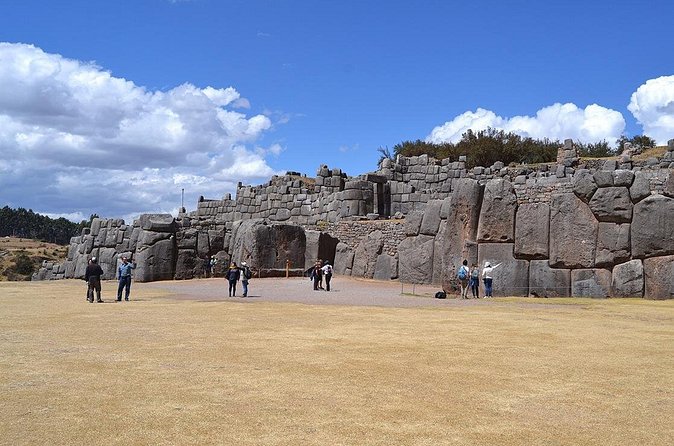
From the city center, the tour continues to Sacsayhuaman, an impressive fortress built on a hill overlooking Cusco. You are scheduled to spend about an hour here.
The site is famous for its enormous carved stones. Some are described as reaching 9 meters, or about 30 feet, in height, and weighing more than 350 tons. Those figures help explain why this stop usually becomes the visual high point of the afternoon. Even without technical knowledge of Inca construction, you can see the scale and precision of the work.
The hilltop position also gives Sacsayhuaman a strong connection to Cusco below. You are not simply looking at stone walls. You are seeing a site chosen for strategic control and for its relationship to the city.
An hour is a sensible amount of time for a first look. You can see the major masonry, hear the explanation, and take in the view without spending the entire afternoon at one location. Still, the site is large enough that the visit may feel short if you want to walk every section.
Wear shoes that feel secure and be prepared for a route that includes archaeological ground rather than smooth city pavement. The tour information says most people can participate, but it does not provide a detailed accessibility description, so anyone with mobility concerns should ask the operator before booking.
More city tours in Cusco:
- Cusco: Sightseeing Tour of the City on an Open-Top Bus
★ 4.0 · 481 reviews - Open Bus Cusco City Tour
★ 4.5 · 219 reviews - Cusco: City Tour | Half-Day Tour to 4 Archaeological Sites
★ 4.6 · 206 reviews - City Tour in Cusco & visit Museum South American Camelid Private.
★ 5.0 · 147 reviews
Q’enqo: a smaller site with a religious purpose
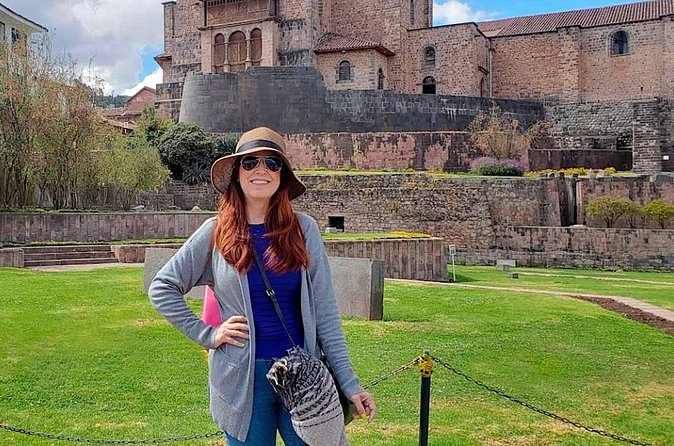
Q’enqo is about 4 kilometers northeast of Cusco and includes the archaeological groups known as Q’enqo Grande and Q’enqo Chico. The name is associated with a labyrinth or zigzag, which suits the site’s unusual character.
The main value here is contrast. Sacsayhuaman impresses through size, while Q’enqo asks you to look more closely at form and ritual use. The site had a religious function, with a semicircular amphitheater outside, trapezoidal niches, and a monolith said to resemble a puma. The monolith measures about 6 meters.
This is the kind of place where a guide makes a real difference. Without explanation, you may see carved stone and an open ceremonial area. With context, the layout begins to suggest how the site was used and why the Inca selected particular shapes and animals for symbolic meaning.
The schedule gives Q’enqo one hour, the same as the first three stops. Since the site is smaller than Sacsayhuaman, that may provide a more manageable visit. The tradeoff is that the overall route still has several stops ahead, so the guide may keep the group moving.
Puka Pukara: a red fortress beside the road
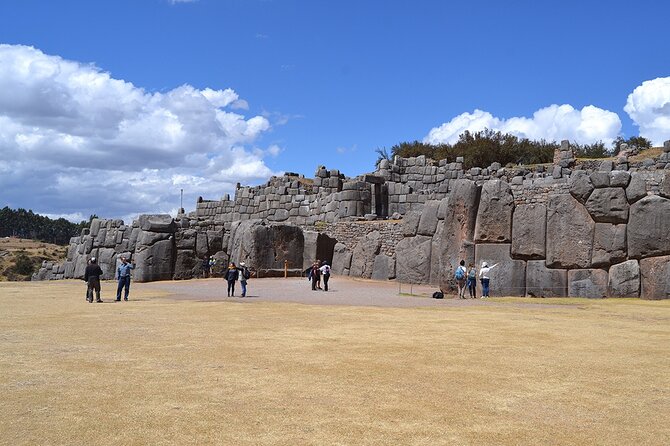
Puka Pukara means red fortress. Its limestone blocks took on a reddish color from the iron-rich soil around them.
The site is especially interesting because its role may have been practical as well as defensive. It is thought to have guarded Tambomachay, but its fountains, aqueducts, and multiple enclosures also fit the description of a tambo, a collective shelter that offered food and lodging to people on the road. It was also connected with the retinue accompanying the Inca to Tambomachay.
You get about 30 minutes here. That is enough for a concise explanation and a look at the main structures, but not enough for a long exploration. I see that as reasonable because Puka Pukara works best as part of the wider route. Its meaning becomes clearer when you soon continue to Tambomachay.
This stop is useful for anyone interested in how the Inca Empire operated beyond palaces and temples. Roads required rest points, supplies, protection, and water. Puka Pukara gives you a glimpse of that support system.
Admission is not included, so the additional tourist ticket applies. Ask your guide how the ticket is being handled for the day, since the tour price itself does not cover it.
Tambomachay: water, ritual, and a quiet finish
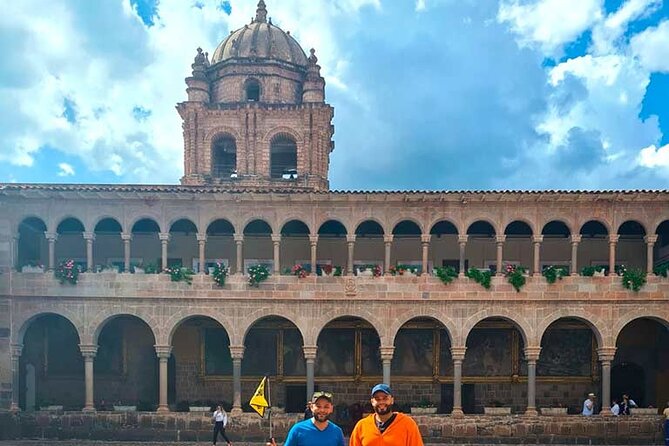
Tambomachay lies about 8 kilometers north of Cusco, close to Puka Pukara. It was connected with the worship of water and with a place for the Inca ruler to rest. It is also known as the Inca Baths.
The site consists of aqueducts, canals, and waterfalls flowing through stone. One especially memorable detail is the pair of secondary waterfalls said to be exactly alike. If two empty bottles are placed beneath them, both fill at the same time.
That detail gives the final stop a sense of wonder without requiring grand scale. After the huge stones at Sacsayhuaman and the ceremonial forms at Q’enqo, Tambomachay brings you back to a precise water system. It shows a different side of Inca planning, one based on control, direction, and careful use of natural water.
You have about 30 minutes here. That should be enough to see the channels and hear the explanation, though again, the pace will be quick. If water engineering is a special interest, you may want to ask whether the schedule allows enough time for a closer look.
The $60 price and the extra ticket
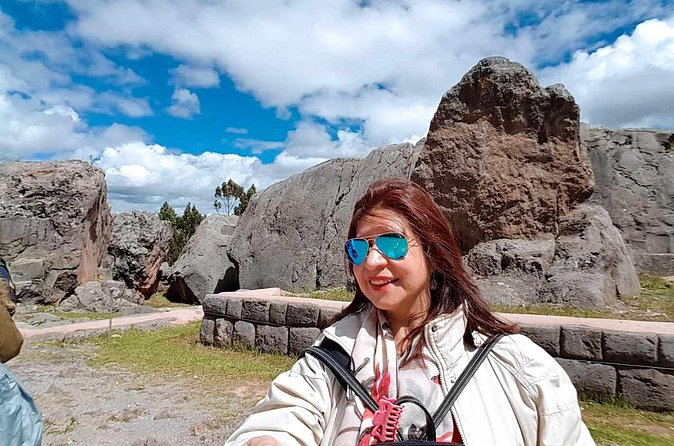
The tour costs $60 per person. That price includes a professional English-speaking guide and transportation to and from hotels in central Cusco. It does not include food, drinks, tips, or the tourist ticket, which is listed at approximately $25.
The value depends on how you use your time. If you tried to arrange transportation to five outer sites, coordinate the route, and hire a guide separately, the convenience could be worthwhile. The tour also saves you from working out how the central city visit fits with the hilltop ruins.
The extra admission charge is the main budget point to remember. The advertised price is not the final cost, so include the ticket when planning your afternoon spending. Tips are optional and not included.
I would consider the tour good value for a first visit, particularly if you have only one free afternoon. It is less compelling if you prefer to spend half a day at one or two sites and examine them slowly.
What the guide adds to the experience
The guide is the difference between a sequence of ruins and a connected story. The strongest guide feedback centers on clear information, patience, practical tips, and punctual service.
Several guides are named in the available comments, including Jorge, Javier, and Jose. Jorge is described as giving a strong general introduction to the city. Javier is credited with keeping the service on schedule, while Jose is praised for explaining the culture and history of the sites.
Because guide assignments can vary, you should not assume a particular person will lead your departure. Still, these comments suggest that the company places value on explanation rather than simply driving you from gate to gate.
The bilingual ability noted in one comment is also useful for mixed-language groups. The tour is offered in English, so confirm your language preference when booking if that matters to you.
Timing, pickup, and group size
Pickup begins around the 1:00 pm start time and is offered within the historic center of Cusco. If your accommodation lies outside the company’s urban pickup radius, you will be given the nearest meeting point for pickup and drop-off.
That rule is worth checking before you pay. A central hotel makes the service straightforward. An outlying accommodation may require a short transfer to the assigned meeting point, and the provided information does not specify how far that point might be.
The group limit is 15 people. That is small enough for questions to be possible, though the quality of the experience will still depend on the pace and guide. The route has six stops, so the group must keep moving to complete it in roughly five hours.
This is not a food tour. No meals or drinks are included. Bring what you need for the afternoon, especially since the schedule moves between the city and archaeological sites.
Who should book this Cusco tour?
I would recommend it to you if you want a practical introduction to Cusco and have limited time. It is especially useful on your first afternoon, when you want a broad sense of the city before choosing which places deserve a longer return visit.
It also suits anyone who prefers organized transportation and historical explanation. The route covers major sights that would be awkward to connect without a vehicle, particularly Sacsayhuaman, Q’enqo, Puka Pukara, and Tambomachay.
You may want another option if you dislike fixed schedules or want long, quiet visits. The two 30-minute stops are necessarily brief, and even the one-hour visits include movement and group coordination.
The tour is also a sensible choice for people who want a general overview rather than a specialist archaeology experience. You will see a lot, but you will not study every stone, canal, or ceremonial space in detail.
Final verdict: book it for orientation, not a slow study
I would book this tour if my goal were to get oriented quickly and see the main Cusco highlights in one afternoon. The combination of Plaza de Armas, Qorikancha, Sacsayhuaman, Q’enqo, Puka Pukara, and Tambomachay gives you a well-rounded look at the Inca capital and its surrounding sites.
The strongest reasons to choose it are the efficient route, central pickup, English guide, and manageable group size. The main cautions are the extra $25 tourist ticket and the brisk schedule.
Think of it as a smart first look. Afterward, you will know which places deserve more of your time, and you will have seen the enormous stones, carefully managed water, religious spaces, and road facilities that made Cusco more than a pretty colonial city.
FAQ
How long does the Cusco city and ruins tour last?
The tour lasts approximately five hours.
What time does the tour begin?
The scheduled start time is 1:00 pm.
Which sites are included in the route?
The route includes the Plaza de Armas, Qorikancha, Sacsayhuaman, Q’enqo, Puka Pukara, and Tambomachay.
Is transportation included?
Yes. Transportation to and from hotels is included within the historic center and urban radius of Cusco.
What happens if my accommodation is outside the pickup area?
You will be informed of the nearest meeting point for pickup and drop-off.
Is the tour offered in English?
Yes. The experience is offered in English.
Is admission to the sites included in the tour price?
No. Admission tickets are not included. The tourist ticket costs approximately $25.
Are food and drinks included?
No. Food and beverages are not included.
How many people can join the tour?
The activity has a maximum group size of 15 people.
Can I cancel for a full refund?
Yes, if you cancel at least 24 hours before the local start time. Cancellations made less than 24 hours before the start are not refunded. If poor weather or an insufficient number of participants cancels the tour, you will be offered another date or experience, or a full refund.
Just added in Cusco
- Cusco Private Transportation for 2026★ 5.0 · 4 reviews
- Private Transfer from Airport to Hotel in the City of Cusco★ 4.0 · 5 reviews
- Best Cusco walking tour: dinner street food tasting★ 4.5 · 11 reviews
- Private Tour to Pisac Market and Pisac Ruins★ 5.0 · 4 reviews
- Machu Picchu Day Trip With Panoramic Train from Cusco★ 5.0 · 10 reviews
- Sacred Valley of the Incas Tour★ 5.0 · 12 reviews
- Private Tour of the Mountain of Colours by Quad★ 5.0 · 7 reviews
- Sacred Valley Private Tour from Cusco, Guide and Driver only★ 5.0 · 4 reviews
Cusco City Tours, compared.
Half-Day City Tour with Sacsayhuaman and Q’enco
Read our review →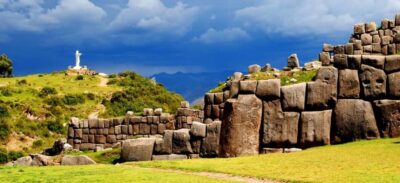
City Tour Cusco Qoricancha Sacsayhuaman y Tambomachay
Read our review →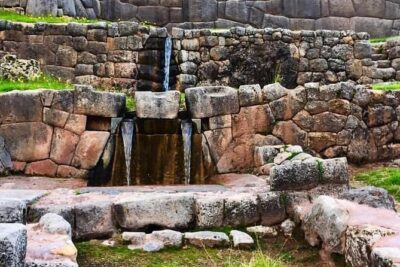
Cusco City Sightseeing, San Pedro Market, Cathedral and Qorikancha Temple
Read our review →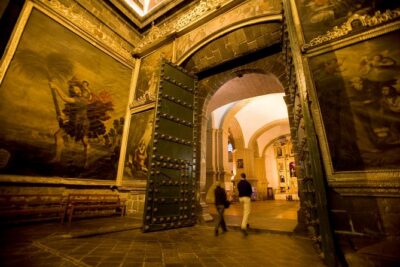
Cusco City Sightseeing and Sacsayhuaman Archeological Park Tour
Read our review →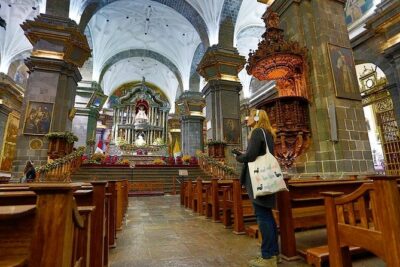
Cusco 4-Hour Private Tour Including Sacsayhuaman and Qenqo
Read our review →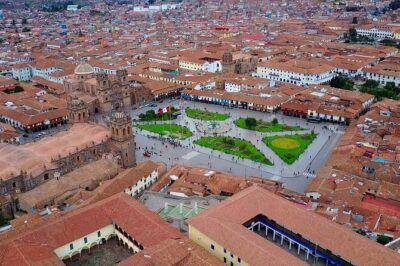
Browse the lists this tour appears in