
Reviewed · CUSCO CITY TOURS
Private Cusco City Tour Archaeological Sites, Guide & Driver only
Ancient stones, living streets, one smart route. This private Cusco tour works well because it links the city’s major Inca and Spanish sites with a guide who can explain both sides of the story. I like the private vehicle for reaching Sacsayhuaman, and I like the chance to walk through Cusco with a guide rather than simply photograph its famous walls.
The strongest guides seem to be the real reason to book. Danny is praised for telling engaging stories in excellent English, while Erica earned high marks for reversing the usual route to avoid crowds. The main drawback is that entrance tickets are not included, and time spent inside churches may feel long if your main goal is archaeology.
In This Review
- Key points at a glance
- Why this private Cusco tour makes sense
- Starting at Sacsayhuaman above Cusco
- Q’enqo, Puca Pucara, and Tambomachay in one circuit
- Coricancha, where Inca and Spanish Cusco meet
- A local market for the everyday side of Cusco
- Cusco Cathedral and the colonial chapter
- The guide can make or break the day
- Timing, walking, and practical limits
- Who will get the most from this tour
- Should you book the private Cusco city tour?
- FAQ
- How long does the private Cusco tour last?
- What sites does the tour visit?
- Is transportation included?
- Are entrance tickets included?
- Are meals included?
- Is this a private activity?
- What is the minimum age?
- Can I cancel for a full refund?
Key points at a glance
- A private six-hour route combines walking in central Cusco with vehicle access to four nearby archaeological sites.
- Sacsayhuaman is the headline stop, with huge fitted stones and views over the former Inca capital.
- The order can be adjusted, and beginning outside the city may help you avoid the thickest crowds.
- Coricancha and Cusco Cathedral show two layers of history, from Inca religion to Spanish colonial rule.
- The local market adds everyday Peru, with produce, meat, seafood, groceries, and simple cooked meals.
- The guide matters greatly, with Danny, Erica, Juan, and Varnia receiving especially warm praise for clear English, humor, and personal insight.
Why this private Cusco tour makes sense
Cusco can feel confusing at first. Streets twist around Inca foundations, churches occupy former temples, and the main ruins sit outside the center. This six-hour private tour gives you a useful first reading of the city.
You receive a guide, private transportation, and hotel pickup and drop-off. Since only your own group participates, you can ask questions, linger at a favorite site, or request a small change in pace. That flexibility matters in Cusco, where altitude, weather, and the uneven paving can affect your energy.
The published price is $90 per person. I consider that fair if you value a private guide and vehicle, especially for a small group that wants a clear introduction without organizing separate taxis and entrance arrangements. It becomes less attractive if you only want transport to the ruins or prefer to explore churches on your own.
The price does not include site tickets or meals. The ticket instructions specify payment in Peruvian soles at the sites, not US dollars, and say that a passport is required. The listed ticket amount is PEN 0.70 per person, so I would confirm the current fee before departure because the figure appears unusually low for a full set of archaeological and church admissions.
More Cusco city tours:
- Cusco: Half-Day City Tour with Sacsayhuaman and Q’enco
★ 4.6 · 1,129 reviews - City Tour Cusco Qoricancha Sacsayhuaman y Tambomachay
★ 4.7 · 617 reviews - Cusco City Tour Four Ruins in Half-Day
★ 5.0 · 530 reviews
Starting at Sacsayhuaman above Cusco
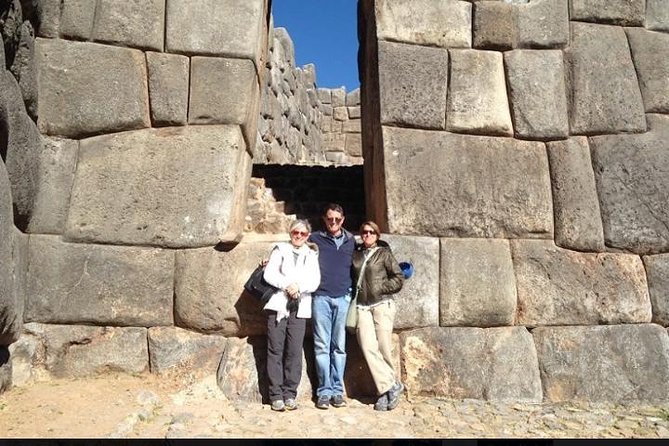
Sacsayhuaman receives about two hours, and that is sensible. This is not a quick photo stop. The scale of the masonry needs time.
The name is translated as speckled falcon or speckled head. The second interpretation connects with the traditional idea that Cusco was laid out in the shape of a puma, with Sacsayhuaman forming its head. The site is generally linked with Inca Pachacutec, the ruler associated with the expansion of the Inca Empire in the fifteenth century.
Your guide can help you look beyond the broad fortress label. The most striking feature is the enormous stonework, with blocks fitted so tightly that the walls seem almost drawn together. I would pay close attention here to how the site relates to the city below. Sacsayhuaman is not just a pile of ruins outside Cusco. It helps explain the scale and planning of the Inca capital.
The private vehicle is a real advantage at this point. Sacsayhuaman sits outside the central streets, and reaching it independently can mean arranging transport and then finding your way between the nearby ruins. With a driver waiting, you can focus on the site rather than the next ride.
The main caution is weather. One person found a heavy rainstorm cut the tour short. Bring protection from sun and rain, and wear shoes suited to uneven ground. The tour is described as suitable for most people, but this is still an active sightseeing day with walking and outdoor stops.
Q’enqo, Puca Pucara, and Tambomachay in one circuit
After Sacsayhuaman, the van continues to Q’enqo, Puca Pucara, and Tambomachay. These sites are close to the same outer Cusco zone, allowing you to see several pieces of the Inca ceremonial and defensive area without repeated journeys across town.
Q’enqo is the next named stop and forms part of the archaeological circuit. The time allocation groups these outer sites together, so your exact pace may depend on your guide and your group’s interests. If you are fascinated by carved stone and ritual spaces, tell your guide early. If you prefer broad context to detailed ruins, you may want to keep moving so there is enough time downtown.
Puca Pucara and Tambomachay complete this section before the return to Cusco. Their value comes partly from comparison. Seeing several sites close together helps you understand that the Inca capital was supported by more than one monumental center. You get a sense of how ceremonial, defensive, and water-related places fit into the wider area.
This is where a private tour has an edge over a fixed group outing. Your guide can spend more time on the stop that catches your attention and less time on one that does not. Still, do not expect six hours of uninterrupted archaeological exploration. The day also includes Coricancha, the market, and the cathedral.
Coricancha, where Inca and Spanish Cusco meet
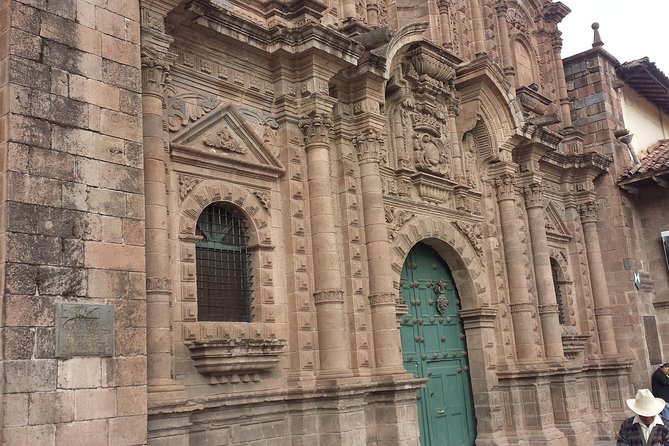
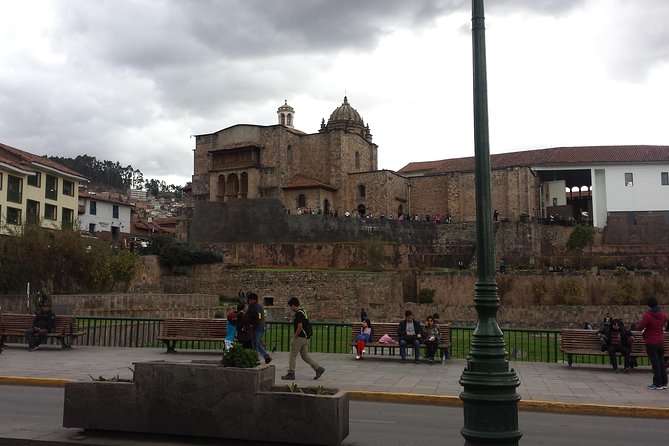
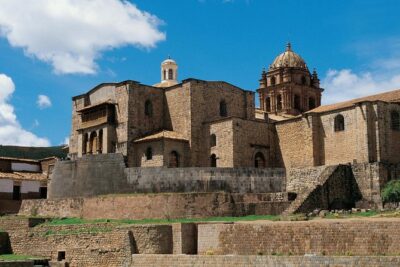
Back in the city, the tour visits Coricancha, also called the Inca Temple of the Sun. The temple lies beneath the Santo Domingo church and convent, making it one of Cusco’s clearest examples of layered history.
The name Coricancha is associated with a religious complex whose walls were once covered in gold. That detail helps you picture the importance of the site before Spanish colonization, but the real interest comes from seeing the Inca foundations beneath the later church complex.
I would listen closely here to the explanation of what survived and what changed. Cusco is easier to understand when you stop treating Inca and Spanish architecture as separate attractions. At Coricancha, they occupy the same physical space.
Photography inside buildings may not be allowed. One person was disappointed by restrictions on interior photographs and bought a postcard booklet showing the cathedral artwork instead. That is useful advice: enjoy the interiors as places to look and listen, not only as photo opportunities.
More city tours in Cusco:
- Cusco: Sightseeing Tour of the City on an Open-Top Bus
★ 4.0 · 481 reviews - Open Bus Cusco City Tour
★ 4.5 · 219 reviews - Cusco: City Tour | Half-Day Tour to 4 Archaeological Sites
★ 4.6 · 206 reviews - City Tour in Cusco & visit Museum South American Camelid Private.
★ 5.0 · 147 reviews
A local market for the everyday side of Cusco
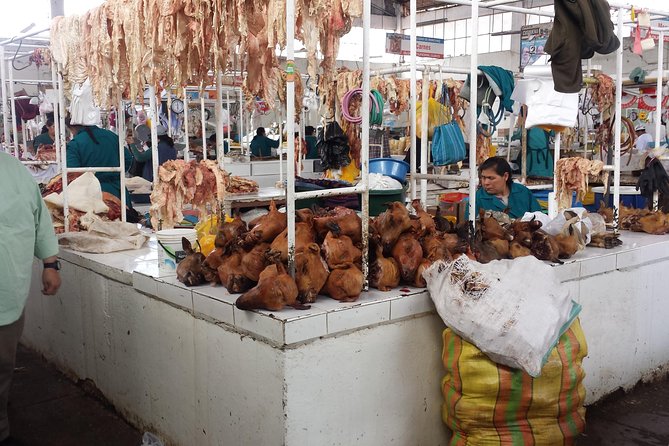
The market visit gives the tour a welcome change of pace. Inside the main building, you can find fresh fruit and vegetables, meat ranging from rabbit and guinea pig to whole pigs, fish and seafood, groceries, and small food stands.
This is not polished sightseeing. That is exactly why it can be useful. A market shows how people shop and eat in present-day Cusco, while the ruins and churches explain the city’s past. The small stalls serve simple meals for a few soles, prepared by local cooks referred to as Mamá or Jefe in the tour description.
The stop may not suit everyone. Some people will find the food displays direct and unfamiliar, especially the meat section. Others will appreciate the chance to see a practical part of local life instead of spending the entire day among monuments.
If you have already visited the market, ask your guide about alternatives. One group persuaded its guide to visit a Peruvian doughnut shop instead. That detail says something useful about the private format: the day does not have to feel rigid, provided your guide agrees and the timing works.
Cusco Cathedral and the colonial chapter
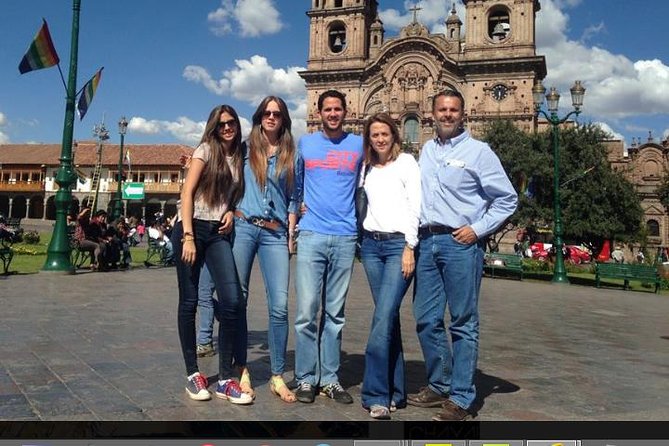
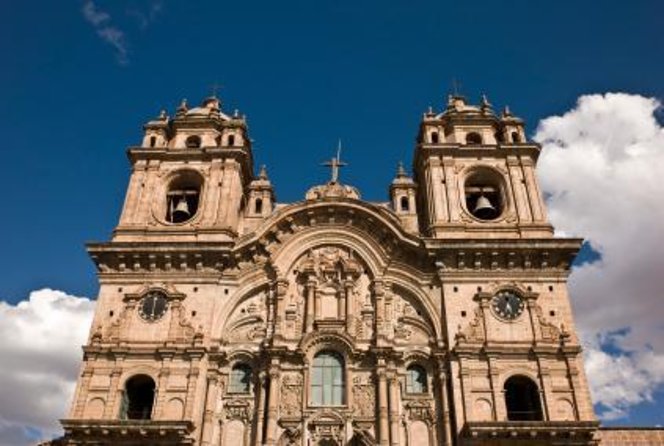
The final major stop is Cusco Cathedral, a large colonial church built by the Spanish in the seventeenth century. The visit lasts about an hour before the return to your hotel.
The cathedral gives the tour a different visual and historical mood. After stone terraces and Inca religious foundations, you move into a Spanish colonial church filled with the artistic and religious legacy of the conquest. For a first visit to Cusco, that contrast is important. The city is not only an Inca capital preserved in stone. It is also a colonial center shaped by Spanish power and Catholic traditions.
The cathedral may be the least appealing section for someone focused only on archaeology. One person felt the tour spent more time in the churches than necessary. I would make your interests clear at the start. If you want architecture, painting, and colonial history, the cathedral deserves its full hour. If you mainly want ruins, ask the guide to keep the church commentary focused.
As with Coricancha, interior photography may be restricted. Plan to remember what you see rather than collect a large set of indoor images.
The guide can make or break the day
The clearest pattern in the available feedback is the importance of the guide. Juan is praised for strong English and a good grasp of local history. Danny receives especially high praise for telling the past through engaging stories in excellent English. Varnia is remembered for sharing her culture with humor and warmth.
Erica appears particularly good at shaping the route. She reversed the usual order, starting with the outer ruins and finishing in Cusco, which helped one group avoid crowds. That is a practical move, not just a pleasant surprise. Ask at pickup about the planned order and request the quieter sequence if conditions allow.
A private guide also gives you room to ask questions about subjects that a standard group may rush past. You can ask about the Inca Empire, Spanish conquest, local food, church art, or present-day Cusco. The strongest guides on this tour seem to connect those subjects instead of presenting a string of disconnected facts.
Guide assignments can change, so I would not book solely on the hope of receiving Danny or Erica. Still, their names are worth noting if the provider can honor a request.
Timing, walking, and practical limits
The full experience lasts about six hours. It combines outdoor ruins, vehicle transfers, central-city walking, churches, and a market. That makes it a good first-day orientation, but it is not a slow specialist tour of every site.
You must book with at least two people, and the minimum age is six. Most people can participate, according to the tour information, but the day still involves walking and uneven historic surfaces. A private vehicle reduces the strain between sites, yet it does not remove the need to walk around Sacsayhuaman or through central Cusco.
The tour includes hotel pickup and drop-off, which simplifies the start and finish. Meals are not included. Since the market has inexpensive food stalls, you might choose to eat there, but the tour does not promise a meal stop or include the cost.
Free cancellation is available if you cancel at least 24 hours before the local start time. Changes or cancellations made inside that window are not accepted for a refund.
Who will get the most from this tour
I would choose this experience if you are visiting Cusco for the first time and want the main picture in one day. It suits couples, families with children aged six or older, and small groups that prefer a private conversation over a fixed public group.
It is also a good fit if you want both ancient and colonial Cusco. The tour does not force you to choose between ruins and churches, and the market adds a useful present-day stop.
I would hesitate if you dislike church interiors, want a slow archaeological study, or have already visited most of these sites. In that case, a shorter custom outing might offer better value. I would also allow extra flexibility for rain, since poor weather has shortened at least one day.
Should you book the private Cusco city tour?
Book it if you want a well-organized first look at Cusco with private transport, hotel service, and a guide who can adjust the pace. The best parts are the massive Sacsayhuaman walls, the clear contrast between Coricancha and the cathedral, and the chance to ask for a local food stop or a quieter route.
Before paying, confirm the entrance fees, passport requirement, likely guide, and route order. Bring soles, rain protection, and realistic expectations about indoor photography. At $90 per person, the value depends on using the private format: ask questions, request sensible timing, and let the guide connect the ruins, churches, and daily life into one readable picture of Cusco.
FAQ
How long does the private Cusco tour last?
The tour lasts approximately six hours.
What sites does the tour visit?
It visits Sacsayhuaman, Q’enqo, Puca Pucara, Tambomachay, Coricancha, the local market, and Cusco Cathedral.
Is transportation included?
Yes. Private transportation, hotel pickup, and hotel drop-off are included.
Are entrance tickets included?
No. Entrance tickets are not included and must be paid for at the sites in Peruvian soles. The instructions also state that a passport is required.
Are meals included?
No. Meals are not included. The market has small food stalls where simple meals are available for a few soles.
Is this a private activity?
Yes. Only your group participates in the tour.
What is the minimum age?
The minimum age is six years.
Can I cancel for a full refund?
Yes, if you cancel at least 24 hours before the experience start time. Cancellations or changes made less than 24 hours before the start time are not accepted for a refund.
Just added in Cusco
- Cusco Private Transportation for 2026★ 5.0 · 4 reviews
- Private Transfer from Airport to Hotel in the City of Cusco★ 4.0 · 5 reviews
- Best Cusco walking tour: dinner street food tasting★ 4.5 · 11 reviews
- Private Tour to Pisac Market and Pisac Ruins★ 5.0 · 4 reviews
- Machu Picchu Day Trip With Panoramic Train from Cusco★ 5.0 · 10 reviews
- Sacred Valley Private Tour from Cusco, Guide and Driver only★ 5.0 · 4 reviews
- Sacred Valley of the Incas Tour★ 5.0 · 12 reviews
- Private Tour of the Mountain of Colours by Quad★ 5.0 · 7 reviews
Cusco City Tours, compared.
Half-Day City Tour with Sacsayhuaman and Q’enco
Read our review →
City Tour Cusco Qoricancha Sacsayhuaman y Tambomachay
Read our review →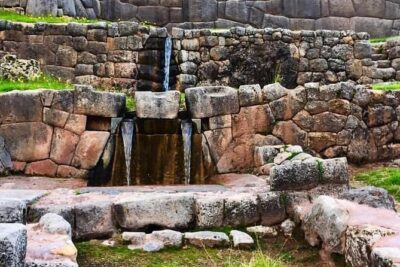
Cusco City Sightseeing, San Pedro Market, Cathedral and Qorikancha Temple
Read our review →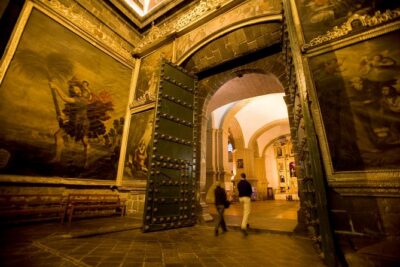
Cusco City Sightseeing and Sacsayhuaman Archeological Park Tour
Read our review →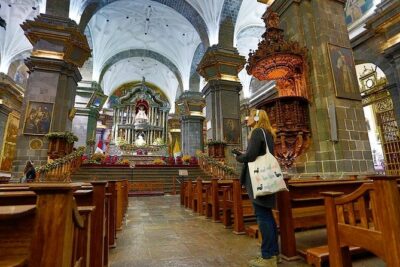
Cusco 4-Hour Private Tour Including Sacsayhuaman and Qenqo
Read our review →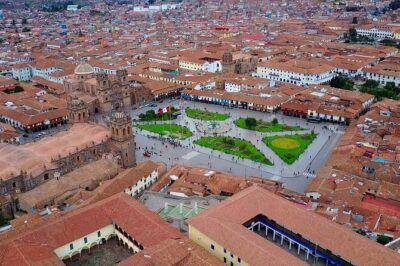
Browse the lists this tour appears in