
Reviewed · HISTORY TOURS IN CUSCO
Cusco : Historical walking tour and tourist lookout point and Andean music show
Cusco rewards a good first walk. This two-hour city tour links major Inca and colonial sights with San Cristóbal viewpoint, where you can photograph the red-tiled city from above. I like the clear introduction it gives you after arrival, and I like the stop with luthier Sabino Huamán, where Andean music and instrument-making add a human touch to the history.
The $10 price is excellent for a guided orientation, especially if you want practical advice about Cusco before exploring alone. The main caution is that the route includes steep streets, and the advertised private or small-group format may not always be what you receive. One recent booking found the tour operated as a group outing instead.
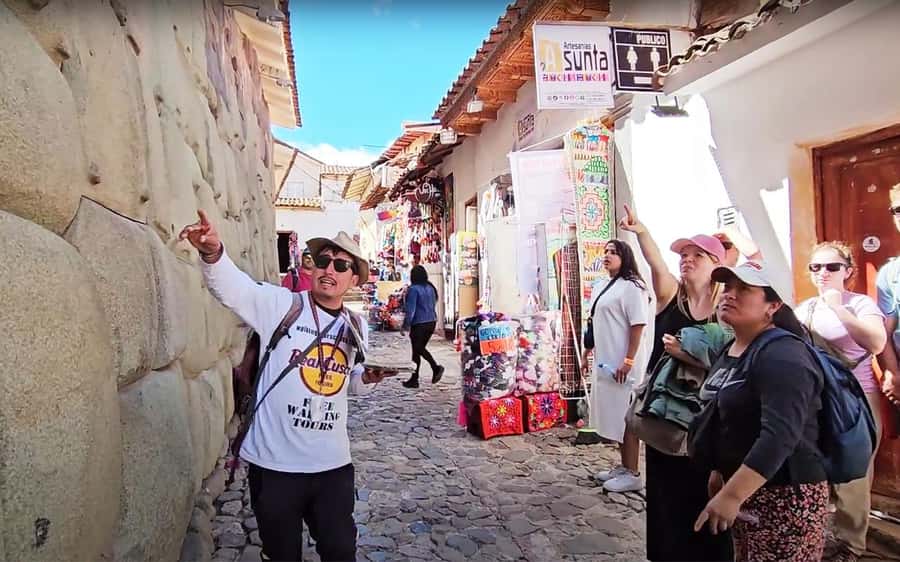
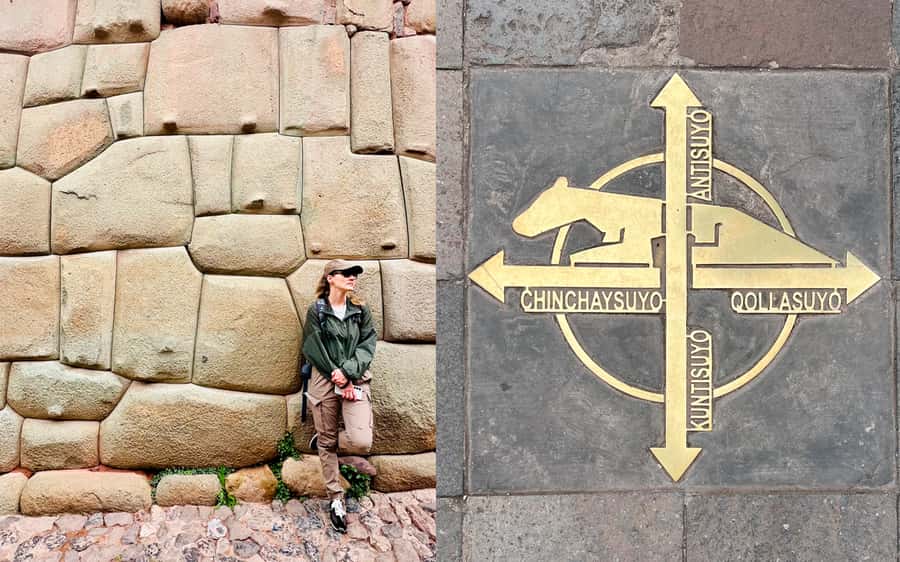
- Inca masonry up close: See the Twelve Angled Stone, the Fourteen Angled Stone, and carved walls linked with the puma, condor, and serpent.
- A useful first-day route: Move from Plaza de Armas through Loreto, San Blas, Sapantiana, and San Cristóbal without needing to plan the route yourself.
- Andean music in a working studio: Meet luthier Sabino Huamán and see the craft behind traditional instruments.
- Photo stops with purpose: San Cristóbal, Siete Borreguitos, and the San Blas area offer some of the tour’s best images.
- Good value at $10: You receive a live guide in English or Spanish, local tips, and an introduction to the city’s main sights.
- Plan for hills: Comfortable shoes, water, sun protection, and layered clothing matter here.
In This Review
- A practical first look at Cusco for $10
- Plaza de Armas and Calle Loreto set the scene
- The Twelve Angled Stone and Inca engineering
- Puma, serpent, and condor in the stonework
- San Blas adds art, slopes, and local character
- Meet luthier Sabino Huamán and hear Andean instruments
- Sapantiana Aqueduct and Siete Borreguitos Street
- San Cristóbal gives you the big Cusco photograph
- Resbalosa and the return to the main square
- English or Spanish guidance, with one group-size warning
- What the $10 price really buys you
- What to bring for a steep, changeable-weather walk
- Who should book this Cusco walk?
- Should you book it?
- FAQ
- How long does the Cusco walking tour last?
- Where does the tour begin?
- How do I identify the tour team?
- Which languages are available?
- Does the tour visit the inside of Cusco Cathedral?
- Is Qorikancha included?
- Does the tour include Andean music?
- Is food included?
- What should I bring?
- Is the tour suitable for wheelchair users?
A practical first look at Cusco for $10
I see this experience as a city orientation rather than a full museum tour. You will pass important sites, hear their basic story, and learn how Cusco fits together. The guide also offers suggestions for further sightseeing and tips about possible discounts at selected entrances.
That makes the tour especially useful on your first day. You can learn where the historic center ends, how San Blas rises above it, and which sights deserve a return visit. At roughly two hours, it gives you useful context without taking over a whole morning or afternoon.
The advertised duration varies between approximately two hours and 150 minutes. The route itself lists several 15-minute stops, a 20-minute visit in San Blas, and a 20-minute stop at the San Cristóbal viewpoint. Expect an unhurried walk, but not a relaxed stroll on level ground.
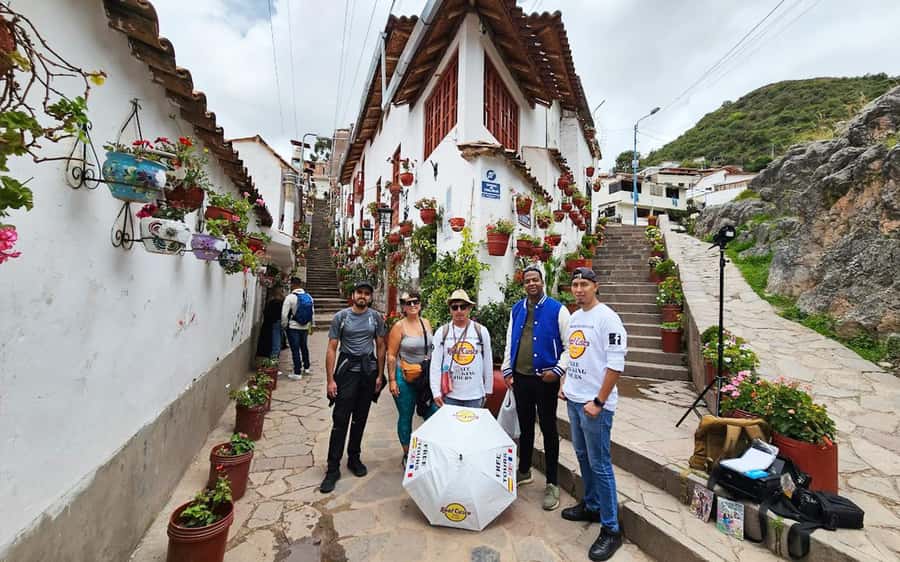
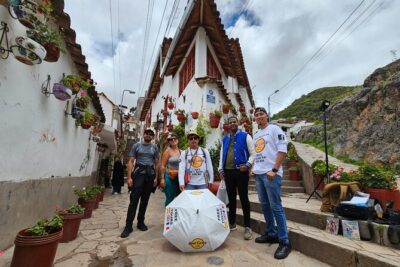
The tour begins and ends at the Plaza Mayor, also called the Plaza de Armas. You meet beside the fountain in the center of the square, looking for white shirts marked with the Real Cusco Free Tour logo. Arrive about 10 minutes early. Cusco’s central square can be busy, and a late arrival could mean missing the opening explanation.
Plaza de Armas and Calle Loreto set the scene
The Plaza de Armas is the right starting point. It is the historic center of Cusco and gives the guide a natural place to explain how the city developed through Inca and colonial periods. You will see the exterior of the Cathedral and La Compañía de Jesús, two major buildings facing the square.
This is mainly an orientation stop. The tour does not include entry into either church, so you should not expect interior art, chapels, or museum displays. The value comes from learning how the buildings relate to the square and from identifying places you may want to visit later.
From there, the walk continues along Calle Loreto. This narrow street is one of the best places to see how colonial construction was placed over Inca foundations. The street helps you understand the scale and precision of the stonework before the tour reaches its more famous masonry examples.
More History Tours in Cusco
- Cusco: Historic Walking Tour with Pisco Sour and Local Music
★ 5.0 · 190 reviews - Cusco: Historical Guided City Tour with 4 Inca Ruins
★ 4.5 · 99 reviews - Cusco Highlights Walking Tour: History, Culture, Traditions
★ 4.9 · 72 reviews
The Twelve Angled Stone and Inca engineering
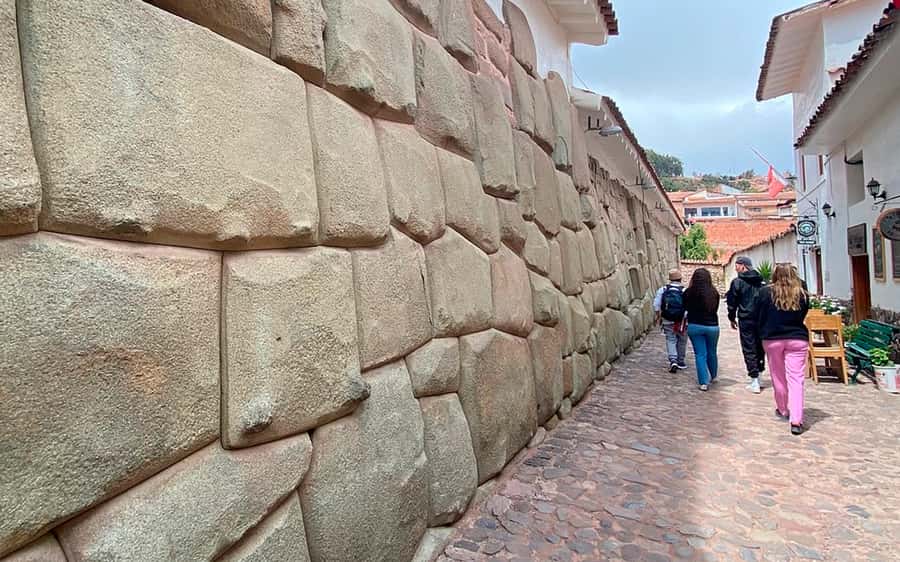
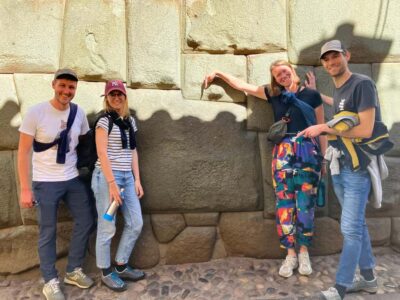
The Twelve Angled Stone is one of Cusco’s classic quick stops. The guide points out the carefully fitted stone and explains why Inca masonry remains so striking. You will have about 15 minutes for photographs and commentary.
The point is not the stone’s size. It is the accuracy of the joints around it. The stones fit together without the broad mortar lines you may expect from colonial walls. Take a moment to look at the entire wall, not only the famous block. The surrounding work shows that this was a system of construction, not a single clever piece.
The route also includes the Fourteen Angled Stone. The names can cause confusion, so listen closely to the guide’s explanation and check that you are photographing the intended wall. These stops are close enough in theme to feel repetitive if the commentary is rushed, but together they give you a useful introduction to Inca building methods.
Puma, serpent, and condor in the stonework
The walk then turns to stone forms associated with the Andean trilogy: the condor, puma, and serpent. These animals carry symbolic meaning in Andean thought, and the guide explains how the shapes appear in Cusco’s walls and layout.
The puma and serpent stone stop is listed as a 15-minute photo and sightseeing visit. It works best when you look beyond the outline and ask how the city’s builders used stone, streets, and sacred ideas together. The condor, puma, and serpent are not simply decoration. They help explain the way Andean culture connected the natural world with religious belief.
The broader description also refers to the Temple of Acllahuasi, the sacred home of the Virgins of the Sun. This is an important cultural reference, though the timed route does not list a separate entrance or extended visit there. If seeing the site’s interior is a priority, ask the guide exactly what you will view from the route and whether a separate ticket is needed.
San Blas adds art, slopes, and local character
San Blas is one of the most appealing parts of the walk. The route spends about 20 minutes in this colonial neighborhood, known here for art and tradition. Its streets are narrower and steeper than the central square, so this is where the physical demands become more obvious.
I like the change of mood. The walk moves away from the grand open plaza and into smaller streets, viewpoints, and photo corners. You get a better sense of how Cusco feels beyond the main square, while the guide explains the neighborhood’s place in the city.
The tradeoff is simple: the slopes are real. The tour notes that some sections are steep and recommends good physical condition. People with recent surgery, back problems, epilepsy, or mobility needs should read the restrictions carefully. The activity is not suitable for wheelchair users, pregnant women, or people over 70 according to the provided booking information.
More Walking Tours in Cusco
- Cusco: Walking Tour with an Experienced Local Guides
★ 4.8 · 636 reviews - Curious Monkey Cusco- Eat the Streets, Walking Food Tour
★ 5.0 · 160 reviews - Cusco: Historic Walking Tour with Pisco Sour and Music Show
★ 4.6 · 65 reviews - Cusco Food Walking Tour & Central Market
★ 5.0 · 48 reviews
Meet luthier Sabino Huamán and hear Andean instruments
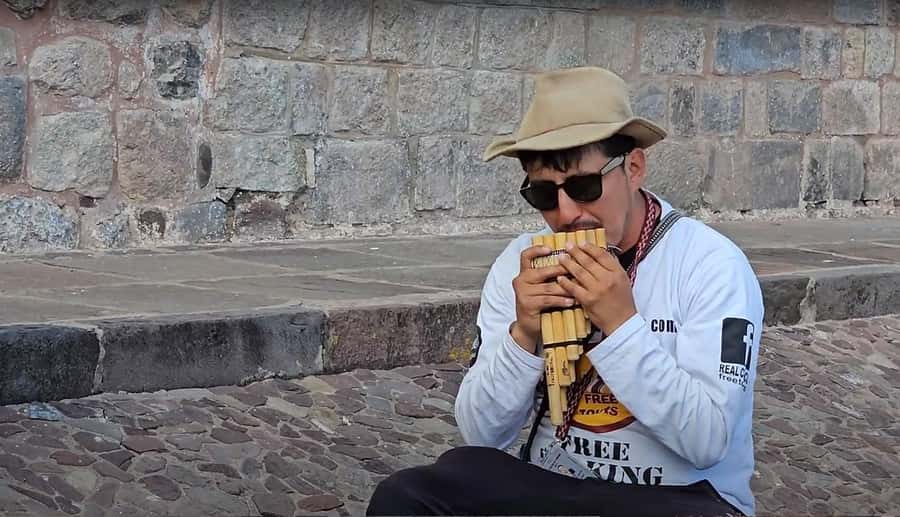
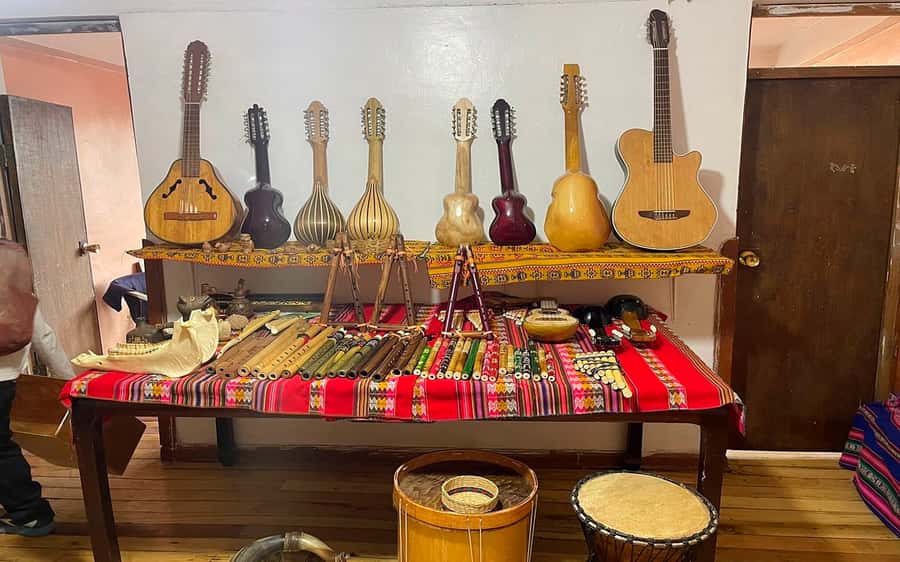
The visit to luthier Sabino Huamán gives the tour a welcome change from walls and viewpoints. You stop for about 20 minutes and learn about the artisanal process behind Andean instruments. The visit also includes a show of Andean music using traditional instruments.
This is the experience’s most personal stop. A wall can show you technical skill, but a working instrument-maker shows how regional culture continues through hands, wood, sound, and teaching. You will likely remember the music more clearly than another quick architectural explanation.
The information describes Sabino Huamán as the luthier, but it does not name the musician who performs or explain which instruments are played. Think of this as a short cultural presentation, not a full concert or workshop. Food and other purchases are not included, so bring money only if you want to buy something or pay for an expense outside the tour.
Sapantiana Aqueduct and Siete Borreguitos Street
The next stops are compact and highly visual. At the Sapantiana Aqueduct, you have about 15 minutes for photographs. The aqueduct adds another layer to the route, showing how water management fits into Cusco’s built environment.
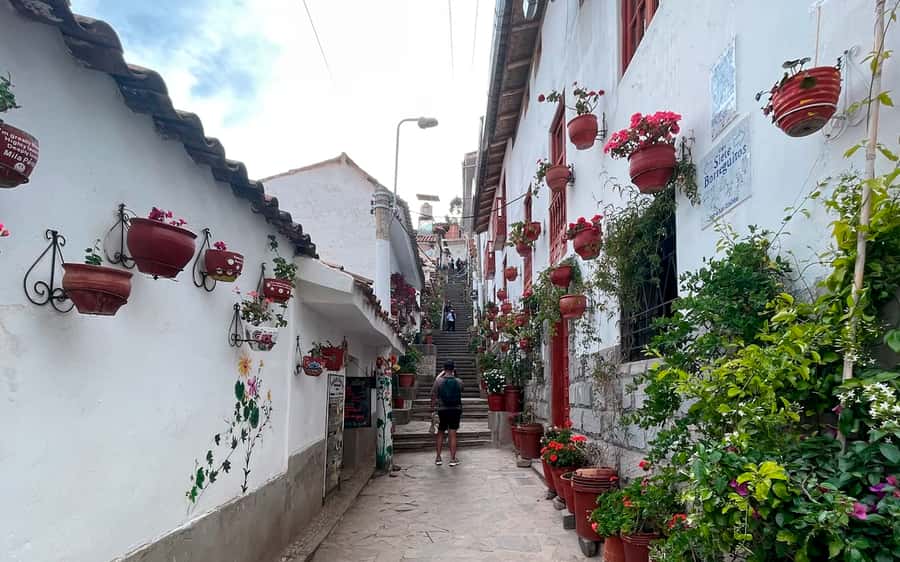
Then comes Calle Siete Borreguitos, listed as one of the city’s most picturesque streets. The stop is also about 15 minutes and is aimed largely at photographs. This is a good place to slow down, frame the street, and avoid treating the stop as a rushed group snapshot.
Because both places are brief, your experience may depend on group size and guide pacing. If you want careful photographs, tell the guide early. A larger group can make a narrow street feel crowded, and the available time may pass quickly.
San Cristóbal gives you the big Cusco photograph
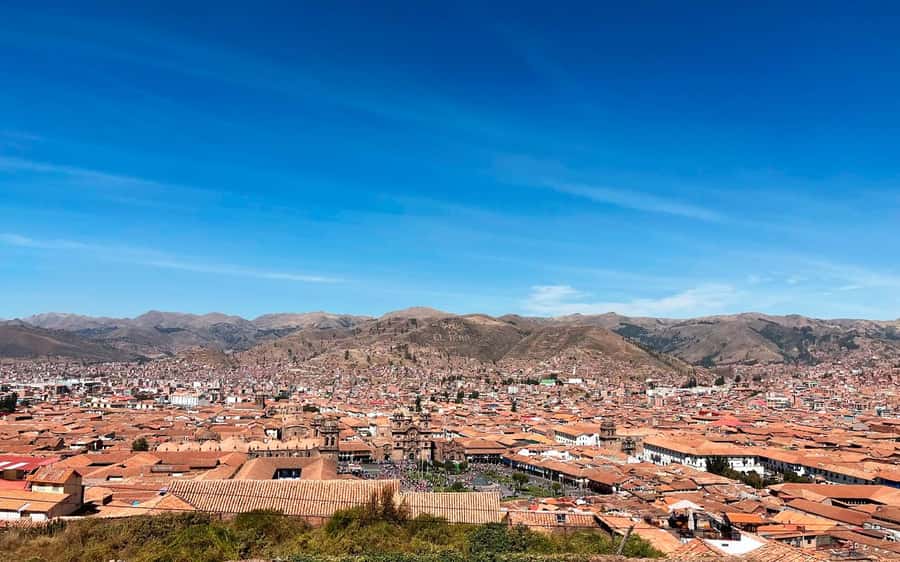
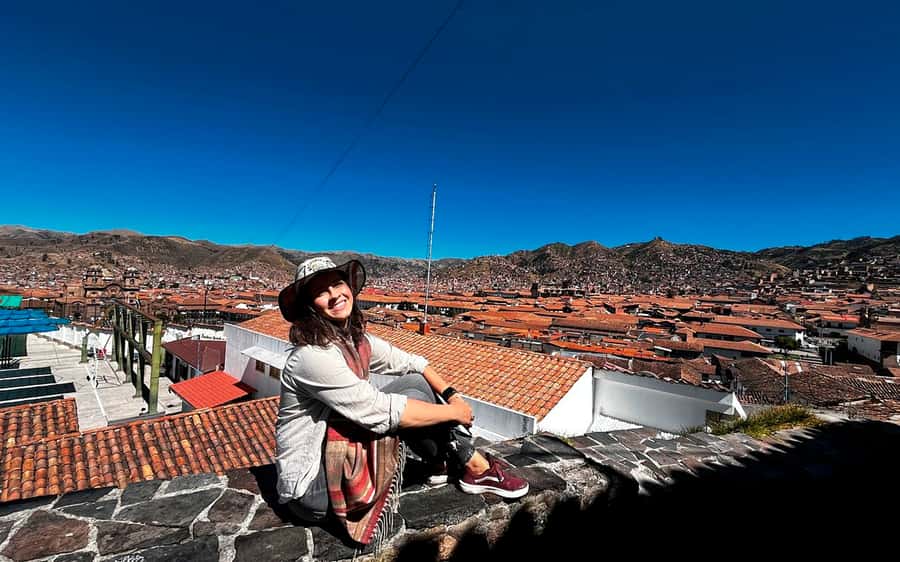
The Mirador de San Cristóbal is the route’s visual payoff. You spend about 20 minutes here, looking across Cusco and taking photographs from above. The viewpoint gives you a useful map of the city: the central area below, the red roofs, and the hills beyond.
This is also where the tour’s uphill effort makes sense. You have earned a broader view after walking through streets and neighborhoods. Bring sunglasses, a hat, sunscreen, and water. Cusco’s weather can change quickly, and strong sun can catch you even when the air feels cool.
The San Blas viewpoint is also included in the broader route description, although the timed itinerary specifically lists San Cristóbal. Ask the guide whether the San Blas lookout is part of your exact departure. The provider may adjust the order or details based on the group and timing.
Resbalosa and the return to the main square
After San Cristóbal, the group passes through Resbalosa before walking back to the Plaza Mayor. The route lists about 15 minutes for sightseeing at Resbalosa and another 10 minutes on foot for the return.
This final section matters because it brings the route back into the city center without requiring transport. You finish where you started, close to restaurants, churches, shops, and other sights. It is convenient if you want to continue exploring immediately.
The total route contains many short stops. That is useful for orientation, but you should not expect a long, quiet explanation at each location. The tour works best when you want a broad first look and plan to revisit your favorite places independently.
English or Spanish guidance, with one group-size warning
A professional guide leads the tour in English or Spanish, and personalized assistance is included. The guide is also expected to provide practical tips for Cusco, including ways to make the most of later activities and possible discounts at certain entries.
The strongest praise in the available feedback focuses on the guides’ attitude. Eduardo is described as attentive and funny, while another booking called the guide excellent. One especially useful detail is that Eduardo respected each person’s pace and physical limits. That matters on a route with hills and changing altitude.
There is an important booking point to clarify. The experience is described as offering private or small groups, but one booking was told only at arrival that the outing was a group tour. The guide received no criticism in that account, but the mismatch affected the booking decision.
If you need a private experience, confirm the group arrangement before paying. At $10, a group outing offers strong value. A private tour would normally be judged by different standards, especially if you expect flexible stops or a custom route.
What the $10 price really buys you
At $10 per person, the value is strongest if you are new to Cusco and want a live introduction without committing to a costly private guide. You receive an English or Spanish guide, a route through major central sights, a music presentation, viewpoints, and practical city advice.
The price does not include food, entry tickets, or other expenses. Since the churches and Qorikancha are described mainly through exterior sightseeing on this route, you should budget separately if you want to go inside. The tour can help you decide which paid sites deserve your time.
The reserve-now-and-pay-later option also gives you flexibility, and cancellation is allowed up to 24 hours before departure for a full refund. Starting times depend on availability, so check the schedule rather than assuming a fixed departure.
What to bring for a steep, changeable-weather walk
Wear comfortable shoes with a firm grip. The route includes steep streets, cobbled or uneven urban areas may be possible, and you will be on your feet for most of the experience.
Cusco can shift from cool to sunny quickly. Bring layered clothing, breathable clothes, a sun hat, sunglasses, sunscreen, and water. The supplied advice also mentions a packed lunch, though a two-hour tour does not include food and may not require a full meal.
Arrive early at the fountain in Plaza de Armas. Keep alcohol and drugs out of the activity, as they are not allowed. If you have a medical or mobility concern, read the suitability restrictions before booking rather than hoping the route can be changed on the day.
Who should book this Cusco walk?
I would choose this tour for a first afternoon or morning in Cusco, especially if you want a quick sense of direction. It suits people who enjoy history in small portions, photography, local music, and walking between sights instead of riding in a vehicle.
It is also useful for a short stay. One booking came from someone with only two days in Cusco, and the guide quality made the decision to continue worthwhile despite the group issue. You can see many central highlights in one outing and then use the remaining time for museums, churches, markets, or a return to San Blas.
I would hesitate if you need a fully private route, a step-free experience, or long interior visits. I would also avoid booking it without clarification if the group format matters to you.
Should you book it?
Book this $10 tour if you want an affordable introduction to Cusco’s Inca walls, colonial streets, Andean music, and high viewpoints. The attentive guiding, especially the patience credited to Eduardo, is a real strength, and the route gives you plenty of ideas for the rest of your stay.
Before booking, confirm whether your departure is private, small-group, or a larger group. Wear proper shoes, arrive early, and treat the tour as a well-priced orientation rather than a series of full museum visits. For the right person, it is an efficient and friendly way to get your bearings fast.
FAQ
How long does the Cusco walking tour last?
The activity lasts approximately two hours to 150 minutes. The route includes several stops lasting 15 to 20 minutes.
Where does the tour begin?
It begins in the center of the Plaza de Armas, next to the water fountain in Cusco.
How do I identify the tour team?
Look for staff wearing white polo shirts with the Real Cusco Free Tour logo.
Which languages are available?
The live tour guide is available in English and Spanish.
Does the tour visit the inside of Cusco Cathedral?
The route includes an exterior view of Cusco Cathedral. An interior visit is not listed as included.
Is Qorikancha included?
Qorikancha, the Temple of the Sun, is included as a sightseeing stop in the walking tour description. The information does not specify an interior visit or entrance ticket.
Does the tour include Andean music?
Yes. The visit to luthier Sabino Huamán includes a show of Andean music with traditional instruments.
Is food included?
No. Food is not included. Other expenses are also excluded.
What should I bring?
Bring comfortable shoes, sunglasses, a sun hat, sunscreen, layered or breathable clothing, outdoor clothing, and water. A packed lunch is also suggested in the tour information.
Is the tour suitable for wheelchair users?
No. The activity is listed as unsuitable for wheelchair users, and it also includes steep streets.
Just added in Cusco
- Private Transfer from Airport to Hotel in the City of Cusco★ 4.0 · 5 reviews
- Best Cusco walking tour: dinner street food tasting★ 4.5 · 11 reviews
- Cusco Private Transportation for 2026★ 5.0 · 4 reviews
- Private Tour to Pisac Market and Pisac Ruins★ 5.0 · 4 reviews
- Machu Picchu Day Trip With Panoramic Train from Cusco★ 5.0 · 10 reviews
- Sacred Valley Private Tour from Cusco, Guide and Driver only★ 5.0 · 4 reviews
- Sacred Valley of the Incas Tour★ 5.0 · 12 reviews
- Private Tour of the Mountain of Colours by Quad★ 5.0 · 7 reviews
History Tours in Cusco, compared.
Historic Walking Tour with Pisco Sour and Local Music
Read our review →
Cusco Highlights Walking Tour: History, Culture, Traditions
Read our review →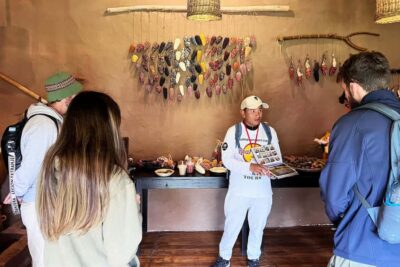
Historic Walking Tour with Pisco Sour and Music Show
Read our review →
Pisco Sour Secrets: Hands-On Mixology in Historic Cusco
Read our review →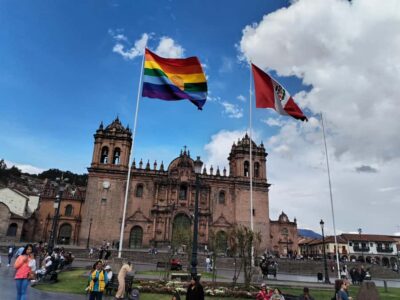
Historic Walking Tour & Scenic Views with local drink
Read our review →
Browse the lists this tour appears in